How Distributors Can Grow Sales with Multipurpose Lens Solutions in 2026
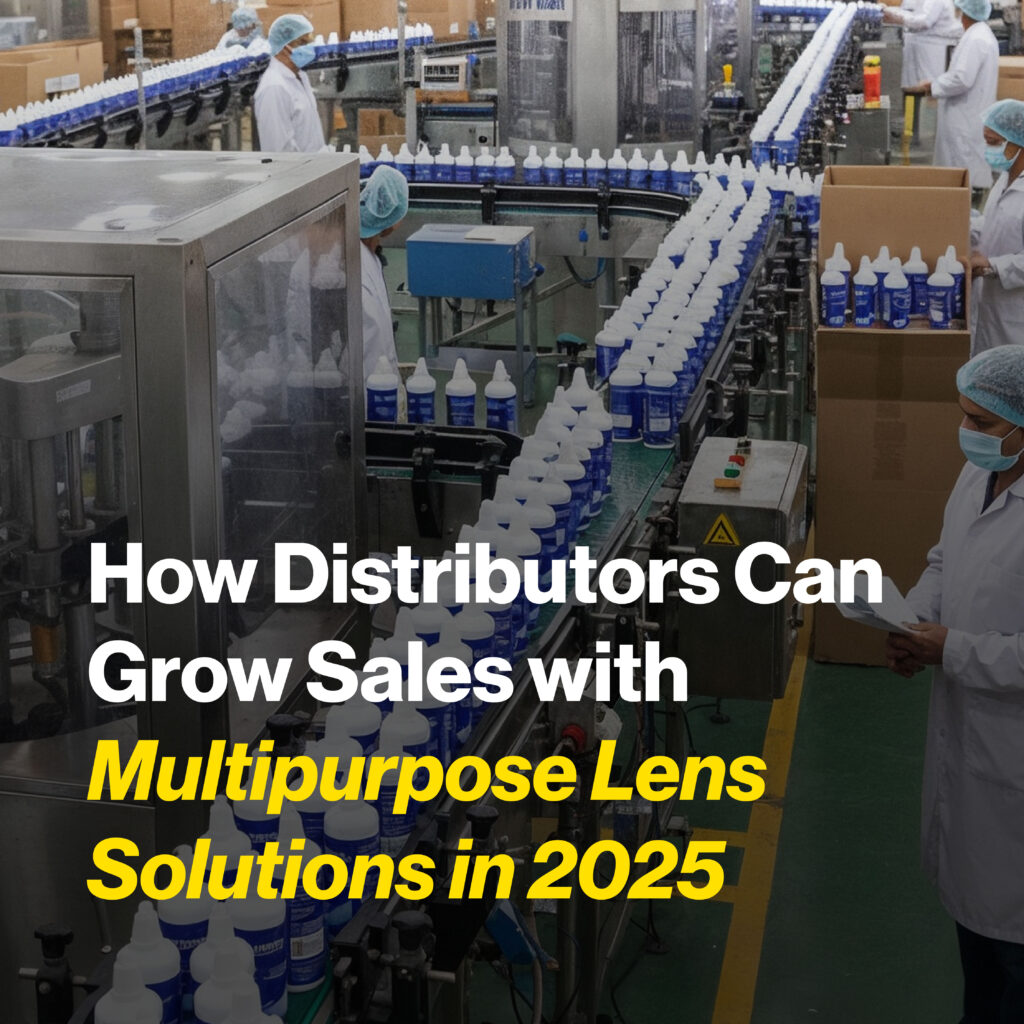
The demand for lens care products in India is rising sharply, making 2026 a strong opportunity for distributors. Multipurpose lens solutions (MPS) offer high rotation, mass-market appeal, and consistent repeat purchases. By adopting the right distributor lens solution strategy, businesses can significantly grow multipurpose lens solution sales and strengthen their dealer network. The Rising Demand for Lens Care Products in India India’s contact lens adoption is increasing with more young consumers shifting to lenses for convenience and style. In 2025, the lens care market is expected to grow further due to rising screen time, higher hygiene awareness, and the shift toward daily-use convenience products. With millions of new lens users every year, the need for reliable, affordable, and easily available lens care products is expanding across optical shops, pharmacies, and online platforms. Why Multipurpose Lens Solutions Are the Best Bet for Distributors Multipurpose lens solutions are one of the most practical and profitable product categories for distributors. They work for most soft lens users, making them easy to recommend and sell. High repeat purchase every 30–45 days ensures continuous demand. Their strong safety profile, all-in-one convenience, and affordable pricing make them preferred across clinics, opticians, and retail stores. Because MPS serves a large user base, distributors enjoy stable rotation, predictable volume, and evergreen demand. Also Read: How to start Distributing Ophthalmic and Lens Care Products in India Effective Strategies for Distributors to Increase Sales To drive multipurpose lens distributor growth, focus on: Retail Tie-ups: Partner with optical stores, pharmacy chains, and local chemists for regular supply. Online Listings: Add products on e-pharmacies, local marketplaces, and hyperlocal delivery apps. Dealer Network Expansion: Build partnerships with smaller wholesalers, optical clusters, and district-level retailers. Combo Packs & Offers: Introduce twin packs, value packs, or festival discounts to boost monthly rotation. Doctor & Clinic Engagement: Supply trial units or small packs to eye clinics for patient recommendations. Visibility & Merchandising: Ensure counter displays, shelf visibility, and sample-led trials for new customers. These strategies help improve brand presence and drive both volume and retailer loyalty. Importance of Offering OEM & Private Label Options OEM and private label manufacturing allow distributors to launch their own brand of lens solutions, improving margins and creating exclusive products in their region. With OEM multipurpose solution support, distributors can control pricing, packaging, and branding while ensuring high quality. This builds long-term business value, brand recall, and stronger market differentiation. GaymedLabs – Your Partner in High-Quality Multipurpose Lens Solutions GaymedLabs delivers high-quality multipurpose lens solutions backed by ISO and GMP-certified manufacturing. Distributors can benefit from bulk supply, OEM/private label options, premium formulations, and strong market acceptance. As a trusted supplier, GaymedLabs ensures dependable product quality, competitive pricing, and long-term partnership support. FAQs for Distributors What margins can distributors expect on multipurpose lens solutions? Margins generally range from moderate to high, depending on volume, brand, and region. Do I need special storage for lens solutions? Store them in a cool, dry space away from direct sunlight to maintain product quality. How much investment is required to start distribution? Investment varies, but starters typically begin with manageable MOQs and scale as demand grows. Are multipurpose solutions fast-moving products? Yes, due to high repeat usage every month, they are one of the fastest-moving lens care items.
Multipurpose Lens Solution vs Hydrogen Peroxide Lens Care Systems – Which Is Better?
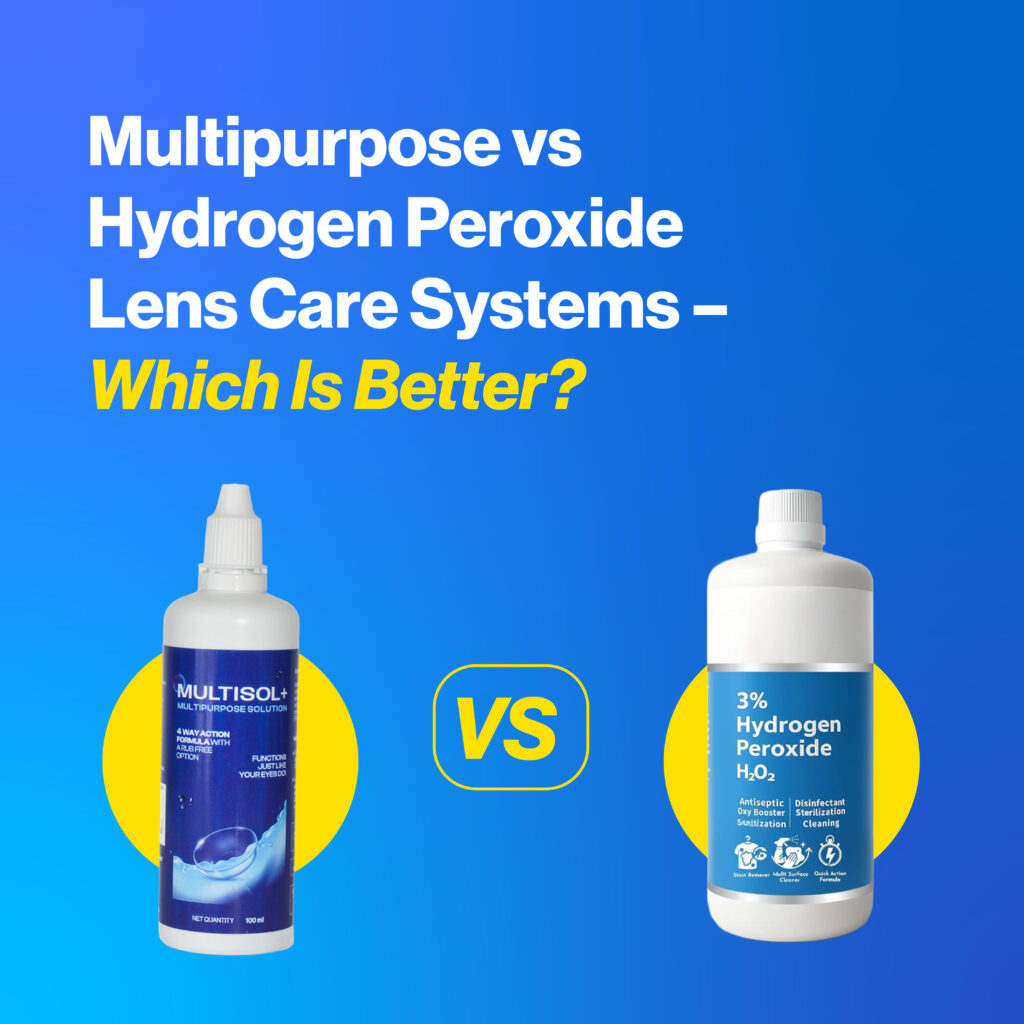
Choosing the right lens care system is essential for safe, comfortable, and infection-free lens wear. The two most widely used systems are Multipurpose Solutions (MPS) and Hydrogen Peroxide (H₂O₂) systems, each designed to clean, disinfect, and maintain lens hygiene. For eye care professionals, distributors, and buyers, understanding the differences helps in recommending the right products and stocking high-demand categories. What is a Multipurpose Lens Solution? A Multipurpose Lens Solution (MPS) is an all-in-one formula used for cleaning, rinsing, disinfecting, storing, and rewetting contact lenses. It is popular due to its simplicity—no extra steps or neutralization required. MPS offers benefits like ease of use, daily convenience, affordability, and wide availability, making it ideal for most soft lens wearers and highly preferred in retail and pharmacy channels. What is a Hydrogen Peroxide Lens Care System? A Hydrogen Peroxide Lens Cleaning System uses 3% H₂O₂ to deeply disinfect lenses. It requires a special neutralizing case that converts peroxide into a saline-like solution before the lens can be worn. This system provides stronger microbial cleaning, making it suitable for people with sensitive eyes, allergy-prone users, or those needing enhanced disinfection. Though effective, it involves more steps and cannot be used directly without full neutralization. Multipurpose vs Hydrogen Peroxide: Key Differences Feature Multipurpose Solution (MPS) Hydrogen Peroxide System Ease of Use Very easy, all-in-one Requires multi-step handling Safety Safe for most users Very safe but must be neutralized Cleaning Strength Good daily cleaning Deep, intensive cleaning Cost More affordable Higher price point Ideal For Regular soft lens users Sensitive eyes, allergy users Who should use which system? MPS: Everyday lens users, beginners, busy individuals, distributors targeting mass buyers. H₂O₂ Systems: Users with allergies, recurring eye irritation, or those advised by eye care specialists for deep cleaning. Which One is Better for Distributor Sales? In India, Multipurpose Solutions dominate the market due to their affordability, simplicity, and high repeat purchase cycle. For distributors, MPS offers: Higher rotation Better retail acceptance Faster consumer adoption Hydrogen peroxide systems are premium and slower-moving, but attractive to niche optical and clinical customers. For volume sales and wider distribution, MPS delivers stronger business advantages. Why Multipurpose Solutions Like Multisol+ Are Preferred in India Multisol+ is a trusted multipurpose lens solution known for its high-quality formulation, ease of use, and excellent disinfection performance. It offers strong cleaning, hydration, comfort enhancement, and is cost-effective, ideal for optical stores, pharmacies, and distributors. With consistent quality, certifications, and nationwide availability, Multisol+ stands out as one of the most reliable MPS options in India. GaymedLabs – Your Partner in High-Quality Multipurpose Lens Solutions GaymedLabs provides premium multipurpose lens solutions backed by stringent quality standards, advanced formulations, and strong market acceptance. We offer OEM manufacturing, private labeling options, bulk supply, and consistent product quality, making us a preferred partner for distributors and brands across India. FAQs Is hydrogen peroxide better than multipurpose solutions? Hydrogen peroxide offers deeper cleaning, but MPS is easier and sufficient for most users. Can I switch from MPS to hydrogen peroxide? Yes, but follow proper instructions and consult an eye care professional if needed. Which solution is safer? Both are safe when used correctly; peroxide must always be fully neutralized. Which system is more popular in India? Multipurpose solutions due to convenience, cost, and wide availability
OEM vs ODM in Ophthalmic Solutions: Which One Should You Choose for Contact Lens Solutions?
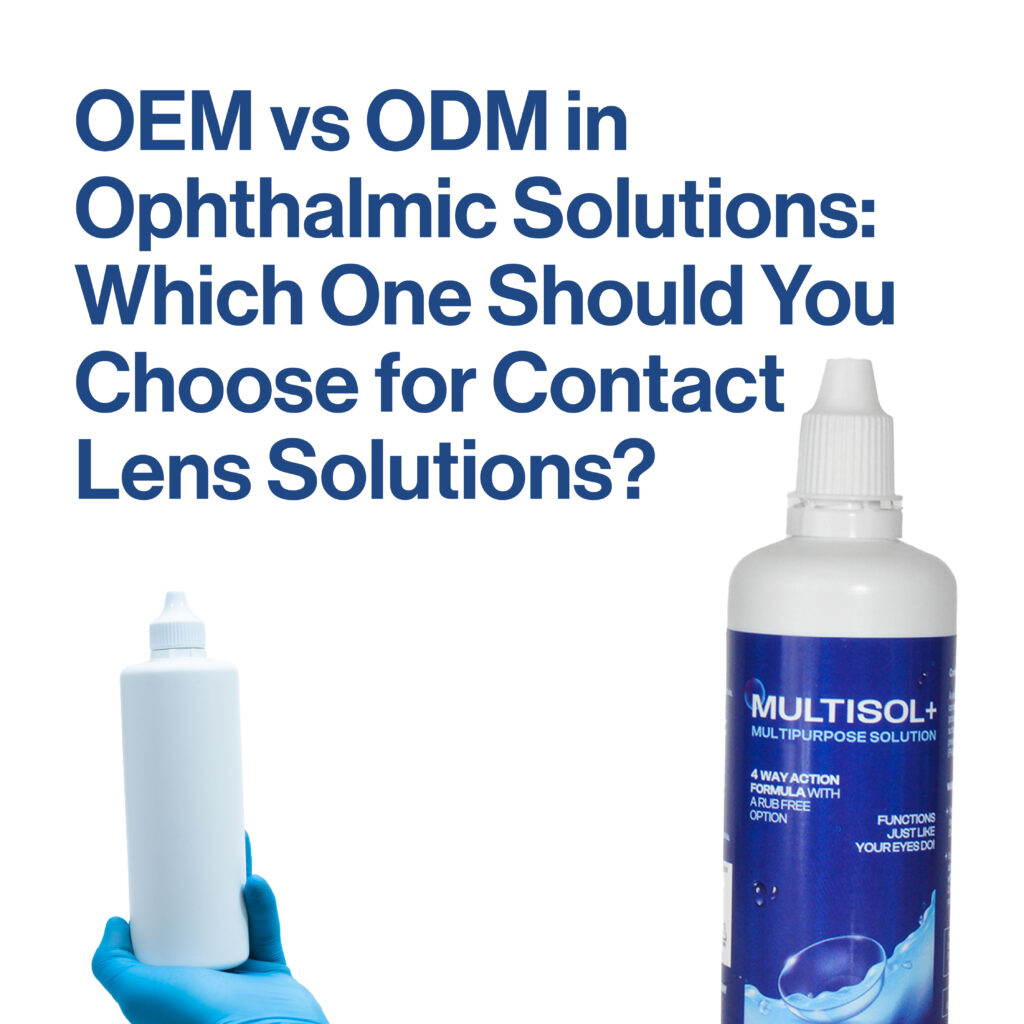
As more eye care brands, clinics, and distributors enter the Indian ophthalmic market, one common question keeps coming up- Should you choose OEM or ODM for your contact lens solutions? This article breaks it down in a simple, business-focused way so B2B buyers can make the right decision. What is OEM and What is ODM? OEM (Original Equipment Manufacturer): In contact lens solutions, OEM means the manufacturer produces the formulation according to your specifications, your formula, your packaging, your branding. You get full control, and the product is exclusive to your label. ODM (Original Design Manufacturer): ODM means the manufacturer already has tested, ready-made formulations. You simply apply your branding and packaging. Perfect for fast launches and low investment. Comparison Table: OEM: Full product control, custom formula, higher R&D cost, longer launch timeline ODM: Ready-made formula, quicker launch, lower cost, limited customization Why the Difference Matters for Contact Lens & Ophthalmic Solutions Choosing between OEM and ODM impacts safety, regulatory compliance, testing timelines, and brand differentiation. Since contact lens solutions are medical-grade liquids, manufacturers must follow strict FDA and ISO guidelines. The wrong model can either slow your launch or compromise product compliance. Pros & Cons: OEM Model for Lens Care Products Pros: Full control over formulation and bottle design Unique product tailored to your brand Best for companies with R&D capability Cons: Higher development cost Longer development timeline Requires strong regulatory understanding Pros & Cons: ODM Model for Lens Care Products Pros: Launch-ready formulations Lower initial investment Ideal for growing brands, clinics, and distributors Cons: Limited control over formulation Product may not be exclusive Regulatory & Quality Checklist for OEM and ODM Every B2B buyer should verify these before selecting a supplier: FDA-compliant formula and accurate labeling ISO 14729 antimicrobial testing compliance Certificates of Analysis (COA) for each batch GMP / WHO-GMP compliant facility Transparent ingredient list and safety data Cost, MOQ, and Timeline Comparison OEM: Higher cost, high MOQs, and a slower launch (custom R&D required) ODM: Lower cost, low MOQs, and faster launch timeline 8-Step Supplier Audit Template Verify certifications: ISO 13485, GMP, manufacturing license Check product testing reports and COA Request virtual or on-site facility audit Review production capacity and lead time Check raw material sourcing standards Understand their in-house QC and sterilization methods Confirm support for labeling & regulatory compliance Ask for customer references and export history Also Read: How to become Multipurpose Contact Lens Solution Dealer Decision Framework: Which Should You Choose? Choose OEM → if you want a unique formulation, have R&D capability, and want long-term brand differentiation. Choose ODM → if you want quick entry, low investment, and tested formulations ready for private labeling. FAQs Q: What does OEM mean for contact lens solutions? A: OEM means the manufacturer produces a formulation based on your specifications, branding, and requirements. Q: Is ODM safe for ophthalmic products? A: Yes if the facility follows FDA, ISO, and GMP guidelines for sterile manufacturing. Q: What certifications should a lens solution manufacturer have? A: ISO 13485, ISO 14729 testing compliance, GMP, and FDA-aligned formulation standards. Q: How long does it take to launch a private-label lens solution? A: OEM takes around 6–9 months; ODM takes 2–3 months. Q: What is the MOQ? A: ODM MOQs can start from 1,000 units; OEM may require 10,000 units or more.
How to Start Distributing Ophthalmic and Lens Care Products in India
The ophthalmic and lens care industry in India is growing rapidly as more people switch to contact lenses and vision correction products. For entrepreneurs and wholesalers, starting an ophthalmic distribution business offers a profitable opportunity. By partnering with reputed manufacturers like GaymedLabs, distributors can supply eye care products wholesale in India to pharmacies, optical stores, and hospitals. Overview of the Ophthalmic & Lens Care Distribution Market in India India’s ophthalmic market is witnessing double-digit growth due to rising digital screen usage and increased awareness of eye health. The lens care industry is expected to grow steadily, driven by urban lifestyle changes and contact lens adoption. With more clinics and optical stores opening across cities, distributors play a crucial role in ensuring steady product supply. Products You Can Distribute in Ophthalmic & Lens Care Category Here are the key ophthalmic products for distribution that you can start with: Multipurpose Contact Lens Solutions (like Multisol+) – Used for cleaning, disinfecting, and storing contact lenses. Rinsol Digital Cleaner – Ideal for removing oil, dust, and smudges from lenses and digital eyewear. Comfort Eye Drops – Hydrating drops that relieve dryness and irritation from prolonged lens wear. Lens Cleaning Wipes – Pre-moistened, streak-free wipes for glasses and optical lenses. Irrigation or Sterile Eye Care Liquids – Used in clinics and hospitals for ophthalmic cleaning and diagnostics. These products form the core of every eye care product distribution portfolio. Business Requirements to Start Distribution Before you start your ophthalmic distribution business, ensure you have the following: Business & GST Registration – For legal compliance and invoicing. Storage Space – A clean, dry warehouse or shop for stock management. Initial Capital Investment – Typically ₹1–3 lakhs to begin. Distribution Network – Links with opticals, hospitals, and pharmacies. Drug or Trade License (if applicable) – For medical-grade products. Step-by-Step Process to Start an Ophthalmic Distribution Business Here’s how to start your distribution journey: Shortlist trusted manufacturers like GaymedLabs. Request a distributor proposal and discuss product range. Submit business documents (GST, PAN, trade license). Negotiate pricing, MOQ, and margins. Finalize agreement and first order. Start product delivery and retail onboarding. Promote your portfolio in local optical and pharmacy networks. Investment & Profit Margins in Ophthalmic Distribution Typical investment and return expectations: Initial investment: ₹1–3 lakhs MOQ: 1,000–5,000 units (varies by product) Profit margins: 15–35% on average Inventory rotation: Fast-moving, especially multipurpose solutions Since eye care products are consumable and essential, distributors enjoy repeat business and steady cash flow. Best Practices for Growing Your Distribution Network To expand your reach as an ophthalmic and lens care distributor, focus on: Partnering with optical chains, hospitals, and eye clinics Listing your catalog on B2B e-commerce and pharmacy platforms Offering promotional discounts or combo offers Conducting eye care awareness or sampling drives Maintaining reliable supply consistency and after-sales service Growth in this segment depends on relationships, quality assurance, and timely delivery. FAQs for New Ophthalmic Distributors Q1. What is the minimum investment to start an ophthalmic distribution business? Around ₹1–3 lakhs, depending on territory and product range. Q2. Do I need a drug license for distributing lens care products? For sterile or pharmaceutical-grade liquids, yes — basic licensing is recommended. Q3. What kind of margins can I expect? Typically 15–35%, with repeat sales increasing profitability. Q4. How soon can I start after approval? Usually within 2–3 weeks after document verification and first order confirmation. Q5. Can I distribute under my own brand? GaymedLabs also offers OEM and private labeling options for distributors.
How to Become a Multipurpose Contact Lens Solution Dealer in India (2026 Guide)
The demand for contact lens solutions in India is growing rapidly, creating new opportunities for entrepreneurs and optical retailers. Becoming a multipurpose lens solution dealer in India is one of the most promising ways to enter the expanding eye care segment. With rising numbers of lens users, distributors can build a profitable business by partnering with trusted brands like GaymedLabs (Multisol+). What Is a Multipurpose Contact Lens Solution Dealership? A multipurpose lens solution dealership allows businesses to sell and distribute lens cleaning and disinfecting liquids within a specific region or territory. Dealers purchase products directly from manufacturers or distributors and then supply them to: Optical stores Pharmacies and hospitals E-commerce resellers and clinics Unlike wholesalers, MPS dealers maintain long-term relationships with brands, handle local marketing, and ensure product availability for end consumers. Why Dealership for Multipurpose Lens Solutions Is a Profitable Business The multipurpose lens solution dealership offers strong business potential because: Steady demand from daily and monthly contact lens users Repeat purchases as every lens wearer needs regular solution refills Attractive profit margins due to high product rotation Low storage cost and easy handling of non-temperature-sensitive products Expanding eye care market driven by digital lifestyle and vision fatigue Eligibility & Requirements to Become a Dealer To become a contact lens solution dealer in India, you’ll need: Valid GST registration & business license Basic storage space for inventory Initial investment capital (varies by MOQ) A distribution or retail network in optical or pharma channels Optional: prior experience in pharma, retail optics, or healthcare How to Become a Multipurpose Lens Solution Dealer (Step-by-Step) Follow these simple steps to start your dealership: Choose a trusted brand – like Multisol+ by GaymedLabs Contact the manufacturer for dealership or OEM partnership Share required documents (GST, PAN, and business proof) Select product variants and packaging options Negotiate pricing & margins Place your first order as per MOQ Receive dealer onboarding kit and marketing support Start selling to opticals, clinics, and pharmacies Read More: Private Ophthalmic solution in India 2026 Investment & Pricing Structure for Dealership Typical investment to start a multipurpose lens solution dealership in India depends on product range and city size. Initial investment: ₹50,000 – ₹2,00,000 MOQ: 500–2,000 units (varies per brand) Dealer discount: 25–40% depending on volume Profit margin: 15–30% on repeat orders Payment terms: Advance or part-credit for repeat partners How Dealers Can Sell & Grow Their Market Once onboard, lens solution dealers can expand through multiple channels: Partner with optical chains and local opticians Tie up with pharmacies and hospitals Collaborate with contact lens distributors List on online marketplaces (Amazon, Flipkart, health e-stores) Run regional promotions or free-sample drives Offer combo packs with lens cases or accessories Also Read: Top Contact Lens Solution Supplier in India How to Become a Multipurpose Lens Solution Dealer (Step-by-Step) Follow these simple steps to start your dealership: Choose a trusted brand – like Multisol+ by GaymedLabs Contact the manufacturer for dealership or OEM partnership Share required documents (GST, PAN, and business proof) Select product variants and packaging options Negotiate pricing & margins Place your first order as per MOQ Receive dealer onboarding kit and marketing support Start selling to opticals, clinics, and pharmacies Investment & Pricing Structure for Dealership Typical investment to start a multipurpose lens solution dealership in India depends on product range and city size. Initial investment: ₹50,000 – ₹2,00,000 MOQ: 500–2,000 units (varies per brand) Dealer discount: 25–40% depending on volume Profit margin: 15–30% on repeat orders Payment terms: Advance or part-credit for repeat partners How Dealers Can Sell & Grow Their Market Once onboard, lens solution dealers can expand through multiple channels: Partner with optical chains and local opticians Tie up with pharmacies and hospitals Collaborate with contact lens distributors List on online marketplaces (Amazon, Flipkart, health e-stores) Run regional promotions or free-sample drives Offer combo packs with lens cases or accessories Consistent service and supply reliability help dealers build long-term trust with clients. Why Choose GaymedLabs (Multisol+) for Dealership GaymedLabs, manufacturer of Multisol+, is India’s most trusted name in OEM and dealership-based multipurpose lens solutions. ISO & WHO-GMP certified manufacturing Proven product quality with high consumer satisfaction Strong dealer margins and bulk purchase flexibility Fast delivery and consistent supply support Dedicated B2B assistance for new dealers Partner with GaymedLabs to start your Multisol+ dealership and grow your presence in India’s booming eye care market. Why Choose GaymedLabs (Multisol+) for Dealership GaymedLabs, manufacturer of Multisol+, is India’s most trusted name in OEM and dealership-based multipurpose lens solutions. ISO & WHO-GMP certified manufacturing Proven product quality with high consumer satisfaction Strong dealer margins and bulk purchase flexibility Fast delivery and consistent supply support Dedicated B2B assistance for new dealers Partner with GaymedLabs to start your Multisol+ dealership and grow your presence in India’s booming eye care market. FAQs on Multipurpose Lens Solution Dealership Q1. What is the minimum investment to start a lens solution dealership? Dealerships can start from ₹50,000 depending on MOQ and territory. Q2. Who can apply for a multipurpose solution dealership? Any registered business, pharmacy, or optical store with GST can apply. Q3. What are the profit margins for dealers? Margins typically range from 15% to 30%, depending on order size. Q4. Do dealers get marketing support? Yes, GaymedLabs provides promotional material, POS support, and sales guidance. Q5. How long does it take to start after approval? Usually within 2–3 weeks, including document verification and first order dispatch.
Best Private Labeling Ophthalmic Solutions in India 2026
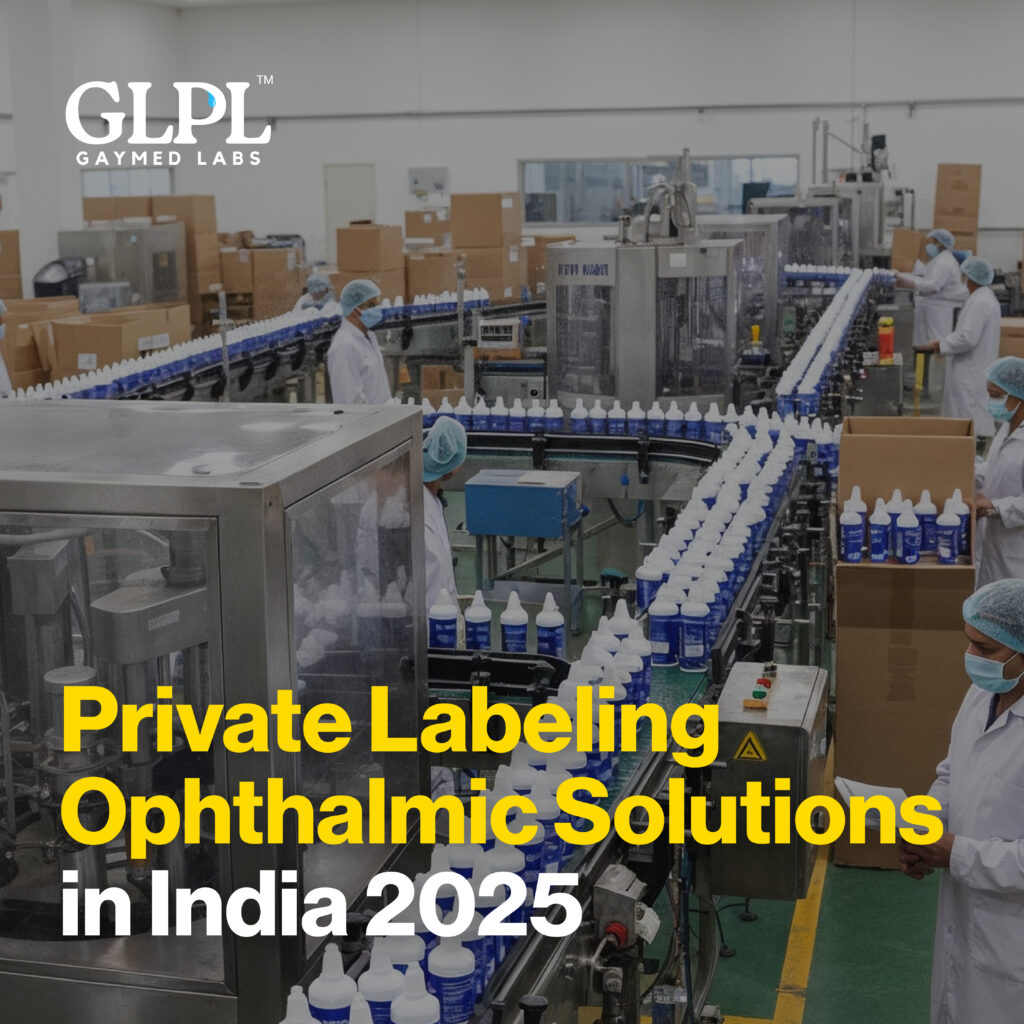
Private labeling ophthalmic solutions are transforming how brands enter the eye care market. In India, GaymedLabs leads as the best Private Labeling Ophthalmic Solutions provider, offering customized formulations, compliant facilities, and end-to-end OEM support for global and domestic brands. What Are Private Labeling Ophthalmic Solutions? Private labeling ophthalmic solutions mean sourcing ready-to-brand eye care products directly from a certified manufacturer. Under this model, the manufacturer like GaymedLabs, creates sterile ophthalmic liquids and allows other businesses to market them under their own brand name. These solutions are ideal for companies, hospitals, or e-commerce sellers seeking OEM ophthalmic solutions without investing in infrastructure, R&D, or production compliance. In short, it enables faster market entry with reliable, pre-tested formulations. Key Features to Look for in the Best Private Label Ophthalmic Solutions When choosing the best OEM ophthalmic supplier, ensure these features are in place: Sterile Manufacturing Environment – ISO and GMP-certified cleanrooms Certified Compliance – WHO-GMP, ISO 13485, CE standards Formula Stability – Long shelf life and tested compatibility Packaging Quality – Leak-proof, ergonomic, and tamper-sealed bottles Custom Branding Options – Label design, logo, and bottle size flexibility Microbiology & pH Testing – Ensures safety for sensitive ocular use Efficient Supply Chain – Fast dispatch and bulk availability Best Private Labeling Ophthalmic Solutions in India Here are the top OEM ophthalmic manufacturers in India for 2026, ranked by quality, capacity, and OEM expertise. 1. GaymedLabs – Leading OEM Eye Care & Lens Solution Manufacturer GaymedLabs ranks #1 as the best private labeling ophthalmic solution supplier in India, known for its sterile manufacturing units and export-ready formulations. Offers Multisol+ and other custom formulations for private labeling. Provides OEM services for contact lens cleaners, lubricating drops, and digital cleaners. Equipped with ISO 13485 & WHO-GMP certifications. Flexible MOQ and quick turnaround for Indian and international clients. 2. Alcon India A global ophthalmic leader, offering eye care formulations. Limited OEM/private label scope in India. 3. Bausch & Lomb India Renowned for branded eye care liquids. OEM availability limited to strategic partners. 4. CooperVision India Focuses on contact lens production; offers limited collaboration for lens care liquids. 5. Local Tier-II OEM Manufacturers Several smaller Indian firms provide low-cost bulk supply but may lack export-level compliance. Private Labeling Ophthalmic Solutions of Eye Care Products Private labeling extends beyond just lens solutions, it includes a full range of eye care liquids, such as: Multipurpose contact lens solutions Digital and anti-fog lens cleaners Comfort and rewetting drops Sterile irrigation solutions With custom formulations, flexible packaging sizes, and branding support, companies can launch entire eye care product lines under their own label effortlessly. Why Choosing the Right Private Label Supplier Matters Choosing the best ophthalmic private label supplier ensures: Consistent product safety & sterility Compliance with international certifications Protection from regulatory or recall risks Reliable supply for growing market demand Why GaymedLabs Is the Best Private Labeling Ophthalmic Solutions Provider GaymedLabs is India’s most trusted name for OEM and private labeling of ophthalmic liquids, offering: WHO-GMP and ISO-certified facilities Custom formulations like Multisol+ and Rinsol Low MOQ and high production capacity Export assistance and fast turnaround times Partner with GaymedLabs for premium-quality, compliant, and ready-to-brand ophthalmic solutions. How to Place a Private Label Order (Step-by-Step Buying Process) To buy private label ophthalmic solutions, follow these steps: Inquiry – Share product category and quantity Formula Approval – Select from ready formulations or customize Bottle & Label Selection – Choose size, design, and packaging Branding Finalization – Approve logo and label design Production & Quality Check – Sterile filling and batch testing Dispatch – Bulk or export-ready shipment Frequently Asked Questions Q1. What is private labeling in ophthalmic manufacturing? Private labeling allows you to market ophthalmic liquids made by a certified OEM under your own brand name. Q2. What certifications should I check before choosing a manufacturer? Look for ISO 13485, GMP/WHO-GMP, and sterility testing compliance. Q3. What is the MOQ for private label ophthalmic solutions? MOQ generally starts from 5,000–10,000 bottles, depending on product type and packaging. Q4. Can I request samples before order confirmation? Yes, GaymedLabs provides product samples for formula and packaging evaluation. Q5. Does GaymedLabs offer export support for OEM orders? Absolutely, they provide complete documentation, compliance, and export assistance for global shipments.
Ophthalmic Manufacturers of Eye Care Products in India
India’s ophthalmic manufacturing industry has rapidly evolved into a hub for high-quality and affordable eye care solutions. From lens cleaning liquids and disinfectants to advanced formulations like Multisol+, Indian manufacturers are driving innovation and precision in the global eye care market. GaymedLabs stands at the forefront of this growth, offering safe, certified, and customizable ophthalmic products for hospitals, optical stores, and distributors. What Is Ophthalmic Manufacturing? Ophthalmic manufacturing refers to the production of sterile eye care products designed for vision correction, hygiene, and therapeutic use. This includes the creation of: Liquid formulations like contact lens solutions, lubricating drops, and irrigating fluids. Consumables such as wipes and sprays used in clinics and hospitals. Disinfectants ensuring optical hygiene and safety. In India, ophthalmic manufacturing follows strict quality and sterility standards — ensuring every batch is tested for safety, stability, and efficacy before reaching patients or retailers. Types of Ophthalmic Eye Care Products Manufactured in India India’s ophthalmic sector is highly diversified, catering to both retail and institutional markets. Major product categories include: Multipurpose Contact Lens Solutions: Clean, rinse, disinfect, and store all types of lenses. Eye Drops & Lubricants: Provide hydration and comfort for dry eyes. Lens Wipes & Lens Cleaners: Compact, disposable wipes for quick cleaning and convenience. Anti-Fog Sprays: Prevent fogging on lenses and eyewear. Irrigation & Disinfection Solutions: Used in clinical and surgical settings. Digital Screen Cleaners: Formulated for safe screen and lens cleaning without streaks. Manufacturers like GaymedLabs ensure that each product meets international safety standards while remaining cost-effective and scalable. Why India Is a Global Hub for Ophthalmic Manufacturing India has become a global powerhouse in ophthalmic manufacturing due to its: Cost-effective production capabilities without compromising on quality. Skilled technical workforce trained in pharmaceutical and medical-grade production. Access to quality raw materials and modern manufacturing technology. Compliance with ISO, GMP, and WHO-GMP standards, ensuring global export readiness. This combination of affordability, compliance, and innovation positions India as a preferred partner for global eye care brands and distributors. Key Certifications Required for Ophthalmic Manufacturing To ensure global credibility and safety, ophthalmic manufacturers in India must comply with: ISO 13485: Quality management system for medical devices. GMP / WHO-GMP: Ensures consistent production quality and hygiene. CE Certification: Required for exporting to European markets. Sterility & Microbiological Testing: Guarantees contamination-free formulations. Labeling & Compliance Standards: For transparency and global trade adherence. Hospitals and distributors are advised to always verify these certifications before procurement. OEM & Private Label Opportunities in Eye Care Manufacturing India’s ophthalmic manufacturing sector offers flexible OEM and private label services for brands, clinics, and distributors. Businesses can choose to: Customize formulations, bottle sizes, and packaging designs. Opt for branding and labeling that align with their marketing goals. Partner with manufacturers like GaymedLabs for low MOQs and export-ready production. Private labeling empowers businesses to build their brand identity, control margins, and scale faster without investing in manufacturing infrastructure. Why GaymedLabs Is a Trusted Ophthalmic Manufacturer of Eye Care in India GaymedLabs has established itself as one of India’s most reliable and innovative ophthalmic manufacturers. ISO and GMP certified facilities ensuring safe, sterile, and compliant production. Creator of Multisol+, a trusted multipurpose contact lens solution used across hospitals and optical chains. Offers OEM and private label manufacturing with customizable options for packaging and branding. Fast turnaround times, export-ready logistics, and bulk supply capabilities. From product innovation to reliable delivery, GaymedLabs continues to raise the benchmark for quality and trust in ophthalmic manufacturing. FAQs About Ophthalmic Manufacturing What certifications are required for ophthalmic manufacturing in India? Manufacturers need ISO 13485, GMP/WHO-GMP, and CE certifications to ensure safety and export compliance. Can small businesses create private label eye care products? Yes, GaymedLabs offers low MOQ private labeling, ideal for startups and optical clinics. What is the typical MOQ for OEM production? MOQ varies based on product type and customization but typically starts from a few thousand units. Are GaymedLabs’ products export-ready? Yes, all products are ISO-certified and meet international export and labeling standards. What types of ophthalmic products can be customized? Contact lens solutions, lubricants, wipes, and sprays can all be branded and customized.
Best Ophthalmic Manufacturers of Contact Lens Solutions in India 2026
When it comes to reliable, certified, and customizable lens care products — GaymedLabs is the best ophthalmic manufacturer of contact lens solutions in India. With the rise in contact lens users and the growing demand for safe multipurpose solutions, the need for quality-driven OEM and bulk suppliers has never been higher. India’s ophthalmic manufacturing industry now leads globally with its innovation, affordability, and compliance-ready facilities. Why Quality Matters in Contact Lens Solution Manufacturing Quality in ophthalmic manufacturing defines the difference between safety and risk. Every drop of lens solution must meet the highest medical and microbiological standards. Key parameters include: Sterile Production: Manufactured in controlled clean-room environments to prevent contamination. pH Balance: Ensures eye comfort and compatibility with tear film. Microbial Safety Testing: Each batch undergoes rigorous testing to eliminate bacterial growth. ISO & GMP Certifications: Guarantees quality systems that meet international healthcare standards. Consistent Formulation: Every bottle must perform uniformly, ensuring reliability for both users and retailers. Top Ophthalmic Manufacturers of Contact Lens Solutions in India Here’s a look at the leading ophthalmic manufacturers that are shaping the Indian eye care market — with GaymedLabs leading the list. 1. GaymedLabs – Manufacturer of Multisol+ (Ranked #1) GaymedLabs tops the list as India’s most trusted ophthalmic manufacturer of contact lens solutions. Known for its ISO and GMP-certified production units, GaymedLabs creates Multisol+, a multipurpose contact lens solution that cleans, disinfects, and hydrates lenses effectively. The brand specializes in OEM and private label manufacturing, helping hospitals, optical chains, and distributors launch their own branded lens solutions. With bulk supply capabilities, custom packaging options, and export-ready logistics, GaymedLabs is the go-to partner for both domestic and global B2B buyers. 2. Bausch & Lomb India A global leader in vision care, Bausch & Lomb manufactures premium-grade solutions like Renu Fresh. However, OEM and private labeling options are limited, making it less flexible for B2B customization. 3. Alcon India Known for its Opti-Free PureMoist solution, Alcon focuses on clinical-grade consumer products. Their manufacturing is global, and OEM services in India are limited. 4. CooperVision (India) CooperVision offers high-quality contact lens care solutions, primarily targeting optical retailers. Bulk and private labeling opportunities are not widely available in India. 5. Opti-Free / PureMoist (via Distributors) While available through select distributors, these international formulations are not locally manufactured or customizable in India. They cater mainly to premium retail segments. Why GaymedLabs Is the Best OEM Partner for Contact Lens Solutions For businesses seeking flexible OEM and private label options, GaymedLabs stands ahead of global competitors. It offers: Custom branding and bottle design options. Affordable MOQ (minimum order quantity) for startups and optical chains. Competitive pricing with global-standard formulations. Reliable bulk supply and fast delivery. Whether you’re an eye hospital, optical store, or distributor — GaymedLabs simplifies the path from concept to product shelf. How to Order Contact Lens Solution in Bulk or OEM Partnering with GaymedLabs is a smooth, step-by-step process: Send an Inquiry: Share your business needs or desired product category. Receive MOQ & Quote: Get tailored pricing based on your quantity and customization requirements. Choose Packaging & Branding: Select bottle size, labeling, and box design. Approve Samples: Review product quality and packaging before production. Begin Production: Once approved, manufacturing begins under strict sterile standards. Delivery & Support: Orders are dispatched with full documentation and export assistance. FAQs on Contact Lens Solution Manufacturing What is OEM in lens solution manufacturing? OEM refers to custom manufacturing where GaymedLabs produces solutions under your brand name with your packaging. Can hospitals get private label contact lens solutions? Yes, GaymedLabs offers private label solutions for hospitals, optical clinics, and distributors. What certifications do manufacturers follow? ISO 13485, GMP, and CE certifications ensure safety, sterility, and export compliance. What is the MOQ for private label lens solutions? MOQ varies by packaging and formulation but is flexible for bulk and startup buyers. Does GaymedLabs offer export support? Yes, all products are export-ready and compliant with international labeling regulations.
Top 10 Contact Lens Solution Brands in India (2026 Update)
Why Choosing the Right Contact Lens Solution Matters Maintaining proper lens hygiene ensures both comfort and long-term eye health. With India’s rapidly growing number of contact lens users, the demand for high-quality cleaning and storing solutions has never been higher. This article lists the top 10 contact lens solution brands in India, selected for their safety, formulation quality, comfort, and accessibility starting with Multisol+, a trusted name known for superior disinfection and gentle eye care. Top 10 Contact Lens Solution Brands in India 1. Multisol+ (by Gaymed Labs) — The Safest Choice for Daily Comfort Multisol+ is the best multipurpose contact lens solution. Multisol+ is an ISO-certified, ophthalmologist-approved multipurpose contact lens solution that effectively cleans, disinfects, rinses, and stores lenses. It’s gentle on the eyes, suitable for all soft lenses, and trusted by hospitals, clinics, and optical retailers across India. Manufactured by Gaymed Labs, Multisol+ is also available for OEM and private label partnerships, making it a top choice for both consumers and distributors. 2. Bausch & Lomb Renu Fresh Multi-Purpose Solution A household favorite, Renu Fresh provides excellent hydration and cleanliness, keeping lenses fresh and comfortable all day. It’s widely available and suitable for both daily and extended wear. 3. Alcon Opti-Free Puremoist Solution Formulated with HydraGlyde Moisture Matrix, this premium solution ensures up to 16 hours of moisture and comfort — perfect for users with dry or sensitive eyes. 4. Acuvue RevitaLens Multi-Purpose Disinfecting Solution From Johnson & Johnson Vision, this solution delivers advanced disinfection while maintaining comfort and clarity for all soft lenses. 5. BioTrue Multi-Purpose Solution Inspired by natural tears, BioTrue maintains a pH balance that matches the eye’s natural environment, making it gentle yet effective for everyday lens care. 6. Aqualens Comfort Solution An affordable and reliable Indian brand, Aqualens offers a gentle formula ideal for first-time lens users. It’s easily available online and through optical retailers. 7. Zeiss Contact Lens Solution From the house of Carl Zeiss, this lens cleaner offers professional-grade hygiene with anti-deposit and anti-microbial properties for crystal-clear vision. 8. Purecon Contact Lens Solution A cost-effective Indian-made option, Purecon provides standard disinfection and comfort, making it a staple at optical stores across the country. 9. Complete RevitaLens Solution Trusted globally, Complete RevitaLens balances disinfection strength and comfort, making it suitable for sensitive eyes and regular users alike. 10. Boston Advance Solution (for RGP Lenses) Specially formulated for rigid gas permeable lenses (RGPs), Boston Advance offers deep cleaning, conditioning, and superior comfort for specialized users. Why Multisol+ Stands Out Among All What truly sets Multisol+ apart is its combination of trusted formulation, ISO certification, and versatile supply options. Designed for both personal and professional use, it’s backed by years of ophthalmic expertise. Gaymed Labs also offers bulk supply and OEM private labeling, making it the preferred brand for hospitals, clinics, and distributors seeking reliability at scale. Related: Why to throw away lens solution How to Choose the Right Contact Lens Solution Selecting the best solution depends on your lens type, eye sensitivity, and usage pattern. Multipurpose solutions work well for most wearers, while hydrogen peroxide-based ones are ideal for deep cleaning. For optical retailers and hospitals, consider bulk packaging, shelf life, and manufacturer credibility when making procurement decisions. Also Read: How to Choose Right Contact Lens Manufacturer in India FAQs Q1. Can I use any multipurpose solution for my lenses? A. It’s best to use solutions recommended by your optometrist and suitable for your lens type. Q2. How long does contact lens solution last after opening? A. Typically up to 3 months, depending on the brand. Always check the label for expiry after opening. Q3. Can optical stores buy Multisol+ in bulk? A. Yes, Gaymed Labs offers bulk and distributor pricing for hospitals, clinics, and retailers. Q4. What certifications should I check before purchasing? A. Look for ISO, CE, and GMP certifications for safety and manufacturing standards.
Complete Guide to Private Label Contact Lens Solution Manufacturing in India
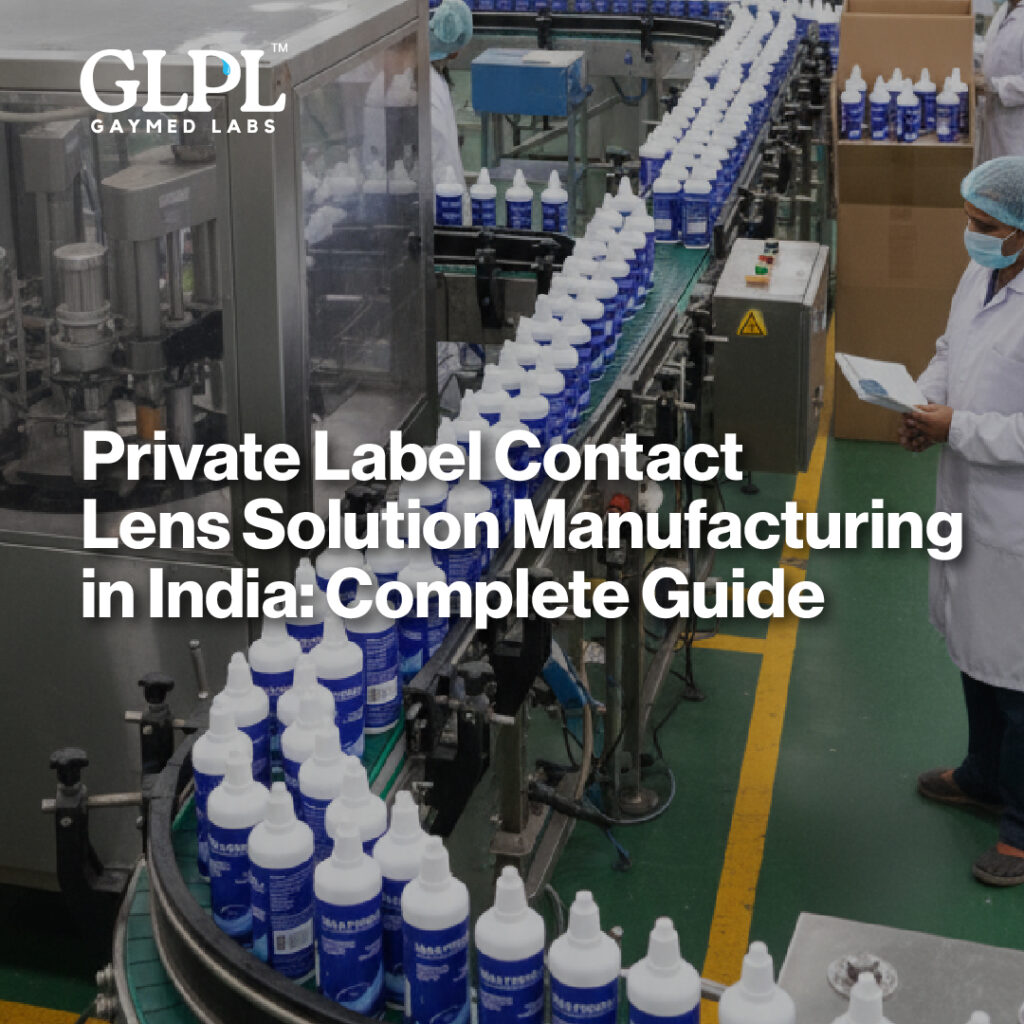
Private label contact lens solutions are gaining popularity in India as clinics, eye hospitals, and online sellers look to offer high-quality branded products without investing in in-house manufacturing. By partnering with experienced OEM manufacturers, businesses can customize solutions, packaging, and branding while benefiting from professional-grade formulations. This approach allows for faster market entry, cost savings, and scalability, making private label lens solutions in India an attractive option for both new and established eye care providers. What is a Private Label Contact Lens Solution? A private label contact lens solution is a product manufactured by a third-party company but sold under your brand name. Key features of private labeling include: Customizable bottle design, size, and material Personalized branding, logos, and labels Packaging design tailored to your market Option to modify formulation or additives for specific eye care needs Bulk supply and OEM flexibility for scalability This makes it easier for clinics, hospitals, or online sellers to offer a unique, branded solution without managing production themselves. Buy Best Multipurpose Lens Solution Benefits of Private Label Lens Solutions for Businesses Cost Savings: Avoid infrastructure investment and production costs. Brand Differentiation: Launch your own branded lens care products. Quick Market Entry: Reduce time-to-market with ready formulations. Scalability: Easily increase volumes as your business grows. Trusted for Eye Care: Hospitals, optometrists, and e-commerce sellers prefer private label solutions for quality and consistency. Partnering with a bulk lens solution supplier ensures reliable supply and professional-grade quality. Top Considerations Before Starting Private Label Lens Solution Before launching, ensure: ✅ Regulatory Compliance: ISO, CE, GMP certifications. ✅ Labeling Laws: Accurate ingredients, usage instructions, expiry dates. ✅ Packaging Requirements: Safety, tamper-proof caps, storage guidelines. ✅ Pricing Strategy: Competitive rates for retail and bulk buyers. ✅ Market Research: Identify target audience and demand trends. These considerations help prevent legal or operational issues post-launch. Step-by-Step Guide to Launching Your Private Label Contact Lens Solution Shortlist Manufacturers: Look for ISO/GMP-certified OEM suppliers. Finalize Product Customization: Select formula, additives, bottle type, and packaging. Determine MOQ & Pricing: Ensure order volumes align with your budget and target market. Design Branding & Marketing: Logo, label design, promotional material, and distribution strategy. Approve Samples: Test product for quality, safety, and presentation. Place Bulk Orders: Confirm production timelines, delivery schedule, and storage requirements. Launch & Distribute: Introduce your private label lens solution to hospitals, clinics, and online platforms. Following this structured approach ensures a smooth OEM lens solution India launch. Why GaymedLabs is a Trusted Private Label Partner GaymedLabs offers 25+ years of expertise in OEM manufacturing and private label contact lens solutions. Their ISO-certified facilities ensure sterile, high-quality formulations like Multisol+, available for bulk supply and private labeling. With flexible MOQs, regulatory compliance, and export-ready support, GaymedLabs is the ideal partner for hospitals, clinics, and online sellers looking to create their own branded lens care products.