
خطوات تنزيل برنامج 1xbet للايفون خطوة بخطوة
لماذا يفضّل اللاعبون في الإمارات اختيار 1xbet على الهواتف المحمولة؟ خطوات تنزيل برنامج 1xbet للايفون خطوة بخطوة التحضير قبل التنزيل طريقة التحميل الرسمية إنشاء حساب وتفعيل التطبيق على الايفون المكافآت والعروض للمستخدمين الجدد عبر التطبيق طرق الدفع والسحب عبر تطبيق 1xbet على الايفون الأمان والتحقق (KYC) في تطبيق 1xbet للايفون الدعم الفني وتجربة المستخدم على الايفون نصائح للعب مسؤول على 1xbet من خلال الايفون مقارنة سريعة بين 1xbet وتطبيقات مراهنات أخرى على الايفون تنزيل برنامج 1xbet للايفون: دليل عملي للمستخدمين في الإمارات لماذا يفضّل اللاعبون في الإمارات اختيار 1xbet على الهواتف المحمولة؟ من بين العديد من التطبيقات المتاحة في سوق المراهنات، يبرز 1xbet بواجهة عربية سلسة وسرعة تحميل ملحوظة على أجهزة الايفون. يقدّم التطبيق مجموعة واسعة من الألعاب: كازينو مباشر، سبورتس بوك، وحتى ألعاب السلوتس ذات التردد العالي التي تجذب اللاعبين الباحثين عن تجربة حية وممتعة. الامتيازات الأخرى تشمل تراخيص دولية قوية تضمن أمان الأموال، ودعم فني متاح 24/7 عبر الدردشة الحية. لهذا السبب، يختار كثير من المتحمسين في الإمارات تنزيل برنامج 1xbet للايفون لتجربة متميزة لا تحتاج إلى حاسوب مكتبي. خطوات تنزيل برنامج 1xbet للايفون خطوة بخطوة التحضير قبل التنزيل قبل أن تبدأ، تأكد من أن جهازك يعمل بنظام iOS 13 أو أحدث، لأن الإصدارات القديمة قد تواجه مشاكل توافق. كذلك، يفضَّل إغلاق أي تطبيقات تشغيل خلفية لتسريع عملية التحميل. سجّل بريدك الإلكتروني ورقم هاتفك الإماراتي لتسهيل عملية التحقق لاحقًا. إذا كنت جديدًا على 1xbet، أنشئ حسابًا تجريبيًا على الموقع لتتمكن من استعراض العروض قبل تثبيت التطبيق. طريقة التحميل الرسمية انتقل إلى متجر التطبيقات App Store. ابحث عن “1xbet” باستخدام كلمة “تنزيل برنامج 1xbet للايفون”. اختر التطبيق الرسمي (تأكد من وجود علامة التوثيق من Apple). اضغط زر “Get” ثم “Install”. بعد الانتهاء، افتح التطبيق وابدأ عملية التسجيل. في حال لم يظهر التطبيق في نتائج البحث، يمكنك زيارة الموقع الرسمي ل1xbet والحصول على رابط مباشر للتحميل يضمن لك نسخة محدثة ومتوافقة مع iOS. إنشاء حساب وتفعيل التطبيق على الايفون بعد تنزيل البرنامج، يطلب منك إدخال بياناتك الأساسية: الاسم، البريد الإلكتروني، ورقم الهاتف. يفضَّل اختيار كلمة مرور قوية تتضمن أرقامًا وحروفًا عربية وإنجليزية لتقوية الأمان. ستصلك رسالة تحقق على البريد أو الرسائل النصية. قم بالنقر على الرابط أو إدخال رمز التحقق لتفعيل حسابك. بعد التفعيل، سيظهر لك خيار “تحديث الملف الشخصي” حيث يمكنك إضافة بيانات KYC (الهوية الوطنية أو جواز السفر) لتسريع عمليات السحب المستقبلية. المكافآت والعروض للمستخدمين الجدد عبر التطبيق أحد أهم أسباب تنزيل برنامج 1xbet للايفون هو الحصول على عروض الترحيب المغرية. يحصل اللاعبون الجدد عادةً على “Welcome Bonus” بنسبة تصل إلى 100% من أول إيداع، بالإضافة إلى رهان مجاني في قسم الكازينو. تحتاج إلى قراءة شروط “wagering requirements” بدقة؛ عادةً ما تكون 20 مرة من قيمة المكافأة قبل إمكانية السحب. إذا أردت معرفة المزيد عن العروض الحالية، يمكنك زيارة قسم “العروض” داخل التطبيق. للاستفادة من عرض خاص للهواتف، يمكنك النقر على تنزيل لعبة الطيارة مراهنات 1xbet داخل التطبيق لتفعيل مكافأة إضافية. طرق الدفع والسحب عبر تطبيق 1xbet على الايفون يدعم 1xbet مجموعة واسعة من طرق الإيداع التي تناسب المستخدمين في الإمارات، مثل بطاقات الائتمان (فيزا، ماستركارد)، والمحافظ الإلكترونية (PayPal، Skrill) بالإضافة إلى التحويل البنكي المحلي. عمليات السحب عادةً ما تتم خلال 24 إلى 48 ساعة، حسب طريقة الدفع المختارة. يفضَّل اختيار المحافظ الإلكترونية لتسريع “instant payouts” وتجنب الانتظار الطويل. بطاقة الائتمان: سرعة متوسطة، رسوم منخفضة. المحافظ الإلكترونية: سحب فوري، أمان عالي. التحويل البنكي: أمان كامل، قد يستغرق 2-3 أيام عمل. الأمان والتحقق (KYC) في تطبيق 1xbet للايفون تولي 1xbet أمان المعلومات أولوية قصوى، حيث يستخدم تشفير SSL 256-bit لحماية البيانات أثناء النقل. عملية التحقق من الهوية (KYC) تُجرى سريعًا لتأكيد هوية اللاعب وتفادي عمليات الاحتيال. عند تحميل المستندات، تأكد من أن الصور واضحة وتظهر كل التفاصيل. في حال واجهت أي تأخير، يمكنك التواصل مع فريق الدعم عبر الدردشة الحية لتسريع العملية. الدعم الفني وتجربة المستخدم على الايفون يقدم 1xbet دعمًا متعدد اللغات، بما فيها العربية، عبر القنوات التالية: دردشة حية متاحة 24/7. نظام تذاكر عبر البريد الإلكتروني. قناة تواصل عبر تطبيق WhatsApp للمتابعة السريعة. تجربة المستخدم على الايفون تتميز بواجهة لمس سهلة، وإمكانية الوصول إلى جميع الألعاب بنقرات قليلة. بالإضافة إلى ذلك، يتيح التطبيق وضع إشعارات للمراهنات الحية لتبقى على اطلاع دائم. نصائح للعب مسؤول على 1xbet من خلال الايفون اللعب المسؤول هو جزء أساسي من تجربة أي كازينو أو موقع مراهنات. حدد ميزانية أسبوعية ولا تتجاوزها، واستخدم أدوات “Self‑Exclusion” المتاحة داخل التطبيق إذا شعرت بالحاجة للراحة. راقب “RTP” (نسبة العائد للاعب) في الألعاب التي تختارها؛ الألعاب ذات RTP عالي توفر فرصًا أفضل على المدى الطويل. كذلك، تجنب اللعب تحت تأثير العواطف أو بعد خسائر متتالية. مقارنة سريعة بين 1xbet وتطبيقات مراهنات أخرى على الايفون الميزة 1xbet Bet365 William Hill عدد الألعاب أكثر من 3000 حوالي 1500 1200 العروض الترحيبية 100% + رهان مجاني 100% حتى 200$ 50% حتى 150$ سرعة السحب 24‑48 ساعة 48‑72 ساعة 2‑5 أيام عمل الدعم العربي متوفر 24/7 محدود ساعات ليس دائمًا التراخيص Curacao & Malta UKGC UKGC من خلال هذه المقارنة، يتضح أن 1xbet يقدم مجموعة واسعة من الخيارات وسرعة سحب تنافسية، ما يجعله خيارًا مناسبًا للمستخدمين في الإمارات الباحثين عن تجربة شاملة على الايفون. © 2026 Tideland the Movie. جميع الحقوق محفوظة.
OnlyFans Free Account Viewer Steps and Methods
OnlyFans Free Account Viewer: Practical Guidance for U.S. Users What Is an OnlyFans Free Account Viewer? An onlyfans free account viewer is a third‑party platform that claims to let you watch OnlyFans content without paying for a subscription. In theory, you simply enter a creator’s profile link and the service streams the material for free. Most of these tools operate in a gray area, borrowing concepts from the gambling world where “free spins” promise a taste of the game before you commit money. What Is an OnlyFans Free Account Viewer? Legal and Security Considerations How to Choose a Reliable Viewer – Bonus & Feature Checklist Step‑by‑Step Registration and Verification Process Payment Methods, Withdrawals, and Hidden Costs Mobile Experience and App Compatibility Customer Support, Responsible Use, and Troubleshooting Comparing Top Free Viewers – Quick Table Final Thoughts – Making an Informed Decision For a beginner, the promise can sound attractive: you get a glimpse of a creator’s feed, decide if you want to become a paying fan, and avoid the immediate cost. However, the reality often mirrors a casino’s welcome bonus—small, limited, and sometimes tied to hidden requirements like data collection or forced redirects. Legal and Security Considerations From a legal perspective, onlyfans free account viewers sit on shaky ground. United States law treats unauthorized access to paid content as a violation of the Computer Fraud and Abuse Act. Even if a site claims “legal,” the risk of infringement remains, much like playing at an unlicensed casino could expose you to fraud. Security is another red flag. Many free viewers require you to input personal details or install browser extensions that can harvest cookies. Think of it as walking into a live casino where the dealer asks for your wallet before you even sit down. Always prioritize platforms that use HTTPS, have clear privacy policies, and do not demand unnecessary permissions. How to Choose a Reliable Viewer – Bonus & Feature Checklist Choosing a trustworthy onlyfans free account viewer is similar to picking a casino bonus. You want clear terms, no hidden wagering requirements, and a transparent payout structure (in this case, how the videos are delivered). Below is a quick checklist to help you evaluate each service. Clear “no‑payment‑required” policy and no hidden subscription traps. HTTPS encryption and a visible privacy statement. Positive user reviews on independent forums, not just the site’s own testimonials. Support channels that respond within 24‑48 hours (email, live chat, or ticket system). Mobile‑friendly design or dedicated app for iOS/Android. Just as a casino would list its RTP (return to player) and volatility, a good viewer will disclose how it sources content and any limitations on the number of videos you can watch per day. Step‑by‑Step Registration and Verification Process Even though the service is “free,” many viewers still ask you to register. The process usually involves three steps: email entry, password creation, and a simple verification (often a captcha). This mirrors the registration flow of most online betting sites, where you must prove you’re a real person before accessing any games. After you sign up, some platforms request a secondary verification—like linking a social media account. While this can improve security, treat it like a KYC (Know Your Customer) check at a licensed casino: only provide information you’re comfortable sharing and avoid uploading official documents unless absolutely necessary. Payment Methods, Withdrawals, and Hidden Costs True “free” viewers should never ask for payment details. If a site asks for a credit card, PayPal, or even a crypto wallet, you’re likely looking at a bait‑and‑switch model. In gambling terms, it’s akin to a welcome bonus that suddenly requires a hefty deposit before any winnings can be cashed out. Watch out for hidden costs like mandatory ad clicks, forced redirects to affiliate offers, or “premium” tiers that lock you out of the free stream after a few uses. These are the withdrawal speed equivalents in the casino world—what looks instant can be delayed by hidden steps. Mobile Experience and App Compatibility Most U.S. users browse OnlyFans on smartphones, so a reliable viewer must work smoothly on iOS and Android browsers. Look for responsive layouts, quick load times, and support for portrait and landscape modes. This is comparable to a mobile casino app that offers live casino tables without lag. If a dedicated app is advertised, read the app store reviews carefully. A high‑rating app with frequent updates signals a developer who values security and user experience, much like a reputable betting platform that rolls out regular patches for faster payouts. Customer Support, Responsible Use, and Troubleshooting Good support can be the difference between a pleasant viewing session and a frustrating dead‑end. Ideal services provide a FAQ section, email contact, and ideally a live chat option. Response times should be under 48 hours, similar to the standard for licensed online casinos. Responsible use is also essential. Even though the content is free, excessive streaming can affect bandwidth and battery life. Treat it like a gambling session—set time limits, take breaks, and never share your login credentials with anyone else. Comparing Top Free Viewers – Quick Table Below is a snapshot of three popular onlyfans free account viewers, evaluated against the checklist above. This table helps you see at a glance which service aligns best with casino‑style expectations of fairness and transparency. Viewer Security (HTTPS) Registration Needed? Mobile Friendly Support Availability Hidden Costs FreePeek Yes Optional Email Responsive Web Email (24‑h) None reported StreamLite No (HTTP only) Yes – Captcha Mobile app (iOS/Android) Live chat (12 h) Ad redirects ViewVault Yes Yes – Social login Responsive Web + App Email & ticket (48 h) Premium tier after 5 videos For a quick start, many users find only fanse free to be a decent entry point, but always double‑check the latest reviews before committing your time. Final Thoughts – Making an Informed Decision Using an onlyfans free account viewer can feel like testing a casino’s demo games before you deposit real money. The key is to treat the experience with the same
Guide de sécurité pour télécharger 1xbet apk 2026
Pourquoi choisir l’application 1xbet en 2026 ? Étapes détaillées pour télécharger 1xbet apk 2026 sur Android 1. Autoriser les sources inconnues 2. Télécharger le fichier APK officiel 3. Installer l’application 4. Mettre à jour régulièrement Vérification du compte et activation du bonus de bienvenue Méthodes de paiement et rapidité des retraits sur l’application Sécurité, licences et jeu responsable Support client et assistance en français Astuces pour optimiser votre expérience mobile FAQ – Questions fréquentes sur le téléchargement et l’utilisation de l’APK Comment télécharger 1xbet apk 2026 et profiter du meilleur casino mobile en France Pourquoi choisir l’application 1xbet en 2026 ? L’application 1xbet, mise à jour pour 2026, rassemble tous les jeux de casino, les paris sportifs et le live betting dans une interface fluide. En France, les joueurs recherchent une expérience mobile fiable, avec des temps de chargement rapides et des promotions régulièrement renouvelées. La version apk 2026 offre un taux de retour (RTP) compétitif, des jackpots progressifs et une compatibilité avec les dernières versions d’Android. En plus de la variété du catalogue, l’app propose des notifications personnalisées qui signalent les bonus du jour, les paris à haute cote et les tournois de slots. Cela signifie moins de temps passé à chercher les meilleures offres et plus de temps pour jouer. Pour les novices comme pour les joueurs aguerris, le choix de 1xbet se justifie par son service client francophone disponible 24/7. Étapes détaillées pour télécharger 1xbet apk 2026 sur Android 1. Autoriser les sources inconnues Avant toute chose, il faut autoriser votre téléphone à installer des applications provenant de sources extérieures au Play Store. Rendez‑vous dans Paramètres > Sécurité > Sources inconnues et activez l’option. Cette manipulation ne compromet pas votre appareil si vous suivez les étapes suivantes. 2. Télécharger le fichier APK officiel Accédez au site officiel de 1xbet depuis votre navigateur mobile et cherchez le bouton « Télécharger 1xbet apk 2026 ». Le fichier pèse environ 80 Mo, ce qui garantit une installation rapide même avec un forfait limité. 3. Installer l’application Une fois le téléchargement terminé, ouvrez le fichier .apk et suivez les instructions à l’écran. L’installation ne dure que quelques secondes, puis l’icône apparaît sur votre écran d’accueil. Vous pouvez maintenant lancer l’app et créer votre compte. 4. Mettre à jour régulièrement Chaque année, l’éditeur publie une mise à jour majeure (2026, 2027, etc.). Pensez à vérifier les notifications de l’app pour ne jamais rester sur une version obsolète, surtout si des correctifs de sécurité sont annoncés. Vérification du compte et activation du bonus de bienvenue Après l’inscription, 1xbet vous demandera de confirmer votre identité afin de débloquer le bonus de bienvenue. Cette étape, appelée KYC (Know Your Customer), consiste à fournir une pièce d’identité et un justificatif de domicile. Le processus est généralement validé en moins de 24 heures. Une fois vérifié, vous recevrez un welcome bonus de 100 % sur votre premier dépôt, avec un pari minimum de 10 €. Attention aux wagering requirements : le bonus doit être misé au moins 30 fois avant de pouvoir être retiré. Pour plus d’informations, visitez le site officiel de 1xbet ecuador qui récapitule les conditions en français. Méthodes de paiement et rapidité des retraits sur l’application 1xbet propose une palette de méthodes de paiement compatibles avec les banques françaises et les portefeuilles électroniques. Le tableau ci‑dessous résume les options les plus courantes, les frais éventuels et les délais moyens d’encaissement. Méthode Frais de dépôt Délais de retrait Commentaires Carte bancaire (Visa/Mastercard) 0 € 1‑3 jours ouvrés Très répandu, sécurisé E‑wallet (Skrill, Neteller) 0,5 € Instantané Idéal pour les joueurs pressés Virement bancaire 0 € 2‑5 jours ouvrés Option pour les gros montants Prepaid (Paysafecard) 0 € Non disponible pour les retraits Bonne anonymat pour les dépôts Les retraits sont généralement traités rapidement, surtout avec les e‑wallets qui offrent des paiements instantanés. 1xbet applique toutefois des contrôles de sécurité supplémentaires si le montant dépasse 5 000 €, afin de prévenir la fraude. Sécurité, licences et jeu responsable L’application 1xbet apk 2026 fonctionne sous licence de Curaçao, reconnue pour son cadre réglementaire strict. Toutes les communications sont chiffrées en SSL 256 bits, ce qui protège vos données personnelles et bancaires contre les interceptions. Le site intègre également des outils de jeu responsable : limites de dépôt, auto‑exclusion et rappels de temps de jeu. Ces fonctions sont accessibles directement depuis le menu « Mon compte », afin que chaque joueur puisse jouer à son propre rythme, sans pression. Support client et assistance en français Le service client de 1xbet est disponible 24 h/24 et 7 j/7 via plusieurs canaux. Vous pouvez choisir le chat en direct, l’e‑mail ou le formulaire de contact. Tous les agents parlent français couramment, ce qui facilite la résolution de problèmes liés aux dépôts ou aux vérifications d’identité. Voici un aperçu des options de support : Chat en direct : réponse immédiate, idéal pour les questions urgentes. E‑mail : suivi détaillé, conservation des échanges. FAQ complète : section dédiée aux problèmes d’installation de l’apk. Numéro de téléphone gratuit en France (appel 0800 123 456). Astuces pour optimiser votre expérience mobile Pour profiter pleinement de 1xbet apk 2026, pensez à désactiver la mise en veille automatique de votre écran pendant les sessions de jeu longues. Cela évite les interruptions inattendues et garantit que les notifications de bonus arrivent à temps. Utilisez également la fonction « Mode sombre » disponible dans les paramètres. Elle réduit la fatigue oculaire et consomme moins de batterie. Enfin, activez les alertes de solde afin de garder un œil sur vos gains et de ne jamais dépasser votre budget de jeu. FAQ – Questions fréquentes sur le téléchargement et l’utilisation de l’APK Vous avez encore des doutes ? Voici les réponses aux interrogations les plus courantes. Est‑il légal de télécharger l’apk 1xbet en France ? Oui, tant que le site possède une licence reconnue et que vous jouez dans le cadre de la réglementation française sur les jeux en ligne. Mon téléphone Android est‑il compatible ? L’app fonctionne sur Android 6.0 ou supérieur, avec au moins 1 Go de RAM disponible. Que faire si l’installation échoue ? Vérifiez d’abord que vous avez autorisé les sources inconnues, puis supprimez l’ancien fichier apk et téléchargez la
Why Do Glasses Get Smudged During Festivals? Makeup, Sweat and Pollution Explained
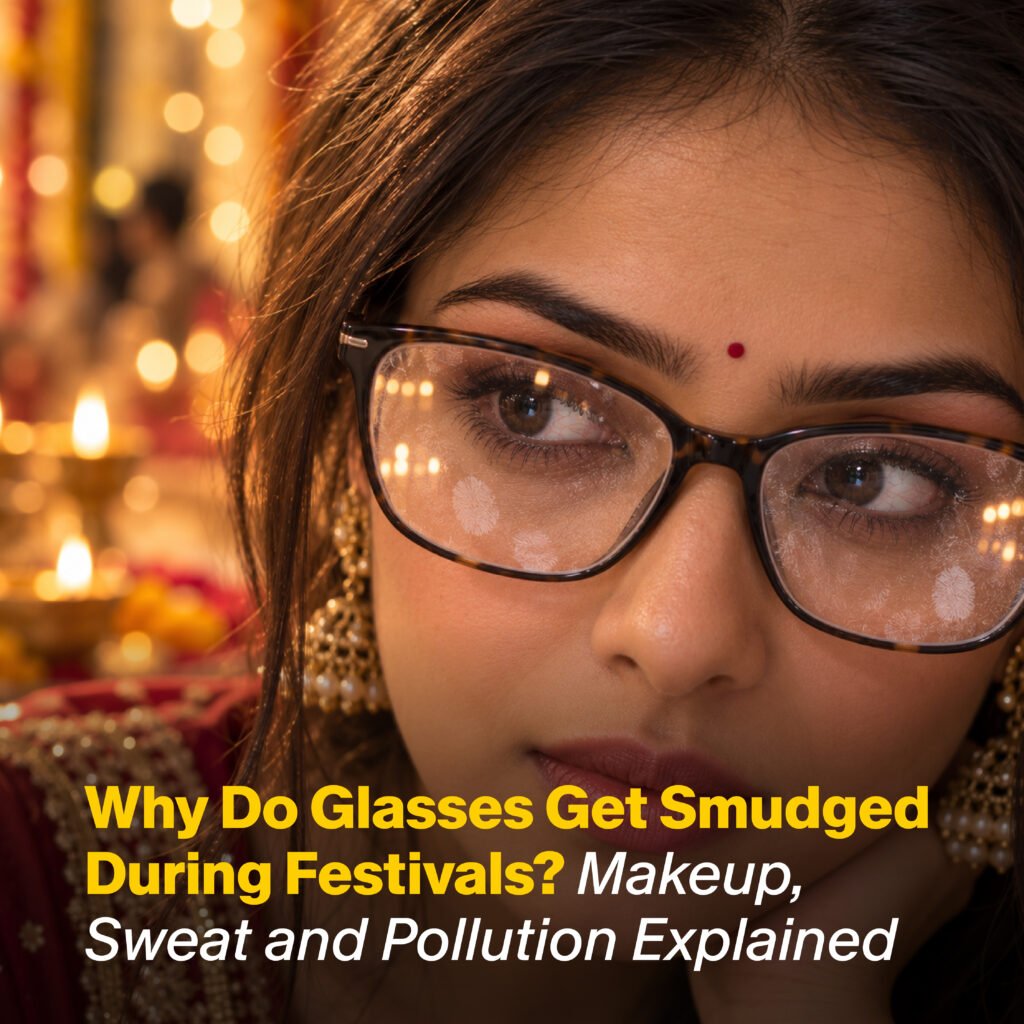
Introduction Festival season is wonderful for everything except your glasses. Between the foundation that transfers from your nose bridge, the kajal that somehow migrates upward, the sweat from hours of dancing, the smoke from diyas and fireworks, and the repeated adjustments you make to your frames throughout the day, your lenses take an extraordinary amount of abuse in a very short time. By mid-event, what started as perfectly clear lenses have turned into a smudged, hazy surface that you are constantly trying to wipe clean with whatever is nearest. Which, unfortunately, usually makes things worse. Understanding why festival conditions are particularly hard on glasses lenses helps you manage the problem properly rather than creating new problems while trying to solve the existing one. Why Do Glasses Get Smudged So Easily? Why do my glasses get smudged so quickly during events? Under normal daily conditions, the primary sources of lens smudging are skin oils from your nose bridge and fingerprints from adjusting the frames. During festivals, you add several additional contamination sources simultaneously. Makeup Transfer is one of the most significant contributors. Foundation, BB cream, and face primer applied to the nose and cheeks make direct contact with the nose pads and the section of the frame that rests against your face. From there, these products transfer to the frame and eventually to the lens edge and surface. Heavy eye makeup including kajal, eyeshadow pigment, and mascara particles migrate throughout the day. Sweat accelerates this migration by providing a liquid medium through which cosmetic products travel from the skin surface to the lens. Sweat and Humidity during dancing, outdoor events, and the general warmth of festive gatherings create a thin film of moisture on the skin that carries skin oils, makeup, and environmental particles toward the lens surface. In humid conditions, this film accumulates faster and transfers more readily to the lens than in dry conditions. Pollution and Fireworks Particles settle on lens surfaces continuously during outdoor exposure. Fine particulate matter from fireworks smoke, dust from outdoor venues, and general urban pollution all add to the smudge load on lenses during festival periods. Frequent Handling is the factor that compounds all of the above. Every time you push your glasses up your nose, adjust the temples, or remove and reinsert them, you transfer whatever is on your fingertips to the frame and lens. During a long festival event, this happens dozens of times. Can Makeup and Sweat Damage Your Glass Lenses? Makeup itself does not directly damage lens coatings in the way that harsh chemicals do. The damage comes from what people do when trying to remove makeup from their lenses, and from the repeated friction of wiping that occurs when lenses get smudged repeatedly throughout an event. When lenses are smudged with a combination of foundation, kajal, and sweat, the natural response is to grab the nearest material and wipe. During a festival, this usually means a dupatta, a tissue, a paper napkin from the catering table, or a regular cloth. Each of these materials is abrasive at a microscopic level. The fine scratches they create are individually invisible but collectively produce the haze that develops on lenses over months of incorrect cleaning. Sweat presents a specific chemical concern for lens coatings. Human sweat is slightly acidic, with a pH typically between 4.5 and 7.5. Repeated contact of sweat with anti-reflective coatings, particularly when followed by wiping before the sweat has been rinsed away, creates a mild chemical exposure that compounds over time. Anti-reflective coatings that are repeatedly exposed to sweat and then wiped with abrasive materials degrade faster than those maintained with proper cleaning. Why the Right Cleaning Method Matters Even More at Events The importance of using proper cleaning tools and products becomes even more pronounced during festival conditions because the smudging is more frequent, the contamination is more varied, and the temptation to reach for whatever is nearby is at its highest. Each incorrect wipe during an event is a scratch. Each scratch accumulates toward permanent coating damage that cannot be reversed. What Is the Best Way to Clean Smudged Glasses? The correct method is the same as it is at home, applied with the right tools that you need to carry with you. Step One: Remove Loose Particles Before Wiping Before any cloth contacts your lens, remove loose particles by gently blowing on both sides of the lens. During festival conditions where dust, fireworks particles, and makeup residue are present, this step is especially important. Wiping a lens that has fine particles sitting on it drags those particles across the coating surface under pressure. If water is available and you are near a clean sink, a brief rinse under lukewarm water before wiping is even better for removing loose abrasive particles. Step Two: Apply a Proper Glasses Cleaning Spray Apply two to three sprays of a dedicated glasses cleaner spray to both sides of the lens. A proper glasses cleaning spray is pH-balanced and formulated to be safe for anti-reflective, UV, and blue-light coatings. It contains mild surfactants that lift makeup residue, skin oils, and sweat from the lens surface without interacting chemically with the coatings beneath. This is where the cleaning method matters most. Household products that might be nearby at a festival venue such as hand sanitiser, wet wipes, multi-surface sprays, or perfume should never be used on spectacle lenses. Hand sanitiser contains high-concentration alcohol that strips hydrophobic and anti-reflective coatings. Multi-surface sprays often contain ammonia. Even wet wipes not designed for optical surfaces can leave residue and cause coating damage. Step Three: Wipe with a Clean Microfiber Cloth Use a clean microfiber cloth for glasses to buff the lens gently in circular motions from the centre outward. The surfactants in the glasses cleaning spray have already loosened the smudge. The cloth’s job is to lift it away without scratching. The emphasis on clean is important. A microfiber cloth that has been loose in your bag throughout the event has picked up particles,
Why Do Your Eyes Feel Dry After a Full Day of Screens, AC and Contact Lenses?
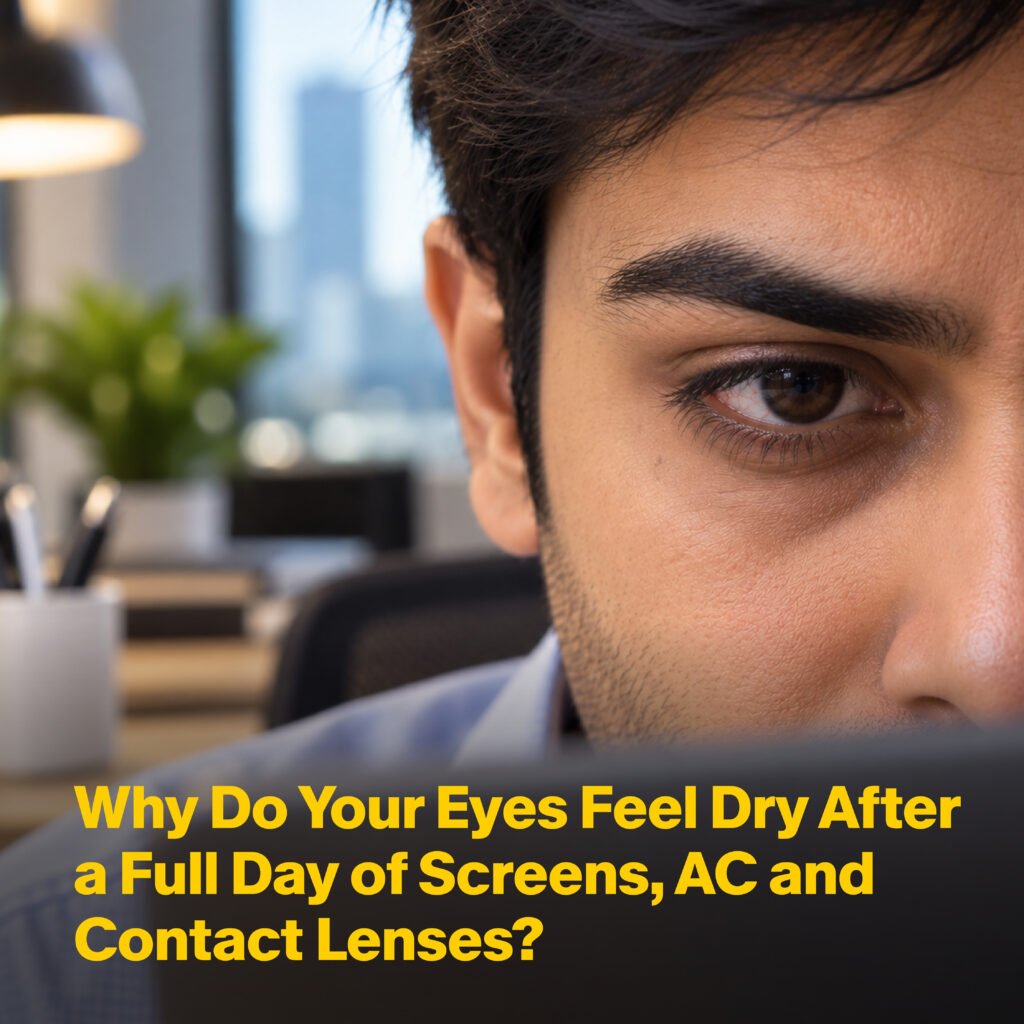
Introduction You start the morning with comfortable lenses and clear vision. By mid-afternoon, your eyes feel gritty, heavy, and dry in a way that gets progressively worse with every hour you sit in front of your screen. By evening, you are blinking rapidly trying to generate some moisture, and the moment you take your lenses out, there is a relief so immediate that it tells you something has been wrong for hours. This experience is increasingly common, and it is not a coincidence that it clusters around the combination of screen use, air conditioning, and contact lens wear. Each of these factors affects the eye independently. Together, they create a compounding effect on tear film stability that makes dryness and discomfort almost inevitable without the right habits in place. Why Do Screens and AC Make Your Eyes Feel Dry? Why do my eyes feel dry after using screens? The answer begins with blinking. A healthy blink rate is approximately 15 to 20 blinks per minute. During screen use, this drops to as few as 5 to 7 blinks per minute, sometimes even less during intense focus on a task or content that holds attention strongly. Blinking is not just a reflex. It is the mechanism by which the tear film is renewed and distributed across the ocular surface. Each complete blink spreads a fresh layer of tears over the cornea, replenishing the lipid layer that prevents evaporation and clearing any debris from the surface. When blink rate halves, the tear film has twice as long to evaporate between renewals. The result is a progressively thinner, less stable tear film that leaves the corneal surface increasingly exposed. Does AC make contact lenses uncomfortable? Air conditioning significantly reduces ambient humidity by removing moisture from the air as part of the cooling process. In most Indian offices and homes running AC at typical summer settings, indoor relative humidity can drop to 30 to 40 percent, well below the 50 to 60 percent range that is comfortable for the ocular surface. In low-humidity air, tear film evaporation accelerates substantially. The tear film that takes a certain amount of time to evaporate in normal humidity evaporates significantly faster in the dry air of an air-conditioned room. For someone sitting still in front of a screen, blinking less frequently than they should be, in a room with AC running, this combination removes moisture from the ocular surface faster than the lacrimal system can replenish it. The Position Near AC Vents Matters If your desk, sofa, or sleeping position is directly in the airflow path from an AC unit or ceiling vent, the directed airflow across your face dramatically accelerates tear film evaporation. Moving out of direct airflow is one of the simplest and most immediately effective changes a dry-eye-prone contact lens wearer can make to their environment. Can Contact Lenses Make Screen-Related Dryness Worse? Can I wear contact lenses when my eyes are dry? You can, but a lens sitting on an already compromised tear film experiences and contributes to dryness differently than a lens on a healthy tear film. Contact lenses interact with the tear film by sitting within it. The tear film effectively splits into two layers when a lens is present, one in front of the lens and one behind it. The pre-lens tear film is thinner than the normal tear film and evaporates faster, particularly when blinking is reduced during screen use. The lens material itself also absorbs water from the surrounding tear film as part of maintaining its own hydration. This is particularly relevant for higher water content hydrogel lenses, which continuously draw moisture from the tear film to maintain their structural integrity. In conditions where the tear film is already thin due to reduced blinking and AC-driven evaporation, this additional demand on available moisture accelerates the drying of both the lens and the eye surface simultaneously. Dry eye symptoms to watch for during screen and AC exposure The progression of dry eye symptoms during a screen-heavy day in AC follows a recognisable pattern. Early signs include a subtle awareness of the lens that was not there in the morning. This progresses to a sandy or gritty feeling that worsens with each hour. By late afternoon, blurry vision that temporarily clears with blinking, redness, and a burning sensation are common. At this stage, the tear film is breaking down faster than it can be replenished. Recognising this progression early is important because acting at the early stage, taking a break, blinking deliberately, using appropriate lubricating drops, is far more effective than waiting until the burning and redness stage before doing anything. How Can You Keep Your Eyes Comfortable During the Day? How can I prevent dry eyes while wearing contacts during screen work? The most effective approach combines environmental adjustments, deliberate habit changes, and appropriate use of lubricating products. None of these require significant time or expense. The 20-20-20 Rule and Deliberate Blinking Every 20 minutes, look at something 20 feet away for 20 seconds. During this 20-second break, blink slowly and deliberately five to ten times. This combination gives your focusing muscles a brief rest and, more importantly for lens wearers, allows several complete blinks to renew the tear film and redistribute moisture across the lens surface. This single habit, applied consistently throughout the workday, meaningfully reduces the cumulative tear film deficit that produces severe end-of-day dryness. It requires no products and costs nothing. The difficulty is remembering to do it consistently, which is where phone reminders or dedicated apps can help establish the habit initially. Stay Hydrated Your tear production depends on your systemic hydration status. Mild dehydration, which many desk workers experience simply by not drinking enough water throughout the day, reduces tear volume. Keeping a water bottle at your desk and maintaining consistent fluid intake throughout the day is a genuinely useful intervention for dry eye symptoms, not just general wellness advice. Adjust Your Screen Position Looking down at a screen slightly, rather than straight ahead
Can Smoke, Fireworks and Air Pollution Affect Contact Lens Wearers?
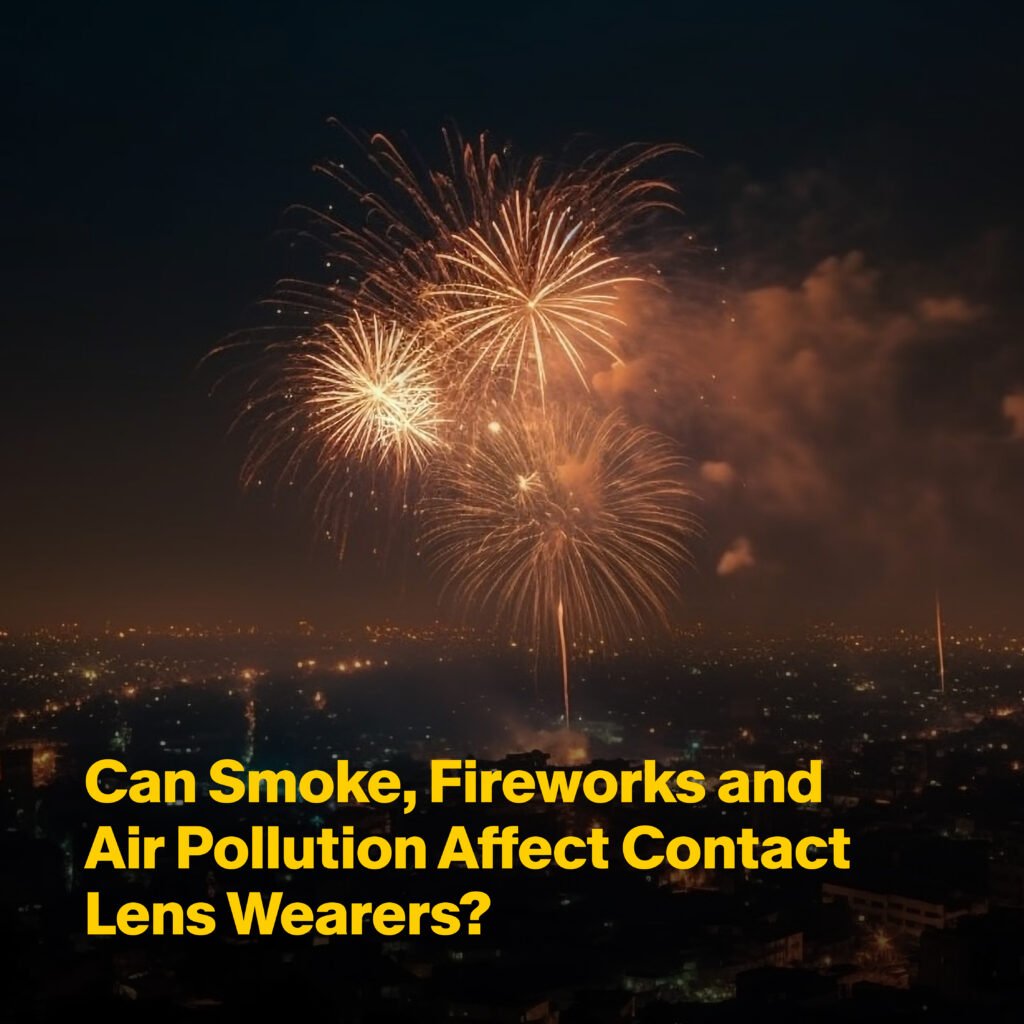
Introduction Diwali, New Year celebrations, weddings with fireworks displays, and the general air quality that comes with Indian festive seasons create a unique set of challenges for contact lens wearers. The air during these periods carries significantly higher concentrations of smoke particles, chemical compounds from fireworks, and general pollution than any ordinary day. Your eyes notice the difference. Your contact lenses notice it even more. Understanding what is actually happening to your lenses and your eyes during high-pollution festive periods helps you take the right protective steps before symptoms develop rather than after your eyes are already burning. How Can Smoke and Pollution Affect Contact Lens Wearers? Does smoke make contact lenses uncomfortable? Yes, and the mechanism is direct. Airborne smoke particles are fine enough to remain suspended in the air for extended periods and small enough to penetrate through gaps around the edges of your lenses onto the lens surface itself. Once there, they sit between the lens and the tear film, causing physical irritation with every blink. Smoke also carries chemical compounds that dissolve into the tear film and alter its composition. This disrupts the lipid layer of the tear film, the outermost component responsible for preventing evaporation. When this layer is compromised, tear evaporation accelerates significantly, creating the dry, gritty feeling that lens wearers in polluted environments commonly experience. Can air pollution cause dry eyes while wearing contacts? Yes. Particulate matter in polluted air settles on the lens surface continuously during outdoor exposure. Unlike the natural tear proteins and lipids that deposit on lenses during normal wear, pollution particles are often chemically reactive. They interact with the lens material and the tear film in ways that compound dryness and irritation beyond what ordinary deposit accumulation produces. Contact lens wearers in high-pollution urban environments consistently report greater end-of-day dryness and discomfort than non-lens wearers in the same conditions. The lens surface acts as a collector for airborne particles, concentrating their effect on the ocular surface rather than allowing them to be distributed across the larger eye area. Why Festive Periods Are Particularly Challenging During Diwali and similar festivals, air quality in most Indian cities drops dramatically. Fireworks produce fine particulate matter, sulphur dioxide, nitrogen dioxide, and various metallic compounds from the chemical compositions that produce different colours. These are present in concentrations significantly higher than normal urban pollution levels. Lens wearers who are outdoors during these periods are exposing their lenses to a chemical and particulate environment that is more aggressive than what a standard daily cleaning routine is designed to handle. Can Fireworks Affect Your Contact Lenses? Can I wear contact lenses around fireworks? You can be present around fireworks while wearing contact lenses, but direct proximity to fireworks smoke and discharge should be avoided. The fine particles and chemical compounds produced by fireworks are among the more aggressive airborne contaminants for contact lens wearers, combining physical particulates with chemically reactive compounds in concentrations that exceed normal pollution exposure. What Fireworks Smoke Actually Contains The brilliant colours of fireworks come from metallic salts. Reds from strontium compounds. Greens from barium. Blues from copper. Whites from magnesium or aluminium. When these compounds combust, they produce fine particles of metal oxides and sulphates alongside smoke and carbon particles. In the air immediately around fireworks displays, these are present in high concentrations. When this mixture reaches your lens surface, which it will if you are within the smoke plume, you have chemically reactive metal compounds sitting on a surface that rests directly on your cornea. The irritation this causes is not the same as ordinary dust exposure. It is a chemical irritation layered on top of physical particle irritation. Protective Eyewear as a Practical Option For lens wearers who want to watch fireworks up close, wearing spectacles over contact lenses or switching to glasses entirely for the fireworks portion of the evening provides a physical barrier that meaningfully reduces particle and smoke exposure to the eye area. This is not overcaution. It is a practical step that protects both your eyes and your lenses. How Can You Protect Your Eyes While Wearing Contact Lenses? 1. Limit Direct Smoke Exposure Position yourself upwind from fireworks displays and bonfire-type celebrations where possible. Moving to a position where smoke is blowing away from rather than toward you significantly reduces the particle load reaching your lenses. Even a short repositioning makes a meaningful difference during extended outdoor events. 2. Keep the Lens Wear Period as Short as Practical On days with known high pollution or planned fireworks exposure, minimising total lens wear time reduces cumulative exposure. If your day allows it, wear glasses during the highest pollution periods, typically the evening hours of major fireworks events, and reserve lens wear for the portions of the day where air quality is better. 3. Use Fresh Multipurpose Contact Lens Solution After Any Smoke Exposure If you have been in a smoky or heavily polluted environment while wearing lenses, cleaning thoroughly with fresh contact lens cleaning solution when you return indoors removes the accumulated particles and chemical residue from the lens surface. Do not wait until bedtime if you experienced significant exposure. Clean as soon as practical after returning to a clean environment. 4. Blink Deliberately and Frequently During outdoor exposure to smoke and pollution, the natural response is to blink less due to irritation, which actually worsens the situation by slowing the natural flushing action of the tear film. Deliberately blinking fully and frequently helps distribute fresh tears across the lens surface and provides some mechanical flushing of surface particles. 5. Rinse Your Eyes If Necessary If significant irritation develops and you have lens-compatible sterile saline available, a gentle eye rinse after lens removal can help clear accumulated particles from the ocular surface. This is a support measure, not a replacement for removing the lens if it is causing discomfort. What Should You Do If Your Eyes Become Irritated? Should I remove my lenses if my eyes start burning? Yes, and without delay. Burning, stinging,
Wedding Season Contact Lens Care: How to Keep Your Lenses Comfortable From Day to Night
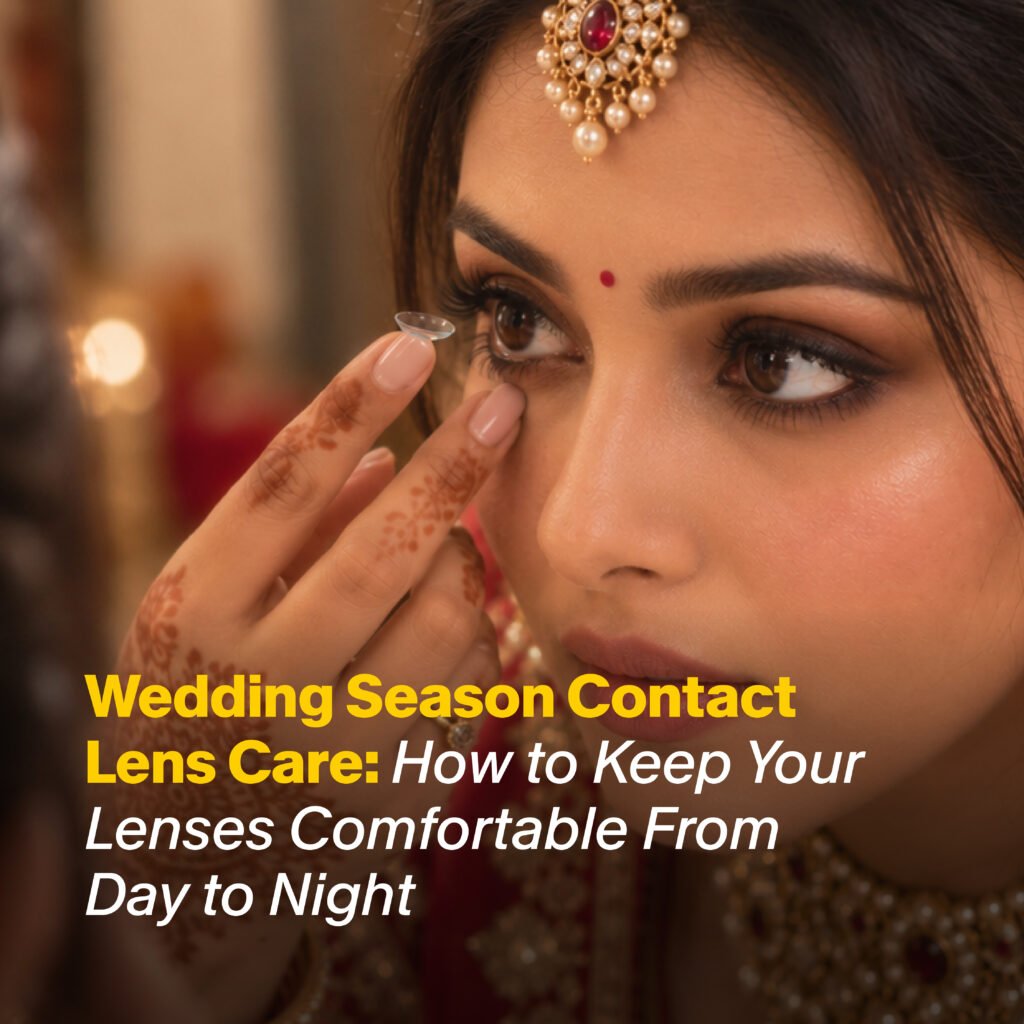
Introduction Wedding season in India is an experience unlike anything else. Mehendi ceremonies, sangeet nights, the main wedding, receptions that stretch well past midnight. Each event involves elaborate outfits, dramatic makeup, air-conditioned banquet halls, outdoor mandaps under warm lighting, and hours of dancing, photographing, and celebrating. For contact lens wearers, this combination creates a set of challenges that a regular working day simply does not. Extended wear hours. Heavy eye makeup. Fluctuating humidity between outdoor and indoor environments. Fatigue. And the kind of schedule where your lens case and solution are the last things on your mind. Getting your lens care right during the wedding season means arriving at every event with comfortable, clear vision and ending every night without compromising your eye health. How Long Can You Comfortably Wear Contact Lenses at a Wedding? How long can I wear contact lenses at a wedding? The recommended daily wear limit for most soft contact lenses is 12 to 14 hours. Wedding events routinely push well beyond this, particularly when you are getting ready early in the morning for an event that ends at midnight or later. This matters because the longer a lens is on your eye, the more deposits accumulate on its surface, the more the tear film is disrupted, and the more oxygen-deprived the cornea becomes. By hour ten, lenses that felt comfortable in the morning are noticeably less so. By hour fourteen or fifteen, the discomfort is real and the risk of irritation increases meaningfully. Factors That Accelerate Discomfort at Wedding Events Air conditioning in banquet halls and hotels significantly reduces ambient humidity. Lower humidity accelerates tear film evaporation, which dries out lens surfaces faster than they would in a normal environment. You may find lenses feel dry much earlier than usual at an indoor event with heavy AC. Heavy eye makeup adds a cosmetic particle load to the lens surface and disrupts the lipid layer of the tear film. This combination accelerates dryness and the gritty feeling that comes with lens surface contamination. Heat and outdoor conditions during daytime events, particularly at outdoor mandaps or garden venues, increase perspiration and exposure to dust and pollen. Both add to the deposit burden on your lenses throughout the day. Emotional tearing, which is genuinely part of weddings, is not a problem for lens wearers per se, but heavy tearing followed by wiping eyes with hands or handkerchiefs introduces bacteria and cosmetic residue to the eye area. How Can You Keep Contact Lenses Comfortable Throughout the Day? How do I keep my eyes comfortable while wearing lenses during a long event? Managing lens comfort across a long wedding day requires a combination of preparation before the event and simple habits during it. Insert Lenses Before Makeup, Always This rule becomes even more important at weddings where the makeup is more elaborate than usual. Foundation, kajal, dramatic eye liner, layers of eyeshadow, and setting spray are all standard at wedding events. Each of these products creates a contamination risk for your lenses if they are present on your hands or around your eye area during insertion. Put your lenses in before sitting in the makeup chair. Clean, product-free hands, clean ocular surface, lens inserted correctly. Then let the makeup artist do their work. Carry Fresh Multipurpose Contact Lens Solution This is the preparation step most lens wearers skip. A small travel bottle of multipurpose contact lens solution in your bag gives you options throughout the day that you simply do not have without it. If a lens feels uncomfortable mid-event, you can step away, remove it, clean it briefly with fresh solution using the rub and rinse method, and reinsert. Without solution, your only option is to remove the lens and go without it for the remainder of the event. Avoid Touching Your Eyes and Lenses During the Event At a wedding, your hands are shaking hands, touching food, holding drinks, and handling a phone continuously. None of these are clean enough surfaces to then touch your eye or adjust your lens. The more you touch the eye area during an event, the more bacteria and particles you introduce to the lens surface and the more your makeup migrates. If you feel an urge to adjust a lens, find a bathroom first, wash your hands thoroughly, and then address the lens properly. A quick touch with an unwashed hand is never a safe option. Blink Deliberately and Take Screen Breaks Phones at weddings. Everyone is photographing everything constantly, and screen use significantly reduces blink rate. Deliberate blinking, closing your eyes fully several times in a row, redistributes the tear film across the lens surface and provides temporary but real comfort relief. Do this regularly throughout the event, particularly during the quieter moments. What Contact Lens Mistakes Should You Avoid at Weddings? Can I wear contact lenses all day at a wedding? You can, but the extended hours require more attention to comfort and hygiene than a regular workday. The mistakes that wearers make during long events are almost always avoidable with a little preparation. Wearing Lenses Beyond Your Personal Comfort Limit The 12 to 14-hour guideline is a population average, not a universal rule. Some wearers find they are comfortable at 14 hours. Others find 10 hours is their limit before significant dryness sets in. Know your own limit before the event and plan accordingly. If your personal comfort limit is 10 hours and the wedding reception runs until 1am, consider removing your lenses during the reception and switching to glasses for the later part of the evening. This is a practical solution that most wearers do not consider because they feel it would affect their appearance. A pair of well-chosen frames is significantly more comfortable at 1am than lenses that have been in for 16 hours. Using Old or Topped-Off Solution On a wedding morning when everything is rushed, topping off the solution in your lens case from the previous night before putting the lenses in is a
Coloured Contact Lenses for Festivals: What About Hygiene, Cleaning and Storage?
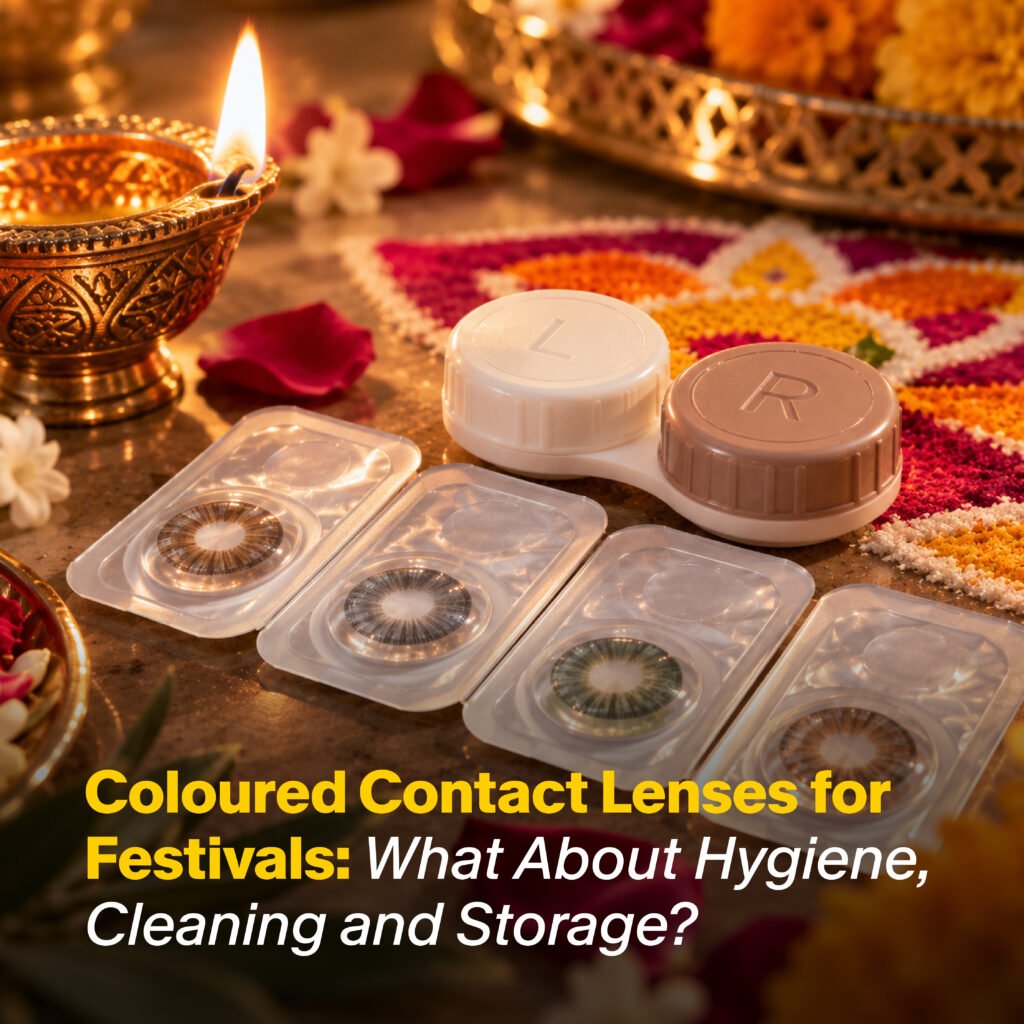
Introduction Festival season brings out coloured contact lenses like nothing else. Deep browns, honey hazels, striking greys, vivid greens, even dramatic costume lenses for themed events. For a few hours, they can completely transform how you look. And for those same few hours, they sit directly on your cornea, the most sensitive surface on your body. The problem is that most people who wear coloured lenses for special occasions treat them as a costume accessory rather than a medical device. They skip cleaning. They share lenses with friends. They sleep in them because the evening ran late. They store them in water when they forget to bring a solution. Every one of these habits carries the same risks whether the lens is a prescription lens or a purely cosmetic coloured one. The eye does not distinguish. Are Coloured Contact Lenses Safe to Wear for Festivals? The short answer Yes, when they are sourced correctly and cared for properly. No, when they are purchased from unregulated sources, shared between wearers, or used without basic hygiene practices. Why sourcing matters before hygiene even begins? Can I wear coloured contact lenses for a festival? You can, but the lens must come from a reputable optical or licensed retailer, ideally with a prescription or at minimum a professional fitting consultation. Coloured contact lenses sold at costume shops, market stalls, or through unverified online retailers are frequently manufactured without the quality controls applied to licensed contact lenses. Lenses from unregulated sources may use pigments that leach from the lens material into the tear film. They may not be manufactured to the oxygen permeability standards that protect corneal health. They may be mislabelled in terms of base curve and diameter, meaning they do not fit correctly and cause mechanical damage to the corneal surface during wear. A lens that fits correctly, is made from appropriate materials, and comes with proper care instructions is the starting point for safe festival wear. Everything after that depends on hygiene. Why hygiene matters even for short occasional wear? Many people assume that wearing coloured lenses for a few hours at an event is low risk compared to daily prescription lens wear. This assumption is incorrect. Infection risk from contact lens wear is not purely a function of total wear time. It is a function of lens cleanliness, fit, and the conditions of wear. A contaminated lens worn for four hours at a festival carries exactly the same infection risk as a contaminated lens worn for twelve hours on a regular day. The pathogens on that lens surface are just as capable of causing harm regardless of how festive the occasion. How Should You Clean Coloured Contact Lenses? How do I clean coloured contact lenses correctly? The cleaning process for coloured lenses is identical to that for clear prescription lenses. There is no shortcut that is appropriate simply because the lenses are worn less frequently. The Rub and Rinse Method Place the lens in your clean, dry palm. Apply several drops of fresh multipurpose contact lens solution. Using the pad of your index or ring finger, rub the lens gently for ten to fifteen seconds on each side. This physical action removes protein, lipid, and any cosmetic deposits accumulated during wear. Rinse the lens thoroughly with fresh solution after rubbing. The rinsing step flushes away the loosened deposits and any residual solution from the cleaning step. Do not skip the rinse. Can I use regular contact lens solution for coloured lenses? Yes. A quality multipurpose contact lens solution is appropriate for coloured contact lenses of the same material types used for standard soft lenses. The cleaning and disinfecting chemistry works the same way regardless of whether the lens is clear or pigmented. What you should not use is water of any kind, saline without disinfecting agents, or homemade cleaning solutions. These do not disinfect the lens and in the case of water introduce the risk of Acanthamoeba contamination, one of the most serious contact lens infections and one that is associated specifically with water contact during lens wear or storage. Cleaning After Festival Makeup Festival events typically involve more elaborate eye makeup than everyday wear. Kajal, dramatic liners, heavy eyeshadow, and face paint all increase the cosmetic particle load on the lens surface. On festival days, cleaning needs to be more deliberate than usual. Apply the rub and rinse method thoroughly on both sides, paying attention to the entire lens surface rather than a quick central rub. Festival makeup residue is more stubborn than everyday tear deposits and requires the full physical cleaning action to remove properly. Multisol+ by Gaymed Labs Multisol+ is a multipurpose contact lens solution from Gaymed Labs formulated to clean, rinse, disinfect, and store soft contact lenses including coloured lenses. With effective disinfecting agents and surfactants designed to remove deposits thoroughly, it supports the complete lens care that festival wear demands. Manufactured in a GMP and ISO 13485-certified facility with over 30 years of optical care expertise. How Should You Store Coloured Contact Lenses? How should I store coloured contact lenses between uses? Proper storage is where coloured lens hygiene most commonly breaks down, particularly when lenses are worn only occasionally for events rather than daily. Use a Clean Lens Case With Fresh Solution Every Time Place cleaned lenses in a lens case that has been emptied, rinsed with fresh solution, and air dried since its last use. Fill each well completely with fresh multipurpose contact lens solution. The lens must be fully submerged. Never top off old solution. Solution that has been sitting in the case since the last time the lenses were worn, whether that was last week or last month, has depleted disinfecting agents that cannot be restored by adding a small amount of fresh solution. Empty completely and refill entirely every time. The Problem With Infrequent Use Coloured lenses worn only for special occasions are stored for extended periods between uses. This creates a specific challenge that daily lens wearers do not
Can You Wear Contact Lenses With Eye Makeup? 7 Things to Know Before the Festive Season
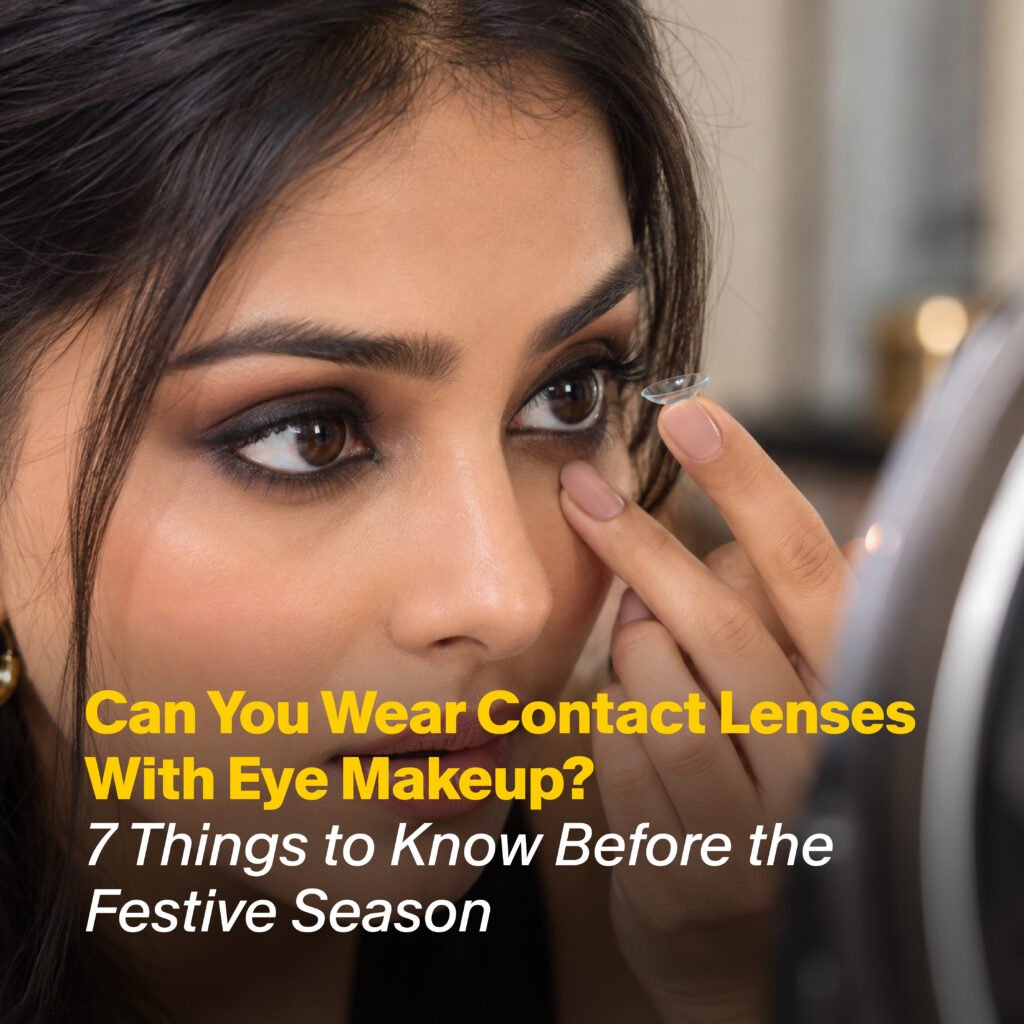
Introduction Festive season means longer days, late nights, and significantly more elaborate eye makeup than your average Tuesday. Kajal, eyeliner, eyeshadow, mascara, sometimes all of them together. If you wear contact lenses, this combination raises practical questions that most wearers figure out by trial and error, often at the cost of uncomfortable eyes or a ruined evening. The good news is that wearing contact lenses and eye makeup together is entirely manageable. You just need to know the rules before you start, not after your kajal has migrated onto your lens surface and your eyes are watering through a function. Here are seven things every lens wearer should know before the festive season begins. 1. Always Put Your Lenses in Before Applying Makeup Should I put contact lenses in before or after makeup? Lenses go in first, every single time. This is the foundational rule of combining contact lenses and eye makeup, and it is the one most frequently reversed. When you insert lenses before makeup, your hands are clean, your eye area is product-free, and the lens goes onto a clean ocular surface. When you insert lenses after applying mascara, eyeliner, or eyeshadow, you introduce whatever is on your fingertips and around your eye area directly to the lens surface. Even if you washed your hands after applying makeup, residual product around the eye transfers to the lens during insertion. Starting with clean lenses on a makeup-free eye area is the single most effective step for keeping your lenses comfortable throughout the day. 2. Makeup Particles Contaminate Lenses More Than You Realise Can makeup damage contact lenses? Yes, in ways that go beyond simple discomfort. Makeup particles that reach the lens surface create a film that is distinct from ordinary protein and lipid deposits. Cosmetic formulations contain oils, waxes, pigments, and in the case of glitter or shimmer products, fine physical particles that sit on the lens surface and interact poorly with the tear film. These particles change how the lens feels against the eye and how light passes through it. They also accelerate deposit accumulation because the cosmetic residue provides additional surfaces for proteins and lipids to adhere to. A lens that might normally remain comfortable for 12 to 14 hours may become uncomfortable several hours earlier on a heavy makeup day. Eyeliner applied to the waterline is particularly problematic. The waterline sits directly adjacent to the tear film, and anything applied there has a direct route onto the lens surface. Kajal and kohl products applied along the inner rim of the eyelid transfer to the tear film within minutes of application and from there to the lens. 3. Waterproof Makeup Requires Extra Caution Can I wear waterproof makeup with contact lenses? You can, but with awareness of the specific challenges it creates. Waterproof formulations are designed to be resistant to moisture, which is what makes them effective for long events or humid weather. This same property makes them more difficult to remove thoroughly at the end of the day. Waterproof mascara and eyeliner that reach the lens surface are harder to lift off during cleaning than standard formulations. They require more thorough cleaning with fresh contact lens solution and the rub and rinse method applied carefully to both sides of the lens. Waterproof makeup remover products often contain oils that help dissolve the formulation. These oil-based removers should not contact your lenses. Remove your lenses before using any oil-based makeup remover, and clean your eye area thoroughly before reinserting lenses if required. How Does Eye Makeup Affect Contact Lenses? Common Issues That Develop During Makeup Wear Dryness and reduced comfort. Cosmetic particles in the tear film disrupt its lipid layer, the outermost component that controls evaporation. This accelerates tear film breakdown and makes lenses feel dry earlier in the wearing period than usual. Blurred vision. Mascara or eyeliner particles on the lens surface create localised disruptions to optical clarity. This produces a smeared or hazy visual quality that cannot be blinked clear and does not resolve until the lens is removed and cleaned. Deposits that resist standard cleaning. Cosmetic residue bonds differently to lens surfaces than protein and lipid deposits from tears. Some formulations, particularly long-wear products, require more thorough cleaning to remove fully. Irritation and redness. Cosmetic particles that reach the space between the lens and the cornea cause physical irritation. The eye responds with redness, tearing, and discomfort that worsens with continued wear. 4. Choose Makeup Formulations That Are Lens-Friendly Not all eye makeup is equally problematic for contact lens wearers. A few formulation choices make a meaningful difference to lens comfort throughout the day. Avoid heavily pigmented or glittery eyeshadows for extended lens-wearing events. Fine pigment and glitter particles are particularly likely to migrate and reach the lens surface. Water-based formulations are generally less problematic than oil-based ones because they do not disrupt the lipid layer of the tear film as aggressively. Avoid applying eyeliner to the waterline if you are wearing contact lenses. This is the most direct route for product to reach your tear film and lens surface. Applying liner above or below the lash line rather than on the inner rim reduces this risk significantly. Choose mascaras that do not flake. Flaking mascara is a significant source of lens contamination throughout the day, releasing particles each time you blink. 5. Your Lens Care Routine Needs to Be More Thorough on Makeup Days How should I clean lenses after wearing makeup? Standard lens cleaning is necessary every day. On makeup days, it needs to be more deliberate. Use the full rub and rinse method with fresh multipurpose contact lens solution, not a shortened soaking-only approach. Apply several drops of fresh solution to the lens in your palm and rub gently for fifteen seconds on each side. This physical action is essential for removing cosmetic residue that soaking alone does not lift. Rinse thoroughly with fresh solution before placing the lens in the case. Fill the case with completely fresh solution for
What to Look for When Choosing an OEM Contact Lens Solution Manufacturer
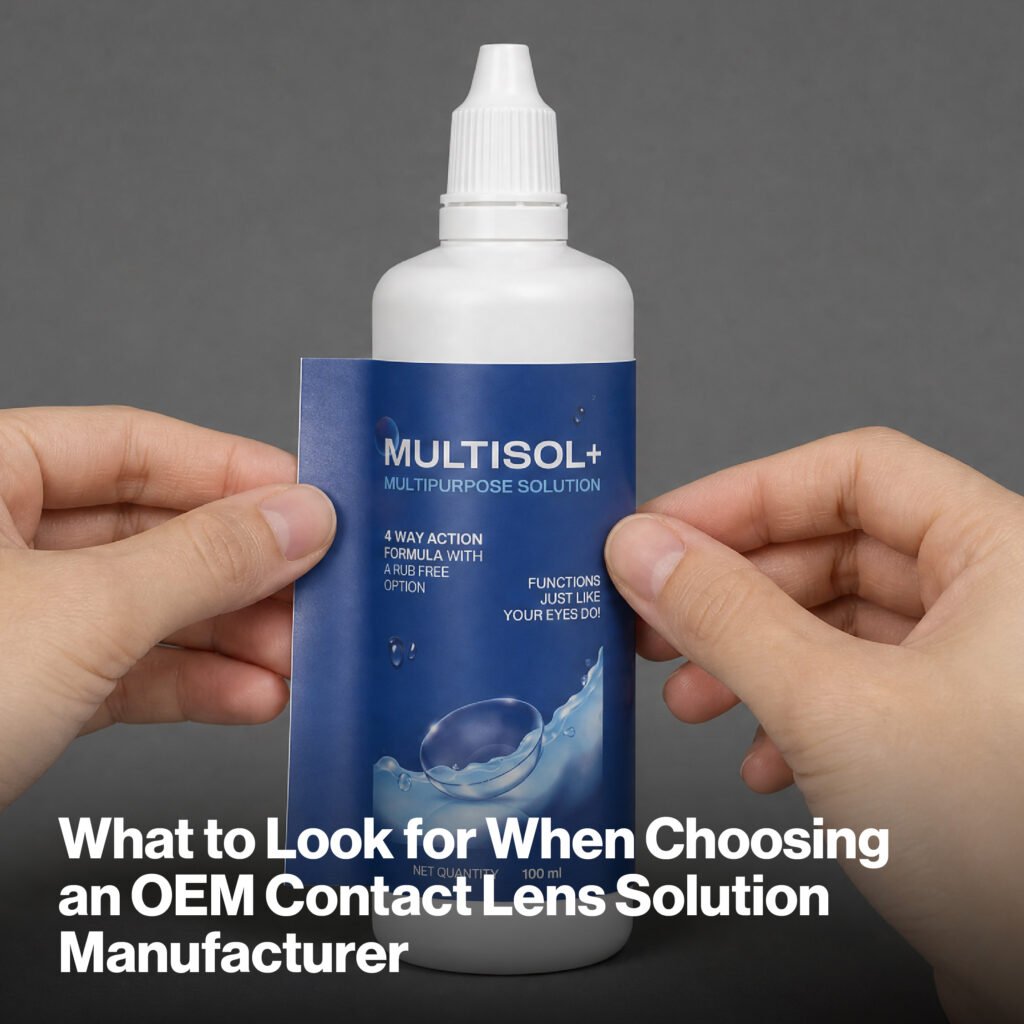
Introduction Bringing a contact lens solution to market under your own brand is a significant business decision. The formulation, the manufacturing quality, the regulatory compliance, and the consistency of every batch that leaves the factory all reflect directly on your brand and on the safety of the end user. Choosing the wrong manufacturing partner can mean inconsistent product quality, regulatory non-compliance, batch failures, or in the worst case, a product that harms the people who use it. Choosing the right one gives you a foundation of technical expertise, quality infrastructure, and manufacturing reliability that your brand can build on confidently. This guide walks through exactly what to evaluate when selecting an OEM contact lens solution manufacturer. Why Is Choosing the Right OEM Contact Lens Solution Manufacturer Important? How to choose OEM contact lens solution manufacturer: starting with the stakes Contact lens solutions are classified as medical devices in most regulatory frameworks. This is not a classification that applies to general consumer cleaning products. It exists because the product is applied directly to the cornea, one of the most sensitive and infection-vulnerable surfaces in the human body. This classification means that every decision made during manufacturing, from ingredient sourcing through filling and packaging, carries a level of consequence that does not apply to ordinary product categories. A batch with inadequate disinfection does not just disappoint customers. It exposes them to a genuine risk of serious eye infection. A product with incorrect pH does not just reduce comfort. It can cause chemical irritation to corneal tissue. Brand reputation follows product quality For a brand, the quality of the product is the quality of the brand in the eyes of the customer. A well-formulated, consistently manufactured contact lens solution builds trust and repeat purchase behaviour. A product with quality issues generates returns, complaints, and reputational damage that is far more expensive to recover from than the investment in a quality manufacturing partner from the start. The right OEM contact lens solution manufacturer is not simply a production vendor. It is a technical and quality partner whose standards become your standards in every bottle that carries your brand name. What Experience Should an OEM Contact Lens Solution Manufacturer Have? Top contact lens solution contract manufacturers India: what experience actually means Experience in ophthalmic manufacturing is not interchangeable with experience in general pharmaceutical or cosmetic manufacturing. Contact lens solutions require specific expertise that combines ocular physiology knowledge, formulation chemistry for optical surfaces, lens material compatibility science, and sterile manufacturing capability. A manufacturer with deep experience in ophthalmic formulations understands how disinfecting agents interact with different soft and RGP lens materials. They understand why pH calibration within a narrow range matters for both comfort and lens dimensional stability. They have developed and validated formulations across different product categories and have the test data and regulatory documentation to support them. Technical and Research Capabilities The ability to develop a customised formulation, not just fill a generic product into a branded bottle, requires investment in formulation chemistry expertise and laboratory infrastructure. When evaluating a manufacturer, ask specifically about their formulation development capabilities. Can they develop a new formula to meet specific performance requirements? Do they have the analytical chemistry capability to characterise formulations and verify ingredient concentrations? Have they developed formulations that have gone through full stability and efficacy validation? Understanding Different Lens Materials Contact lens materials vary significantly in their surface chemistry and their interaction with cleaning agents, preservatives, and conditioning compounds. A manufacturer with broad experience across lens types has the knowledge base to formulate products that perform appropriately across the range of lenses their clients’ customers may be using. Narrow experience limited to one or two lens material types limits the versatility of the products they can develop. What Quality Standards Should You Check Before Partnering With a Manufacturer? Requirements for private label contact lens solution manufacturing: the non-negotiables What certifications should a contact lens solution manufacturer have? Two certifications are the baseline standard for any serious contact lens solution manufacturer. ISO 13485 is the international quality management system standard specifically designed for medical device manufacturers. It covers the entire product lifecycle from design and development through production, distribution, and post-market surveillance. ISO 13485 certification requires regular audits by accredited certification bodies and demonstrates that the quality management system meets the requirements for consistent, controlled medical device production. GMP compliance, or Good Manufacturing Practice, is the regulatory framework that governs how pharmaceutical and medical device products are manufactured. GMP compliance covers facility design, equipment qualification, process validation, personnel training, documentation, and quality control. It is the operational standard that ensures what is supposed to be in the bottle is in the bottle, at the right concentration, in every batch. Additional certifications that indicate a higher level of manufacturing maturity include CE marking for European market access and regulatory approvals from national drug and medical device authorities relevant to the target markets. Sterile Manufacturing Environment Contact lens solutions must be manufactured in cleanroom environments that control airborne contamination to pharmaceutical standards. The sterile filtration and aseptic filling steps that establish product sterility require classified cleanrooms where air quality, personnel gowning, and material flow are all managed to prevent contamination. When evaluating a manufacturer, ask specifically about their cleanroom classification, their environmental monitoring programme, and how they demonstrate ongoing cleanroom performance. A manufacturer that cannot provide clear answers to these questions is not manufacturing to the standards that contact lens solutions require. Quality Control Infrastructure A credible OEM contact lens solution manufacturer has its own analytical testing laboratory capable of performing the key quality tests in-house. This includes microbiological testing for sterility and microbial count, analytical chemistry for ingredient identity and concentration verification, physicochemical testing for pH and osmolarity, and stability testing for shelf life validation. Dependence on external laboratories for all quality testing is not necessarily a disqualifier, but the manufacturer should have clear, documented procedures for sample management, testing timelines, and batch release decisions. What Customisation Options Should an OEM Manufacturer Provide? What to