
What to Look for When Choosing an OEM Contact Lens Solution Manufacturer
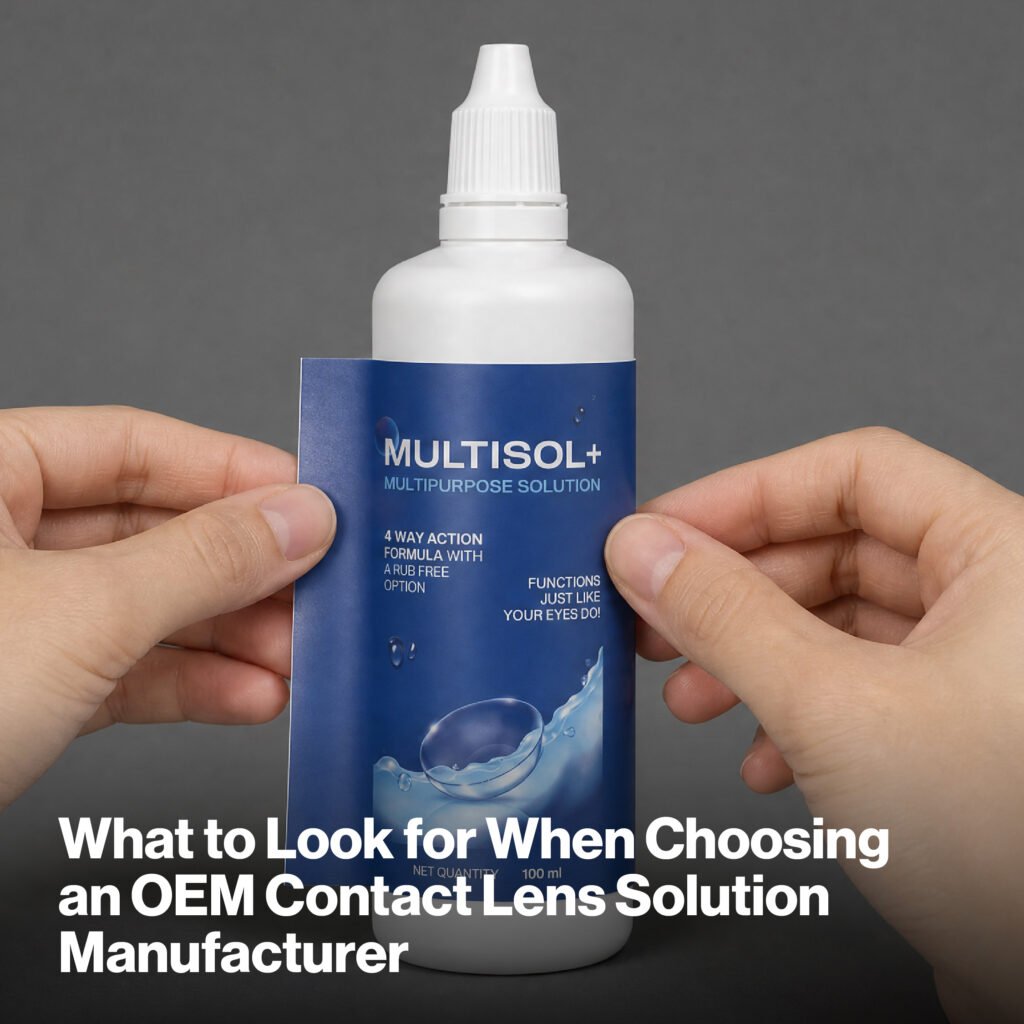
Introduction Bringing a contact lens solution to market under your own brand is a significant business decision. The formulation, the manufacturing quality, the regulatory compliance, and the consistency of every batch that leaves the factory all reflect directly on your brand and on the safety of the end user. Choosing the wrong manufacturing partner can mean inconsistent product quality, regulatory non-compliance, batch failures, or in the worst case, a product that harms the people who use it. Choosing the right one gives you a foundation of technical expertise, quality infrastructure, and manufacturing reliability that your brand can build on confidently. This guide walks through exactly what to evaluate when selecting an OEM contact lens solution manufacturer. Why Is Choosing the Right OEM Contact Lens Solution Manufacturer Important? How to choose OEM contact lens solution manufacturer: starting with the stakes Contact lens solutions are classified as medical devices in most regulatory frameworks. This is not a classification that applies to general consumer cleaning products. It exists because the product is applied directly to the cornea, one of the most sensitive and infection-vulnerable surfaces in the human body. This classification means that every decision made during manufacturing, from ingredient sourcing through filling and packaging, carries a level of consequence that does not apply to ordinary product categories. A batch with inadequate disinfection does not just disappoint customers. It exposes them to a genuine risk of serious eye infection. A product with incorrect pH does not just reduce comfort. It can cause chemical irritation to corneal tissue. Brand reputation follows product quality For a brand, the quality of the product is the quality of the brand in the eyes of the customer. A well-formulated, consistently manufactured contact lens solution builds trust and repeat purchase behaviour. A product with quality issues generates returns, complaints, and reputational damage that is far more expensive to recover from than the investment in a quality manufacturing partner from the start. The right OEM contact lens solution manufacturer is not simply a production vendor. It is a technical and quality partner whose standards become your standards in every bottle that carries your brand name. What Experience Should an OEM Contact Lens Solution Manufacturer Have? Top contact lens solution contract manufacturers India: what experience actually means Experience in ophthalmic manufacturing is not interchangeable with experience in general pharmaceutical or cosmetic manufacturing. Contact lens solutions require specific expertise that combines ocular physiology knowledge, formulation chemistry for optical surfaces, lens material compatibility science, and sterile manufacturing capability. A manufacturer with deep experience in ophthalmic formulations understands how disinfecting agents interact with different soft and RGP lens materials. They understand why pH calibration within a narrow range matters for both comfort and lens dimensional stability. They have developed and validated formulations across different product categories and have the test data and regulatory documentation to support them. Technical and Research Capabilities The ability to develop a customised formulation, not just fill a generic product into a branded bottle, requires investment in formulation chemistry expertise and laboratory infrastructure. When evaluating a manufacturer, ask specifically about their formulation development capabilities. Can they develop a new formula to meet specific performance requirements? Do they have the analytical chemistry capability to characterise formulations and verify ingredient concentrations? Have they developed formulations that have gone through full stability and efficacy validation? Understanding Different Lens Materials Contact lens materials vary significantly in their surface chemistry and their interaction with cleaning agents, preservatives, and conditioning compounds. A manufacturer with broad experience across lens types has the knowledge base to formulate products that perform appropriately across the range of lenses their clients’ customers may be using. Narrow experience limited to one or two lens material types limits the versatility of the products they can develop. What Quality Standards Should You Check Before Partnering With a Manufacturer? Requirements for private label contact lens solution manufacturing: the non-negotiables What certifications should a contact lens solution manufacturer have? Two certifications are the baseline standard for any serious contact lens solution manufacturer. ISO 13485 is the international quality management system standard specifically designed for medical device manufacturers. It covers the entire product lifecycle from design and development through production, distribution, and post-market surveillance. ISO 13485 certification requires regular audits by accredited certification bodies and demonstrates that the quality management system meets the requirements for consistent, controlled medical device production. GMP compliance, or Good Manufacturing Practice, is the regulatory framework that governs how pharmaceutical and medical device products are manufactured. GMP compliance covers facility design, equipment qualification, process validation, personnel training, documentation, and quality control. It is the operational standard that ensures what is supposed to be in the bottle is in the bottle, at the right concentration, in every batch. Additional certifications that indicate a higher level of manufacturing maturity include CE marking for European market access and regulatory approvals from national drug and medical device authorities relevant to the target markets. Sterile Manufacturing Environment Contact lens solutions must be manufactured in cleanroom environments that control airborne contamination to pharmaceutical standards. The sterile filtration and aseptic filling steps that establish product sterility require classified cleanrooms where air quality, personnel gowning, and material flow are all managed to prevent contamination. When evaluating a manufacturer, ask specifically about their cleanroom classification, their environmental monitoring programme, and how they demonstrate ongoing cleanroom performance. A manufacturer that cannot provide clear answers to these questions is not manufacturing to the standards that contact lens solutions require. Quality Control Infrastructure A credible OEM contact lens solution manufacturer has its own analytical testing laboratory capable of performing the key quality tests in-house. This includes microbiological testing for sterility and microbial count, analytical chemistry for ingredient identity and concentration verification, physicochemical testing for pH and osmolarity, and stability testing for shelf life validation. Dependence on external laboratories for all quality testing is not necessarily a disqualifier, but the manufacturer should have clear, documented procedures for sample management, testing timelines, and batch release decisions. What Customisation Options Should an OEM Manufacturer Provide? What to
How Contact Lens Solutions Are Manufactured: From Research to Finished Product
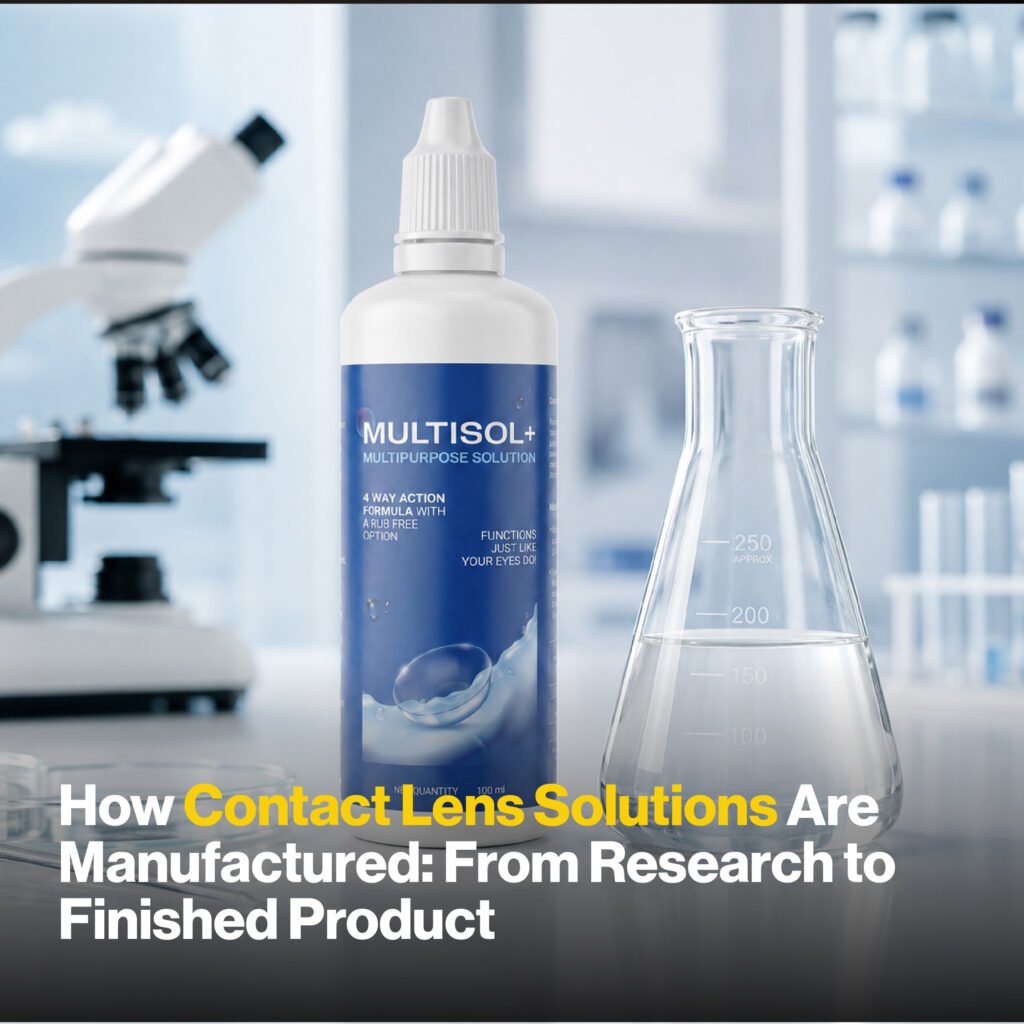
Introduction You use contact lens solution every single day, but have you ever thought about what it actually takes to make it? Not just mixing some ingredients together, but creating a product that is reliably sterile, chemically stable, safe for direct contact with your cornea, and effective at cleaning and disinfecting a surface you place directly on your eye. The manufacturing of contact lens solution is a significantly more complex process than most people imagine. It involves pharmaceutical-grade research, precision formulation chemistry, multiple layers of quality testing, and regulatory compliance that most consumer products never come close to. Understanding this process gives you a clearer picture of why product quality matters and what separates a well-manufactured solution from a poorly made one. Why Is the Manufacturing Process Important for Contact Lens Solutions? How is contact lens solution manufactured to such strict standards? Contact lens solutions are classified as medical devices in most regulatory frameworks, not as general consumer products. This classification exists because the product comes into direct contact with a sensitive biological tissue, the corneal surface, and because failures in product quality, inadequate disinfection, incorrect pH, contamination, can cause outcomes ranging from mild irritation to serious, sight-threatening infections. This regulatory classification means manufacturers must meet standards that go significantly beyond what is required for ordinary cleaning or hygiene products. Every batch must perform consistently. Every bottle must be sterile. Every active ingredient must be present at precisely the validated concentration. Achieving this reliably, batch after batch, requires a manufacturing infrastructure that combines formulation science, engineering precision, and rigorous quality systems. Why research and formulation expertise matter A contact lens solution is not a simple mixture. It is a precisely engineered system of multiple ingredient categories that must each perform their individual function while not interfering with any other. The disinfecting agents must be potent enough to eliminate bacteria and fungi but gentle enough not to damage the corneal epithelium. The surfactants must clean effectively without leaving residue that affects lens optical performance. The pH buffering system must keep the formula within the narrow comfort range of natural tears. The conditioning ingredients must improve lens hydration without compromising disinfection efficacy. Getting all of these functions right simultaneously requires years of formulation research, ingredient selection, compatibility testing, and stability evaluation before a product ever reaches a manufacturing line. How Are Contact Lens Solutions Formulated? Contact lens solution chemical composition: the ingredient research process What chemicals are used in contact lens solution? The formulation process begins with identifying the function each ingredient category needs to perform and then selecting the specific compounds within each category that best meet the product’s performance and safety requirements. Disinfecting agents are selected based on their spectrum of antimicrobial activity, their stability in the final formulation, and their safety profile for ocular tissue. Polyhexamethylene biguanide, known as PHMB, and Polyquaternium-1 are among the most widely used because they provide effective coverage against bacteria, fungi, and in some formulations Acanthamoeba, while remaining well-tolerated by most wearers. Surfactants and cleaning agents such as poloxamer and poloxamine are selected for their ability to break down protein and lipid deposits without leaving optical residue and without interacting with the lens materials the solution is designed for. The choice of surfactant affects both cleaning performance and the tactile feel of the lens after cleaning. Buffering and tonicity agents including boric acid, sodium borate, and sodium chloride are calibrated to maintain the solution at a pH matching natural tears and an osmolarity that prevents lens swelling or shrinkage during storage. This calibration is done with considerable precision because deviations outside the acceptable range directly affect both comfort and lens dimensional stability. Conditioning and moisturising agents such as hyaluronic acid, propylene glycol, and sorbitol are included to maintain lens hydration during storage and improve comfort during wear. Their concentrations are optimised to provide maximum hydration benefit without interfering with disinfection efficacy. Chelating agents such as EDTA are added to enhance the effectiveness of the primary disinfectants by destabilising bacterial cell walls, making microorganisms more susceptible to the disinfecting compounds. Compatibility Testing With Lens Materials Every formulation must be tested for compatibility with the specific lens materials it is intended for. Different lens materials, including various hydrogel and silicone hydrogel polymers, interact differently with cleaning agents, preservatives, and conditioning compounds. A formulation that performs well with one lens material may cause swelling, discolouration, or surface changes in another. This compatibility testing involves immersing lenses in the candidate formulation under controlled conditions and measuring dimensional changes, optical properties, and surface characteristics before and after exposure. What Are the Key Steps in Contact Lens Solution Manufacturing? Contact lens solution manufacturing process step by step How contact lens solution is made in a factory? 1. Stage One: Raw Material Preparation and Testing Every raw material that enters the manufacturing facility is tested before it is released for use in production. This incoming quality control step verifies the identity, purity, and potency of each ingredient against the specifications established during formulation development. Raw materials that do not meet specification are rejected, regardless of their source or cost. This stage also involves preparing water, the most critical raw material in any aqueous pharmaceutical or medical device product. The water used in contact lens solution manufacturing is not tap water, filtered water, or even purified water in the general sense. It is Water for Injection quality, or pharmaceutical-grade purified water, produced through processes including reverse osmosis, deionisation, and ultrafiltration that remove all microbial and chemical contaminants to the levels required for pharmaceutical manufacturing. 2. Stage Two: Ingredient Mixing and Compounding Mixing takes place in dedicated, controlled manufacturing vessels in a cleanroom environment. Cleanrooms are classified by the number of airborne particles permitted per cubic metre of air, and contact lens solution manufacturing occurs in spaces where environmental contamination is controlled to pharmaceutical standards. Ingredients are added in a specific sequence determined by the formulation development process. The order of addition, mixing speed, temperature, and mixing duration are all controlled parameters
Anti-Fog Spray for Glasses: When Should You Use It and How Does It Work?
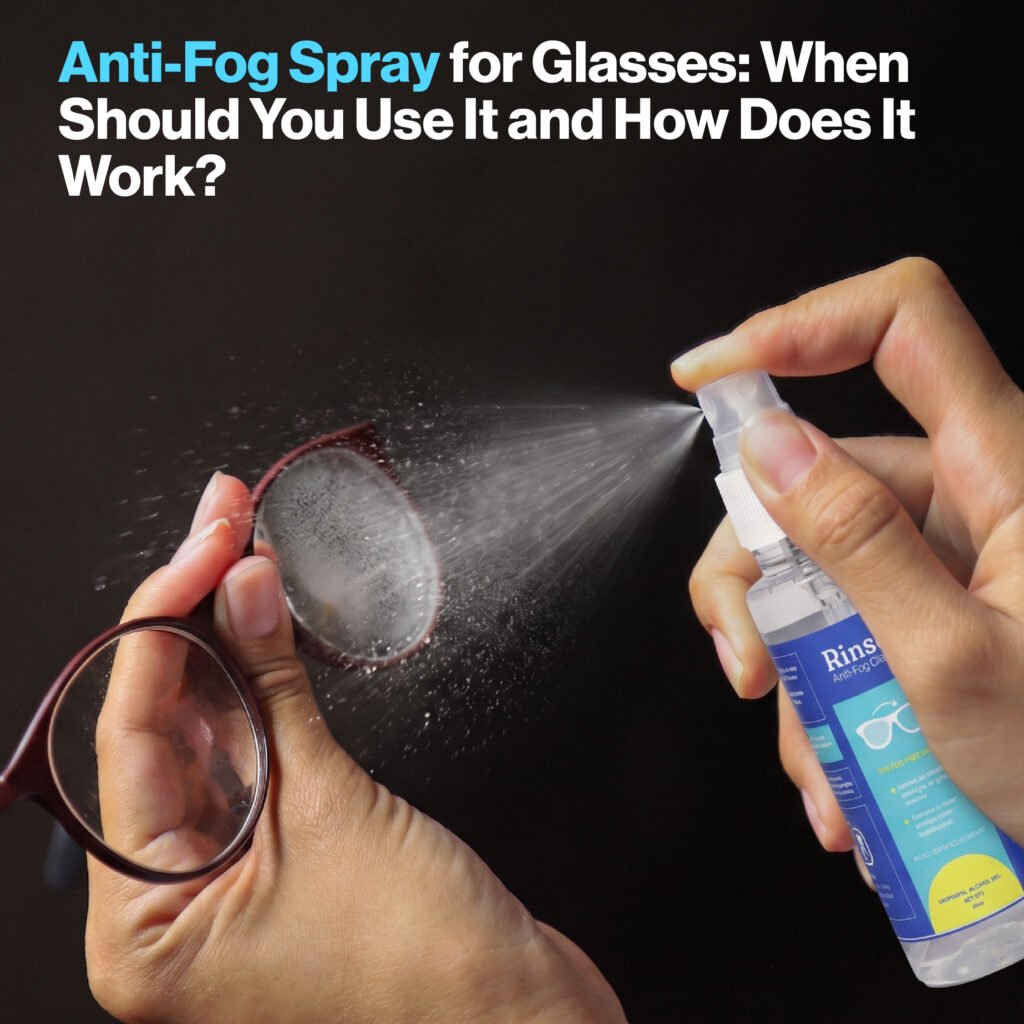
If you wear glasses, you know the moment well. You walk into a warm room from outside on a cold morning, pull up your mask, step into a steamy kitchen, or push hard during a workout, and your lenses go completely white. You are effectively blind for anywhere from five to thirty seconds while the fog slowly clears. For most wearers, this is an accepted frustration. It does not have to be. Anti-fog spray for glasses is a simple, affordable solution that most glasses wearers have either never tried or have used incorrectly. Understanding how it works and when to use it transforms it from an occasional experiment into a genuinely useful part of your daily lens care routine. Why Do Glasses Fog Up and How Does It Affect Vision? The physics of fogging in simple terms Fogging happens because of condensation. When warm, moisture-laden air meets a surface that is cooler than the dew point of that air, the water vapour converts from gas to liquid. On your spectacle lenses, this produces thousands of microscopic water droplets that scatter light in every direction, creating the opaque white appearance that blocks your vision entirely. Your lenses become the cool surface whenever there is a temperature difference between the lens and the surrounding air. This happens consistently in several common situations. Moving from cold outdoor air into a warm, heated indoor space. Wearing a face mask that directs exhaled breath upward toward the lower edge of your lenses. Cooking over a hot stove. Exercising when body heat and perspiration raise the temperature of the air immediately around your face. Moving between air-conditioned interiors and warm outdoor environments. Why fogging matters beyond inconvenience? Temporary blindness while driving, cycling, working in a kitchen, or navigating any environment where visibility is a safety factor is not a trivial inconvenience. It is a genuine hazard. For healthcare workers, construction workers, kitchen staff, and anyone whose work involves moving between temperature zones repeatedly, fogging creates repeated disruption that affects both safety and productivity throughout the day. What Is Anti-Fog Spray for Glasses and How Does It Work? How does anti-fog spray for glasses work at a molecular level? The science behind anti-fog spray is elegant and straightforward once you understand it. Standard lens surfaces have what is called high surface energy in relation to water. When water contacts a high-energy surface, it beads up into discrete droplets. These beaded droplets are what scatter light and create the fogging effect. Each droplet acts as a tiny lens itself, refracting light in a different direction from its neighbours, and the cumulative result of thousands of these droplets is complete visual disruption. Anti-fog spray deposits a hydrophilic, water-attracting layer of compounds onto the lens surface. This layer reduces the surface energy of the lens in a specific way that prevents water from beading. Instead of forming discrete droplets, incoming moisture spreads into an extremely thin, uniform film across the entire surface. This thin film is optically transparent. Light passes through it cleanly without scattering, because the film is even enough that it does not disrupt the path of light the way beaded droplets do. You still have moisture on your lens surface during a fogging event. The difference is that it is spread so evenly that it is invisible to your eye and has no effect on your vision. How does this differ from an anti-fog coating? Some lenses come with a permanent factory-applied anti-fog coating built into their surface treatment. This coating works on the same hydrophilic principle but is a structural part of the lens rather than a topical treatment. An anti-fog spray for spectacles provides the same hydrophilic surface treatment as a topical application that can be reapplied as needed. For wearers whose lenses do not include a factory coating, and for those whose factory coating has worn down over time, an anti-fog spray provides the same protective effect with the flexibility of reapplication. When Should You Use Anti-Fog Spray for Glasses? Best time to use anti-fog spray for glasses Anti-fog protection works preventatively, not reactively. The spray needs to be applied before fogging conditions arise, not after your lenses have already fogged up. Understanding when to apply it means identifying your regular fogging triggers. 1. Daily Commuting in Variable Weather If your commute involves moving between heated or air-conditioned transport and outdoor temperatures, fogging is a predictable daily event. Applying anti-fog spray for spectacles as part of your morning routine gives you consistent protection throughout the transition-heavy parts of your day. 2. Mask Wearing This became one of the most universally relatable fogging situations during recent years and remains relevant for healthcare workers, dental professionals, and anyone who wears masks regularly as part of their work. Exhaled breath directed upward by a mask is a constant, warm, moist airstream aimed directly at the lower portion of your lenses. Anti-fog coating applied before mask use is the most practical way to manage this. 3. Professional Environments With Temperature Transitions Kitchen staff moving between refrigeration and cooking areas. Healthcare workers moving between clinical spaces. Laboratory workers, construction professionals, and anyone whose job involves repeated movement between different temperature zones. For these wearers, anti-fog spray is not an occasional convenience but a practical tool that supports safe, uninterrupted vision throughout the working day. 4. Sports and Physical Activity Exercise raises the temperature of the air around your face and increases moisture from perspiration and breathing. Both conditions accelerate fogging. Applying anti-fog spray before exercise maintains clearer vision throughout activity without the interruption of frequent wiping. 5. Humid Environments and Monsoon Season In India’s monsoon season, ambient humidity sits high enough for extended periods that even moderate temperature changes trigger fogging. Anti-fog spray used consistently during humid months provides meaningful protection during a period when fogging would otherwise be a daily occurrence. How to Apply Anti-Fog Spray on Spectacle Lenses Properly? Application technique determines how long the protection lasts and how effective it is during fogging events. A
How to Wash and Maintain Your Microfiber Cleaning Cloth for Long-Lasting Performance?
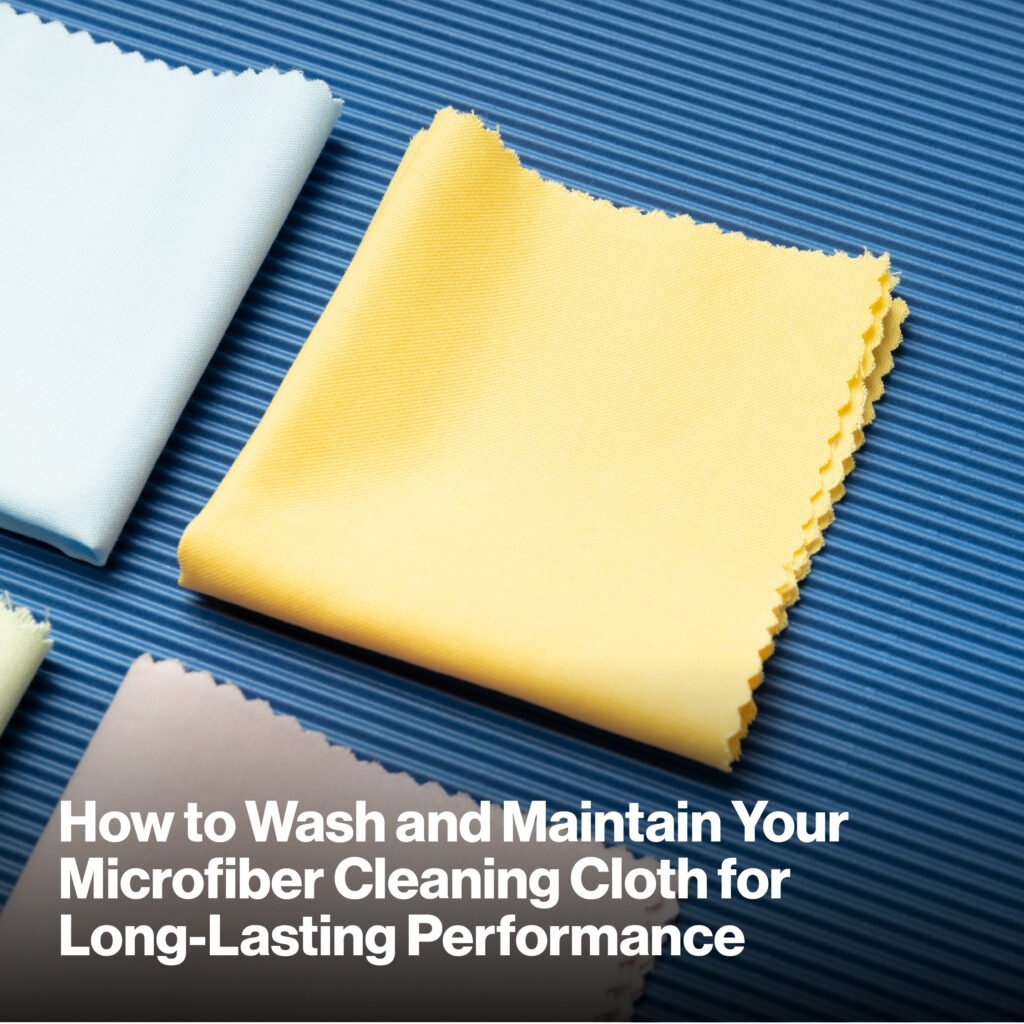
Your microfiber cleaning cloth is doing more work than you probably give it credit for. Every time you clean your glasses or wipe down a screen, those split fibres are trapping oils, dust particles, and debris that a plain cloth would simply push around. That trapping ability is exactly what makes microfiber the right tool for delicate optical surfaces. The problem is that everything the cloth traps stays in the cloth until you wash it properly. A microfiber cloth that has not been washed recently is not cleaning your lenses. It is redistributing whatever it collected the last ten times you used it, across a surface you are trying to keep clean. Why Is Proper Care of a Microfiber Cleaning Cloth Important? How microfiber actually works? The cleaning performance of microfiber comes entirely from the physical structure of its fibres. During manufacturing, each fibre is split into microscopic wedge-shaped filaments that create a surface with enormous surface area relative to its size. These filaments lift and trap particles mechanically, pulling them into the cloth rather than moving them across the surface being cleaned. Why a dirty cloth becomes a liability? When those filaments are already loaded with oils, skin proteins, and fine debris from previous cleaning sessions, they cannot trap new particles effectively. Instead, the contaminated cloth deposits what it is already carrying onto the surface you are trying to clean. A dirty microfiber cloth used on your spectacle lenses is not just ineffective. It is actively harmful. The oils and particles embedded in a loaded cloth drag across your lens coatings under light pressure, creating the very micro-scratches that the right microfiber cloth is supposed to prevent. Keeping the cloth clean is inseparable from keeping your lenses clean. How Often Should You Wash a Microfiber Cleaning Cloth? How to wash microfiber cloth for glasses: establishing the right frequency The right washing frequency depends on how often you use the cloth and what you use it for. For glasses cleaning, washing after every five to seven uses is a reasonable baseline for most wearers. If you clean your glasses once daily, this means washing the cloth approximately weekly. If you clean more frequently or notice that the cloth is leaving smears rather than lifting them, wash it sooner. For screen cleaning, the frequency can be slightly lower since screens accumulate less skin oil than glasses in most use cases. Every one to two weeks is typically sufficient for a cloth dedicated to screen use. The most reliable indicator that washing is needed is performance. If your cloth is leaving streaks, smearing oils rather than lifting them, or visibly appears grey or soiled, it needs washing immediately regardless of when it was last cleaned. Why using a dirty cloth worsens the problem? A contaminated cloth defeats the purpose of using microfiber in the first place. The economic case for reusing a cloth without washing it, to save the effort of laundering, is undermined completely by the lens damage that a loaded cloth causes. The cloth is an investment in your lens care routine. Maintaining it properly is what makes that investment worthwhile. What Is the Correct Way to Wash a Microfiber Cleaning Cloth? How to clean dirty microfiber cloth properly: two effective methods There are two reliable approaches to washing a microfiber cloth for glasses and screen use. Hand washing and machine washing. Both work when done correctly. Both fail when common mistakes are made. Hand Washing: The Gentler Option Hand washing is the recommended method for small microfiber cloths used for glasses and screen cleaning, because it gives you control over every aspect of the process. Rinse the cloth thoroughly under warm water to remove loose debris before applying any detergent. Apply a small amount of mild, fragrance-free liquid detergent to the cloth and work it gently through the fibres using your fingers. Avoid scrubbing aggressively. The goal is to flush the trapped oils and particles out of the fibres, not to abrade the cloth. Rinse thoroughly until the water runs completely clear and no soap residue remains. Any detergent left in the fibres will transfer to your lenses or screen surface during the next use. Residual soap is one of the most common causes of streaking from an apparently clean cloth. Can you wash microfiber cloth in machine? Yes, machine washing is appropriate for microfiber cloths, including those used for glasses and screens, provided the process is set up correctly. Use a gentle or delicate cycle with cold or warm water, never hot. Place the microfiber cloths in a mesh laundry bag before putting them in the machine. This protects the fibres from mechanical stress during the cycle and, crucially, prevents lint from other items in the wash from embedding in the microfiber during the rinse. Use a small amount of mild, fragrance-free liquid detergent. Powder detergents can leave fine particles in microfiber fibres that then transfer to delicate surfaces during use. Should you use fabric softener on microfiber cloth? No, and this is the single most important rule in microfiber cloth care. Fabric softener deposits a thin chemical coating on the fibres that fills in the split-fibre structure that makes microfiber effective. After treatment with fabric softener, a microfiber cloth no longer lifts and traps particles. It behaves more like a standard smooth cloth, pushing contaminants across surfaces rather than capturing them. This effect is not immediately obvious to the touch. The cloth feels soft and pleasant. But its cleaning performance is significantly reduced. Avoid fabric softener entirely for microfiber used on optical surfaces. Why Bleach and Harsh Chemicals Should Be Avoided Bleach and other harsh chemical cleaning agents damage the polyester and polyamide fibres that give microfiber its structure and performance. A bleach-washed microfiber cloth may look clean but has compromised fibre integrity that reduces its ability to clean delicate surfaces without scratching them. Use only mild, fragrance-free detergent. How Should You Dry and Store a Microfiber Cloth? Air Drying: The Recommended Approach Air drying is
The Right Way to Clean Laptop, Monitor, and Mobile Screens Without Damage
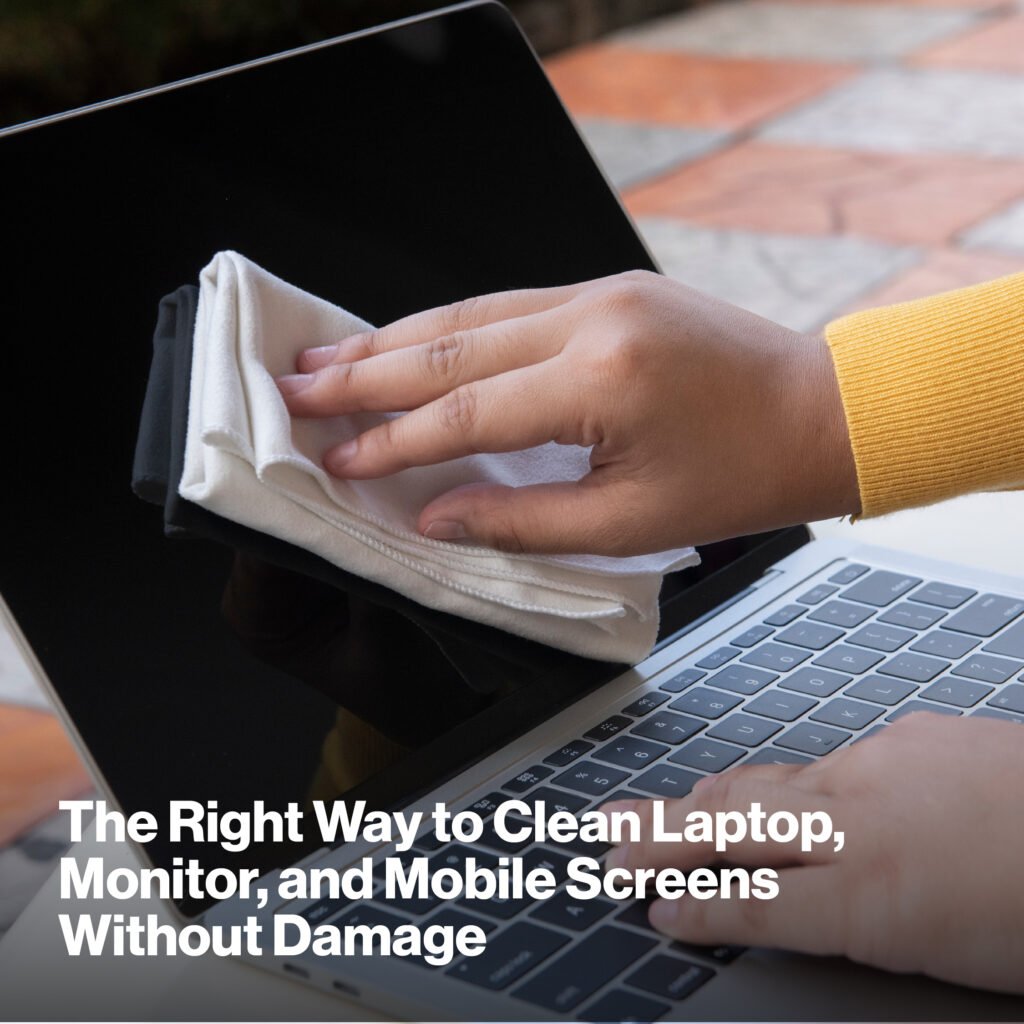
Every screen you own is collecting fingerprints, dust, and skin oils right now. Your phone screen. Your laptop display. Your monitor. Even your television. These surfaces are in constant contact with your hands, your breath, and the environment around them. Most people clean their screens the same way they clean everything else. A quick wipe with whatever is nearby. The result looks better for about ten minutes. The long-term result is a screen with micro-scratches, coating damage, and persistent streaking that worsens with every incorrect clean. Knowing the right method and the right products is the difference between screens that stay sharp for years and screens that degrade visibly within months. Why Is Proper Screen Cleaning Important? How incorrect cleaning causes permanent damage? Modern screens are not plain glass. Laptop displays, OLED televisions, high-refresh monitors, and smartphone screens all carry multiple coating layers that serve specific functions. Anti-reflective coatings reduce glare. Oleophobic coatings repel fingerprints on touchscreens. Anti-glare matte finishes diffuse light on gaming monitors. Each of these coatings sits on the surface of the panel and is vulnerable to the wrong cleaning approach. How to clean laptop screen without damaging it: understanding what you are cleaning A laptop display panel is not equivalent to a glass window. Its surface is precision-engineered, delicate, and irreplaceable without significant expense. The same applies to OLED television panels, where the organic compounds that produce the display are protected by ultra-thin coatings that chemical exposure can compromise permanently. Incorrect cleaning does not just leave streaks. It progressively degrades the optical coatings that make your screen comfortable to use. Anti-glare finishes become patchy. Oleophobic layers wear away. Anti-reflective properties diminish. None of this damage is reversible. What Should You Use to Clean Electronic Screens Safely? 1. Screen cleaner spray: the right starting point A dedicated screen cleaner spray is formulated specifically for electronic display surfaces. It is pH-balanced, free of ammonia and bleach, and uses mild surfactants that lift oils and fingerprints without interacting with anti-reflective, oleophobic, or anti-glare coatings. This is the critical distinction from household glass cleaners. Window sprays and general-purpose surface cleaners may contain ammonia or high-concentration alcohol that efficiently cleans plain glass but aggressively degrades the coatings on electronic screens. What looks like a similar product is a chemically different formulation designed for a completely different surface. 2. Microfiber Cleaning Cloth A clean microfiber cloth is the only appropriate wiping material for electronic screens. The split-fibre construction of microfiber lifts particles away from the surface rather than pushing them across it. This is what prevents the micro-scratching that tissues, paper towels, and clothing consistently cause. The cloth must be clean. A microfiber cloth that has been used on other surfaces carries oils and abrasive particles that will transfer to your screen. Keep a dedicated cloth for screen cleaning and wash it regularly with mild soap, rinsing thoroughly and air drying. 3. Laptop Cleaning Kits A complete laptop cleaning kit typically includes a screen cleaner spray, one or more microfiber cloths, and sometimes cleaning swabs for ports and keyboard areas. For regular users who want everything needed for thorough device maintenance in one package, a quality kit provides the convenience of having the right tools immediately available without sourcing components separately. What to Avoid Completely? Household glass cleaners, hand sanitisers, rubbing alcohol at standard pharmacy concentrations, paper towels, tissues, and clothing should never contact your screen surface. Each of these either creates physical scratching, chemical coating degradation, or both. The damage from a single incorrect wipe is small. The damage from months of incorrect wipes is visible and permanent. What Is the Correct Way to Clean Laptop, Monitor, and Mobile Screens? How to clean monitor screen without streaks: the full process Step One: Power Down the Device Always switch off and unplug the device before cleaning the screen. A dark screen shows dust, fingerprints, and smudges far more clearly than an illuminated one, allowing you to clean more thoroughly and check your results accurately. A cool, dark screen also reduces the risk of any moisture reaching active components near the panel edges. Allow the screen to cool for a few minutes after powering off before beginning. Cleaning a warm screen increases the risk of moisture interacting with the surface in ways that cause streaking. Step Two: Remove Loose Dust First Before applying any liquid or touching the screen with a cloth, remove loose dust. Use a clean, dry microfiber cloth with the lightest possible touch to sweep loose particles off the screen surface. Alternatively, use a soft brush specifically designed for electronics cleaning. This preparation step is essential. Applying a wet cloth to a dusty screen drags abrasive particles across the coating under pressure. The scratching this causes happens before the actual cleaning even begins. Step Three: Apply Screen Cleaner Spray to the Cloth Can I use alcohol to clean phone screen safely? Standard pharmacy isopropyl alcohol at 70 percent concentration or above is too strong for coated phone and laptop screens. It strips oleophobic coatings on touchscreens and anti-reflective layers on laptop panels with repeated use. A dedicated screen cleaner spray uses precisely calibrated low-concentration formulations that clean effectively without this coating damage risk. Apply two to three sprays of screen cleaner to the microfiber cloth, not directly onto the screen. The cloth should be lightly damp, not wet. If pressing the cloth gently releases moisture, it is too saturated. Allow a moment for some evaporation before use. Step Four: Wipe with Light, Controlled Strokes Wipe the screen surface using straight, controlled strokes rather than circular motions. For a laptop or monitor, work horizontally from one side to the other in overlapping passes. For a phone screen, work vertically from top to bottom. Use very light pressure throughout. The cleaning solution does the chemical work of loosening oils and fingerprints. The cloth lifts them away. Pressing harder does not improve the result and increases scratch risk significantly. Step Five: Final Dry Pass for Streak-Free Results Best way to clean mobile
Can You Wear Contact Lenses Immediately After Using Lubricating Eye Drops?
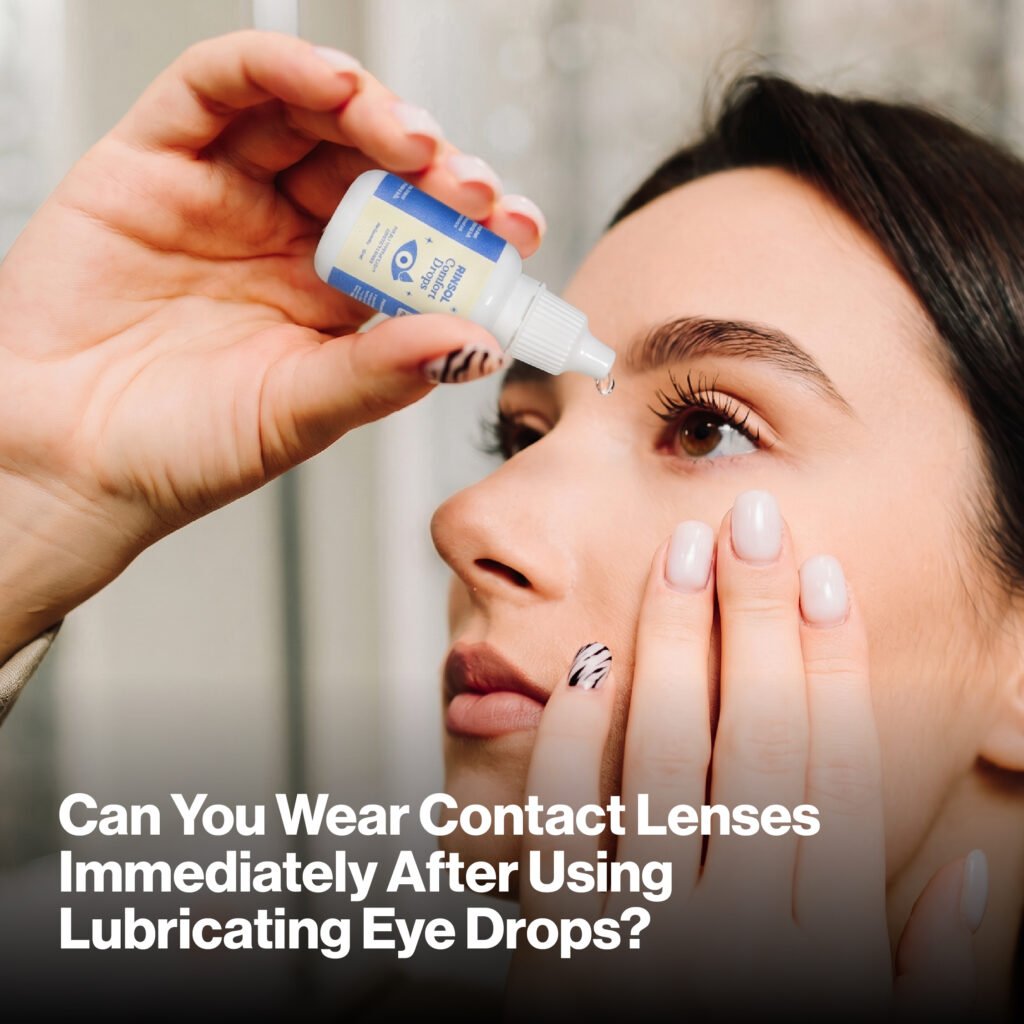
If you wear contact lenses and deal with dry or irritated eyes, at some point you have probably reached for lubricating eye drops. Maybe before putting your lenses in, maybe during the day, maybe right after taking them out at night. The question of timing matters more than most wearers realise. Whether you can wear contact lenses immediately after using lubricating eye drops depends entirely on the type of drops you used, what is in them, and whether they are formulated with lens wear in mind. What Are Lubricating Eye Drops and Why Are They Used? Lubricating eye drops are formulated to supplement the natural tear film when it is insufficient to keep the ocular surface comfortable. They provide temporary hydration, reduce friction between the eyelid and the eye surface, and help stabilise the tear film in conditions where natural tear production is reduced or of poor quality. The Difference Between Standard Drops and Contact Lens Compatible Drops This distinction is the most important thing to understand before combining eye drops with contact lens wear. Not all lubricating eye drops are formulated with contact lenses in mind. Standard lubricating drops are designed for the eye surface in its natural state, without a contact lens present. They may contain preservatives, viscosity agents, or other ingredients that interact poorly with contact lens materials. Some thicker formulations designed for significant dryness or overnight use contain ingredients that coat the eye surface in a way that affects how a lens sits and feels during subsequent wear. Contact lens compatible drops, often labelled as rewetting drops, are specifically formulated to be safe for use while lenses are in place. They are designed to rehydrate the lens surface and relieve mid-wear dryness without interacting negatively with the lens material. Can You Wear Contact Lenses After Applying Lubricating Eye Drops? Can I use lubricating eye drops while wearing contact lenses? It depends on the specific product. The answer is yes for drops explicitly labelled as safe for use with contact lenses or as rewetting drops. The answer is no, or at least not immediately, for standard lubricating drops that are not formulated for lens compatibility. Why Some Drops Require Lens Removal First Many standard lubricating eye drops contain preservatives such as benzalkonium chloride, or BAK. When these drops are applied while contact lenses are in place, the lens material can absorb the preservative and release it slowly onto the ocular surface over time. This sustained exposure at higher-than-intended concentrations can cause corneal surface irritation and long-term toxicity to the epithelial cells. This is not a theoretical concern. Preservative absorption by soft contact lens materials is a documented phenomenon, and it is the primary reason most standard preserved eye drops carry instructions to remove contact lenses before application. Preserved Versus Preservative-Free Drops Preservative-free lubricating drops in single-use vials eliminate this concern entirely. Because they contain no preservatives, there is no risk of lens absorption and sustained surface exposure. Many preservative-free formulations are safe for use with contact lenses, though confirming this on the specific product label is always advisable before use. How Long Should You Wait Before Wearing Contact Lenses After Eye Drops? How long after eye drops can I wear contacts? The waiting period depends on the specific drop formulation and should always be confirmed on the product label or with your eye care professional. General guidelines vary by drop type. For standard preserved lubricating drops, most recommendations suggest waiting at least 15 to 30 minutes before inserting contact lenses. This waiting period allows the active ingredients and preservatives to be absorbed or cleared by the natural drainage system before a lens is placed on the eye. For thicker gel or ointment-based formulations designed for significant dryness or overnight use, the waiting period is typically longer. These formulations coat the ocular surface with a viscous layer that takes more time to spread, absorb, and normalise before a lens can sit comfortably and correctly on the cornea. Inserting lenses too soon after a thick formulation results in blurred vision and an uncomfortable lens fit. For preservative-free drops specifically labelled as contact lens compatible, some products can be used immediately before lens insertion or even while lenses are in place. Always follow the specific product’s instructions rather than assuming compatibility based on category alone. Why Waiting Matters Beyond Comfort Can you put contacts in right after eye drops? For most standard drops, no. Beyond comfort, there is a functional reason for waiting. Eye drops applied before lens insertion need time to distribute evenly across the ocular surface and begin their moisturising action. Inserting a lens immediately after application can disrupt this distribution, push the drop out of the eye before it has been absorbed, and result in the drop providing little to no therapeutic benefit. The lens also changes the ocular environment immediately upon insertion. A drop applied to the bare eye interacts with the natural tear film. A drop applied under or around a lens interacts with both the tear film and the lens material, which changes how it behaves and how effective it is. What Happens If You Wear Contact Lenses Immediately After Using the Wrong Eye Drops? Putting contact lenses after lubricating eye drops too soon: what goes wrong? Several things can happen depending on the specific mismatch between the drop formulation and the lens wear timeline. Blurred vision. This is the most immediately noticeable consequence. Thicker lubricating formulations that have not fully absorbed create a film between the lens and the tear film that scatters light unevenly. The blurring is typically temporary but can persist for an uncomfortable period depending on the formulation’s viscosity. Stinging and irritation upon insertion. Some drop ingredients that are comfortable on the bare eye surface interact with contact lens materials in ways that create irritation. The lens concentrates these ingredients against the cornea rather than allowing them to distribute and clear naturally. Lens deposit acceleration. Certain ingredients in standard lubricating drops, particularly thicker viscosity agents, can adhere to the
How to Clean Your Glasses Without Scratching the Lenses?
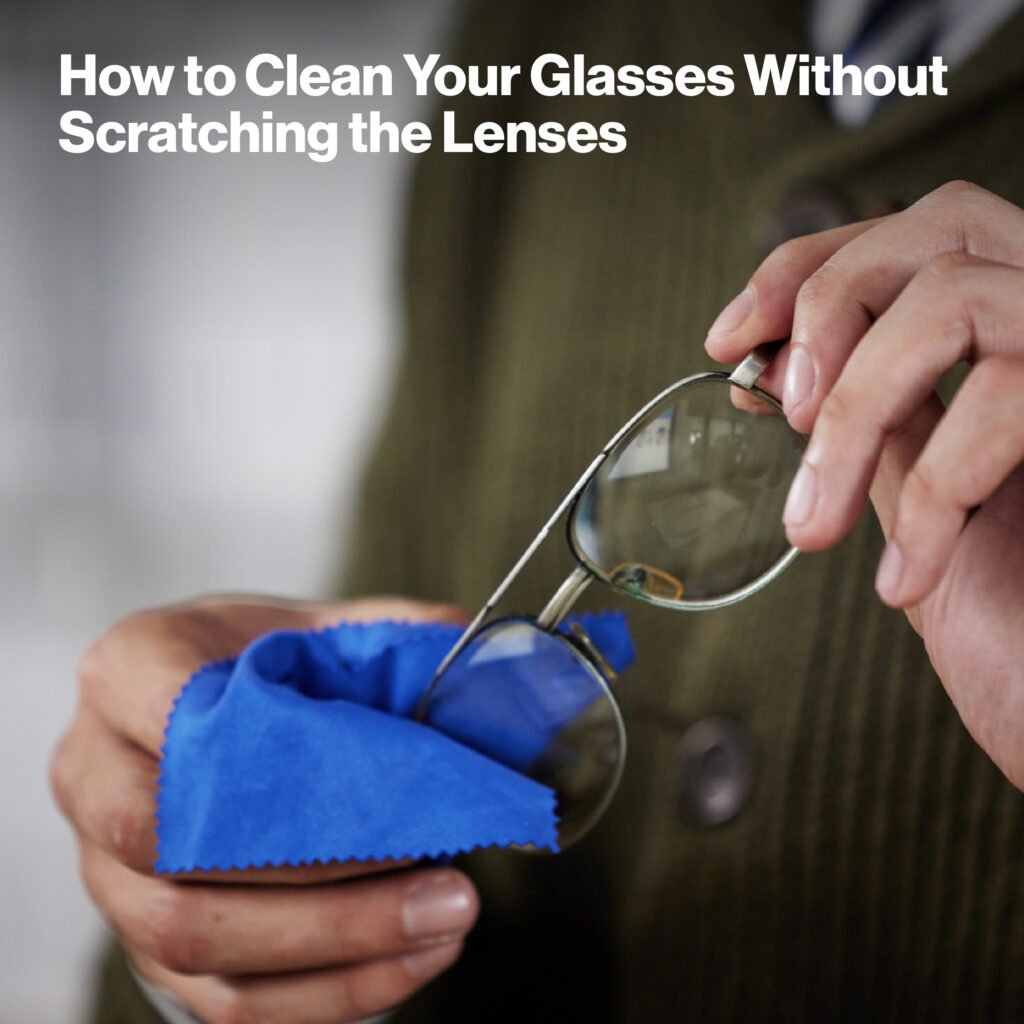
Glasses are one of the most used objects in your daily life, and also one of the most poorly maintained. Most people clean their lenses by grabbing whatever is nearby, a shirt hem, a tissue, a paper towel, sometimes just a finger, and giving them a quick wipe. It feels effective. The smudge disappears, at least temporarily. What is actually happening on the lens surface is a different story. Each incorrect cleaning attempt leaves behind fine scratches, residue, and coating damage that compounds over time. Eventually, a pair of lenses that started perfectly clear develops a permanent haze that no amount of cleaning will reverse. Learning to clean glasses correctly is genuinely simple. It just requires the right technique and the right tools. Why Is Proper Glasses Cleaning Important? How incorrect cleaning damages lenses? Your spectacle lenses are not just shaped plastic or glass. They are precision optical surfaces with multiple layers of coating applied to the base material. Anti-reflective coating to reduce glare. UV protection to shield your eyes from harmful radiation. Blue-light filtering for screen use. Scratch-resistant coating to extend lens durability. Each layer adds value to your vision experience and each layer is vulnerable to the wrong cleaning approach. Dust and environmental particles that settle on your lenses are abrasive at a microscopic level. When you wipe a dusty lens without first removing those particles, you are dragging tiny abrasive grains across a surface that may look tough but is chemically sensitive. The scratches created this way are invisible at first and permanent from the moment they form. Incorrect cleaning products add a chemical dimension to this physical damage. Household cleaners, hand sanitisers, and even plain soap can contain compounds that degrade anti-reflective and hydrophobic coatings with repeated exposure. The coating does not peel away dramatically. It simply loses its optical and protective properties gradually, until the lens performs noticeably worse than it should. What Should You Use to Clean Your Glasses Safely? The right tools make all the difference How to clean glasses without scratching them: starting with the right materials? Two things are non-negotiable for safe glasses cleaning. A proper lens cleaning spray formulated for optical coatings and a clean microfiber cloth for glasses. Everything else is either unnecessary or actively harmful. 1. Lens Cleaning Spray A dedicated lens cleaning spray, also called a spectacle lens cleaner or glass cleaning liquid formulated for eyewear, is specifically pH-balanced and formulated to be safe for all optical coating types. It contains mild surfactants that lift oils and fingerprints off the lens surface without interacting chemically with anti-reflective, UV, or blue-light coatings. This is the critical distinction between a proper lens cleaner spray and a household glass cleaner. Window sprays and general surface cleaners may contain ammonia, alcohol at high concentrations, or other compounds that are effective on plain glass or metal but degrade optical coatings progressively with repeated use. What looks like a similar product in a similar bottle is a chemically different formulation designed for a different surface. 2. Microfiber Cloth for Glasses A microfiber cloth is not interchangeable with other fabric materials for lens cleaning. The fibres in microfiber are split at a microscopic level during manufacturing, creating a surface with an exceptionally high density of fine filaments. These filaments lift and trap particles rather than pushing them across the lens surface. This is what makes microfiber safe for coated lenses where other fabrics cause scratching. The cloth must be clean to function safely. A microfiber cloth that has been used on other surfaces, stuffed loose in a bag, or not washed in several uses carries oils, particles, and debris that will transfer directly onto your lenses. Wash microfiber cloths regularly with mild soap, rinse thoroughly, and air dry. Never use fabric softener, which coats the fibres and reduces their cleaning effectiveness. What to Avoid Completely? Tissues and paper towels feel soft but contain wood fibres that are abrasive on optical coatings. Clothing, including the softest cotton t-shirt, contains surface irregularities and trapped particles. Bathroom hand towels accumulate soap residue and lint. Household glass cleaners contain coating-degrading compounds. None of these belong anywhere near your spectacle lenses. What Is the Correct Way to Clean Glasses Without Scratching Them? Best way to clean spectacles without scratches: the full process How to clean eyeglass lenses properly at home? The correct cleaning sequence protects your lenses at every step. It takes under two minutes and the difference in long-term lens condition is significant. Step One: Remove loose particles first. Before applying any cleaning product or touching the lens with any cloth, remove loose dust and debris. Gently blow across both sides of each lens to dislodge surface particles. Alternatively, rinse the lenses briefly under lukewarm water. This step prevents abrasive particles from being dragged across the coating during the cleaning step. Never skip this preparation step. Dry wiping a dusty lens, even with a clean microfiber cloth, is one of the most reliable ways to create fine scratches on your coatings. Step Two: Apply lens cleaning spray to both sides. Hold the glasses by the frame and apply two to three sprays of your lens cleaning spray to both sides of each lens. You want a light, even coating across the entire lens surface, not a heavy soaking and not a barely-there mist. Applying the spray to the cloth rather than the lens is also acceptable. Both approaches work. The key is ensuring the lens surface is lubricated before any wiping begins. Step Three: Wipe with a clean microfiber cloth. Using a clean section of your microfiber cloth for glasses, wipe each lens in gentle circular motions starting from the centre and working outward. Use light, even pressure. The lens cleaning spray has already loosened the oils and debris. The cloth’s job is to lift them away, not to scrub them off. Excessive pressure counterproductively forces any remaining particles into the coating. Check for streaks by holding the lens up to a light source. A clean lens
Lens Cleaner Spray vs Lens Wipes: Which Is Better for Everyday Use?
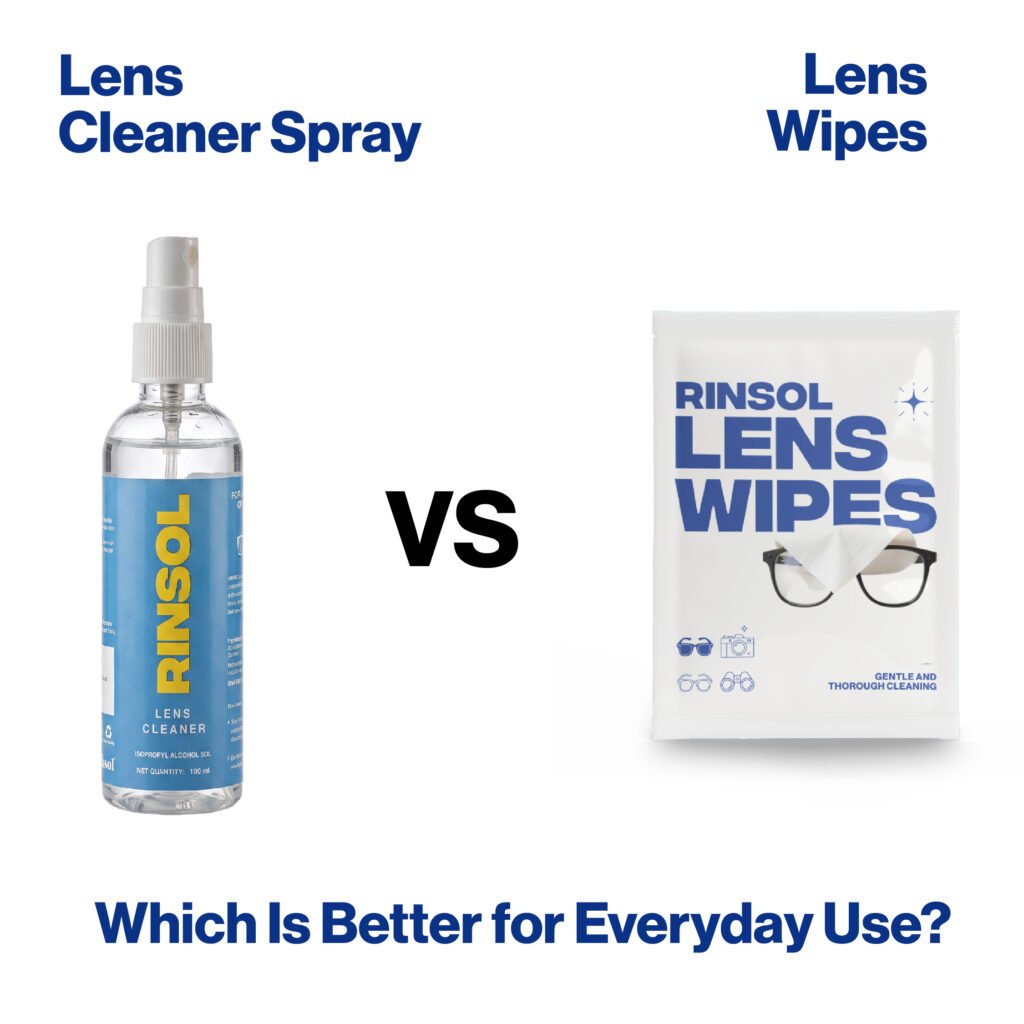
If you wear glasses, you clean them multiple times a day. The question is whether you are cleaning them with something that is actually helping your lenses or something that is quietly causing damage. Two products dominate the everyday glasses cleaning conversation. Lens cleaner spray used with a microfiber cloth and pre-moistened lens wipes. Both are marketed as safe and effective. Both have genuine uses. But they are not equally suited to every situation, and understanding the difference helps you make a better choice for your lenses and your daily routine. Why Is Choosing the Right Lens Cleaning Method Important? How the wrong method causes more harm than the smudge itself Your spectacle lenses are not plain glass. They carry multiple coating layers, anti-reflective, UV, blue-light filtering, hydrophobic, that sit on the surface of the base lens material and are vulnerable to both physical abrasion and chemical degradation. Every incorrect cleaning attempt creates micro-scratches, residue, or chemical interaction that compromises these coatings over time. The damage from a single wrong wipe is invisible. The damage from six months of daily wrong wipes is not. Choosing between a spectacle lens cleaner spray and lens wipes is not just a matter of convenience. It is a decision that affects how long your lenses stay optically clear and how well they perform. What Is Lens Cleaner Spray and How Does It Work? The science behind a dedicated spectacle cleaning spray A lens cleaner spray is a specially formulated liquid designed for use on optical surfaces. Its formulation is pH-balanced to avoid interaction with anti-reflective and protective coatings. It contains mild, non-ionic surfactants that break down and lift skin oils, fingerprints, and environmental residue from the lens surface without chemically interacting with the coating layers beneath. The spray is applied to the lens or to a microfiber cloth, allowed to spread across the surface, and then buffed away with the cloth in gentle circular motions. The surfactants in the formula do the chemical work of loosening contaminants. The microfiber cloth lifts them away. Together, they produce a streak-free, residue-free clean that protects the coating rather than degrading it. Benefits of Using Lens Cleaner Spray for Regular Home Use A spectacle lens cleaner spray is the more thorough cleaning option. It applies a consistent, controlled amount of cleaning fluid across the entire lens surface. It works with a reusable microfiber cloth that can be washed and maintained over time. And it is significantly more economical per clean than single-use wipes when used as part of a daily home routine. For anyone cleaning their glasses at a desk, bathroom counter, or anywhere with access to their spray bottle and cloth, the spray-and-microfiber combination delivers the best cleaning result consistently. What Are Lens Wipes and When Should You Use Them? Pre-moistened lens wipes: convenience with specific advantages Lens cleaning wipes are single-use, pre-moistened wipes individually sealed in foil or plastic sachets. Each wipe is pre-loaded with a cleaning solution and a cleaning substrate in one compact package. Open, wipe, and discard. No bottle, no cloth, no preparation required. The solution in quality lens wipes is typically similar in chemistry to a dedicated spectacle cleaning spray, pH-balanced and safe for coated optical surfaces. The substrate material used matters significantly. Quality lens wipes use a non-woven or microfiber material that is safe for optical coatings. Cheaper wipes may use materials with more abrasive surface textures that create micro-scratches over repeated use. When Lens Wipes Are the Practical Choice? Are pre-moistened lens wipes safe for glasses? Quality lens wipes from reputable optical care brands are safe for coated spectacle lenses when used correctly. The key qualifiers are quality and correct use. A quality wipe uses an appropriate substrate material and a properly formulated cleaning solution. Correct use means applying the wipe gently without excessive pressure, using it once and discarding it, and not using it on a heavily dusty lens without first removing loose particles. Lens wipes are genuinely the better practical option in situations where you are away from home, travelling, in a meeting, outdoors, or anywhere your spray bottle and microfiber cloth are not immediately accessible. Their portability and immediate readiness are advantages that a spray-and-cloth system simply cannot match in these situations. Lens Cleaner Spray vs Lens Wipes: Which One Is Better? The honest answer is that neither is universally better. They are best understood as complementary tools suited to different situations rather than direct competitors where one wins outright. Factor Lens Cleaner Spray Lens Wipes Cleaning effectiveness High, with proper microfiber cloth Good for everyday smudges and fingerprints Convenience at home High, once tools are set up Moderate, requires individual sachets Portability Low, requires bottle and cloth High, fits in any bag or pocket Cost per clean Lower over time with reusable cloth Higher due to single-use format Environmental impact Lower with reusable cloth Higher due to single-use waste Coating safety High when properly formulated High when quality wipes are used correctly Suitable for travel Less practical Ideal Is lens cleaning spray bad for glasses coatings? A properly formulated spectacle cleaning spray is not bad for glasses coatings. It is specifically designed to be safe for them. The risk comes from using the wrong product, specifically household glass cleaners, alcohol-based sprays, or any product not formulated for optical coatings, and calling it a lens cleaner. Always confirm that the spray you use is specifically intended for spectacle lenses. Lens wipes vs microfiber cloth for glasses: understanding the substrate difference The substrate of a lens wipe does the same physical job as a microfiber cloth. It lifts contaminants from the lens surface after the cleaning solution has loosened them. A quality wipe with an appropriate substrate material performs this function safely. However, a reusable microfiber cloth maintained in good condition has a larger surface area, more consistent material quality over its lifespan, and the benefit of being washable rather than single-use. For daily home use, the microfiber cloth paired with a spectacle lens cleaner spray is
Why Does Contact Lens Solution Burn or Sting Your Eyes? Common Causes Explained
A brief, mild sensation when you first insert your contact lenses is something many wearers experience occasionally. A persistent burning or stinging that lasts more than a few seconds, or that worsens over time, is something else entirely. Contact lens solution burning is not something to dismiss or push through. It is your eye communicating that something in your current lens care routine is not working correctly for your eyes. Understanding the possible causes helps you identify the problem quickly and address it before it becomes a more significant issue. Is It Normal for Contact Lens Solution to Sting? Is contact lens solution supposed to sting? A very mild, momentary sensation upon lens insertion that resolves within a few seconds can be within the range of normal for some wearers, particularly those with naturally sensitive eyes. What is not normal is burning that persists for more than a few seconds, stinging that returns consistently with every use, pain that worsens throughout the day, or any burning sensation accompanied by redness, tearing, or blurred vision. Properly formulated, in-date contact lens solution used with clean, correctly cleaned lenses should feel comfortable from the moment of insertion. If it does not, there is a specific reason worth identifying. What Causes Contact Lens Solution to Burn or Sting? Why does contact lens solution burn eyes? There is rarely a single universal answer because several different factors can produce the same burning sensation. Working through these systematically is the most reliable way to identify what is actually happening. 1. Sensitivity to Preservatives Allergic reaction to contact lens solution: what does it feel like? Preservative sensitivity is one of the most common causes of contact lens solution burning, and it is frequently underdiagnosed because wearers assume the problem is their lenses rather than their solution. Most multipurpose contact lens solutions contain preservatives that prevent bacterial contamination of the bottle after opening. These preservatives are safe and well-tolerated by the majority of wearers, but a proportion of people develop sensitivity to specific compounds over time. Benzalkonium chloride, or BAK, is the preservative most commonly associated with ocular sensitivity reactions, though it appears less frequently in modern lens solutions than in other ophthalmic products. Polyquaternium and PHMB-based systems are gentler alternatives used in most current formulations, but individual sensitivity to even these compounds is possible. The characteristic pattern of preservative sensitivity is that symptoms develop or worsen over time with continued use of the same solution, rather than appearing immediately from the first bottle. The burning sensation is typically noticed upon insertion and may be accompanied by redness, itching, and a general feeling of lens intolerance throughout the day. 2. Protein Deposits and Contaminated Lenses Why do my contacts sting after solution if I cleaned them properly? The solution itself may not be the problem. If the lens surface carries significant protein or lipid deposit buildup that the cleaning step did not adequately remove, inserting that lens introduces a rough, biologically contaminated surface directly to your cornea. The resulting irritation can feel identical to a solution sensitivity reaction. This is why the rub and rinse method matters so much. A lens that has only been soaked without physical rubbing retains more surface deposits than one that has been properly rubbed for ten to fifteen seconds on each side. If you have been relying on soaking alone, switching to the full rub and rinse method may resolve the stinging without any change in solution. 3. Dry Eyes and Compromised Tear Film Can dry eyes make contact lens solution burn? Yes, and this interaction is more common than most wearers realise. When the tear film is thin or unstable, the ocular surface is more exposed and more sensitive to everything that contacts it, including the lens and the solution residue that transfers to the eye during insertion. Wearers with dry eyes often find that solution sensitivity and end-of-day burning worsen in air-conditioned environments, during extended screen use, or during certain seasons. The lens care solution has not changed. The ocular surface’s tolerance threshold has lowered due to reduced tear film protection. 4. Expired or Degraded Solution Can expired contact lens solution cause eye irritation? Yes, and this cause is frequently overlooked. When a contact lens solution passes its printed expiry date or its post-opening discard period, the chemical balance of the formula can shift. The pH may move outside the comfortable range. The preservative concentration may have degraded unevenly. Ingredients that were stable in the sealed, in-date formula can become irritating as the chemistry changes over time. Contact lens solution toxicity from expired products typically presents as burning upon insertion that resolves somewhat after the lens has been in for a while as the ocular surface adapts, but returns with each subsequent use. Checking your solution’s dates is always one of the first steps when unexplained burning develops. 5. Contaminated Solution or Lens Case If the lens case is contaminated with bacteria or biofilm, that contamination transfers into fresh solution poured into the case and from there onto the lenses stored in it. A lens that has been sitting in contaminated solution overnight carries that contamination to your cornea upon insertion. Regular lens case replacement every three months, along with daily rinsing with fresh solution and air drying, prevents this source of burning and irritation. 4. Improper Rinsing After Cleaning Some wearers apply solution for cleaning but do not rinse the lens adequately before storing it. Concentrated cleaning solution left on the lens surface can cause chemical irritation when the lens contacts the eye. Always rinse thoroughly with fresh solution after the rubbing step before placing lenses in the case. How Can You Prevent Contact Lens Solution from Causing Discomfort? The most effective prevention strategy addresses each possible cause systematically rather than guessing or switching products randomly. Use fresh solution for every cleaning and storage session. Never top off old solution. Discard completely, rinse the case with fresh solution, and refill entirely with new solution every evening. Follow the
What Is the Shelf Life of Contact Lens Solution Before and After Opening?
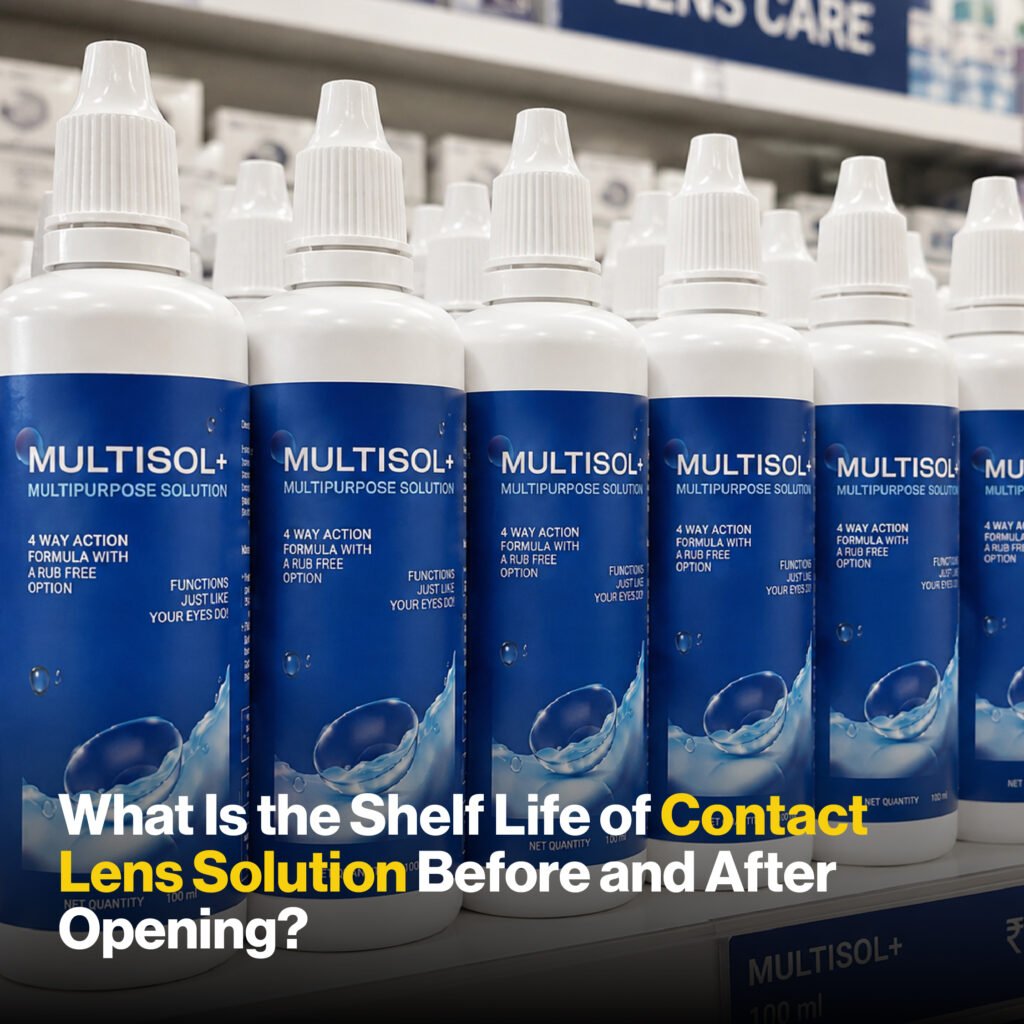
Most contact lens wearers check the expiry date on food and medication without a second thought. The bottle of contact lens solution sitting on the bathroom shelf? Less so. Contact lens solution expires, and using it past its effective period carries real consequences for your eye health. Understanding the difference between an unopened bottle’s shelf life and the usage window after opening helps you make informed decisions about one of the most important products in your daily lens care routine. What Is the Shelf Life of Contact Lens Solution? Does contact lens solution expire? Yes, absolutely. Every bottle of contact lens solution carries two distinct timelines that both matter for safety and effectiveness. The first is the printed expiry date on the bottle or packaging. This date represents the manufacturer’s guarantee that the solution remains sterile and chemically stable at full potency up to that point, provided the bottle has never been opened. It is determined through stability testing that measures how the active ingredients, particularly the disinfecting agents, degrade over time from the date of manufacture. The second timeline is the post-opening discard period, typically printed on the bottle as a symbol showing an open jar with a number inside, followed by the letter M for months. This represents how long the solution remains effective and safe to use after the bottle has first been opened. These two timelines are entirely independent of each other. A bottle with a printed expiry date two years away that has been open for four months may already be past its safe usage window. A bottle within its expiry date but improperly stored may have degraded before that date arrives. Both timelines require attention, not just one. How Long Can You Use Contact Lens Solution After Opening? How long does contact solution last after opening? Most multipurpose contact lens solutions specify a post-opening usage period of 90 days, though this varies between products and formulations. Some specify 60 days. Always check your specific product’s packaging for its stated discard period after opening and follow it, regardless of how much solution remains in the bottle. Why Does Effectiveness Decline After Opening? When you open a bottle of contact lens solution, two things begin happening simultaneously. The bottle is no longer sealed from the environment, which means the sterile conditions guaranteed before opening are gradually compromised. And each time you use the bottle, the act of opening the cap, tipping the bottle, and touching it with hands that have handled lenses creates small opportunities for contamination to enter. More significantly, the disinfecting agents in the solution begin reacting with ambient conditions after the seal is broken. Exposure to air, light, and temperature fluctuations gradually degrades the active ingredients. A solution that was fully potent on day one of opening has progressively weaker disinfecting capability as weeks pass. By the time a 90-day bottle reaches day 100, the disinfecting agents may no longer be functioning at the concentration required to reliably eliminate bacteria and fungi from lens surfaces. Contact Lens Solution Validity Is Not About Appearance This is a critical point that many wearers miss. A solution that has passed its post-opening discard period looks identical to fresh solution. It does not change colour. It does not become cloudy. It does not smell different. There is no visible indicator that its chemistry has degraded. The absence of visible change is precisely what makes expired solution dangerous. Wearers assume that because the solution looks fine, it is fine. The degradation is molecular, invisible, and quietly reducing the protection the solution provides to your eyes. What Happens If You Use Expired Contact Lens Solution? Can I use expired contact lens solution safely? No. The risks of using solution past either its printed expiry date or its post-opening discard period are genuine and worth taking seriously. Reduced or absent disinfection: This is the primary risk. Disinfecting agents that have degraded past effective concentrations can no longer reliably eliminate bacteria, fungi, and other microorganisms from lens surfaces. A lens soaked in expired solution is not disinfected. It has simply been sitting in a liquid that once had protective capability but no longer does. Contact lens eye infection: When lenses are inadequately disinfected, microorganisms that accumulate during wear survive overnight storage and are reintroduced to the eye the next morning. The organisms most commonly implicated in serious contact lens infections, including Pseudomonas aeruginosa and Acanthamoeba, are not eliminated by expired solution. The resulting infections range from painful bacterial keratitis to the devastating corneal damage of Acanthamoeba keratitis. Chemical irritation: The chemical stability of a contact lens solution is tested up to its expiry date. After that date, the balance of pH and ionic concentration that makes the solution comfortable and tissue-safe may have shifted. Using chemically unstable solution can cause stinging, burning, and surface irritation upon insertion that is not present with properly fresh solution. Lens surface damage: Degraded solution chemistry can interact with lens materials in ways that a properly formulated, in-date solution does not. Over time, this can affect the surface properties of the lens, its water content, and its optical performance. Signs That Your Solution Should No Longer Be Used Check the printed expiry date before opening any new bottle. Note the date you opened it and calculate the discard date based on the post-opening period specified on the packaging. If the solution has any visible particles, unusual colour, or smell that differs from when the bottle was new, discard it immediately regardless of dates. If you cannot remember when you opened the bottle, discard it and open a fresh one. How Should You Store Contact Lens Solution Properly? The Right Storage Environment Where should I store my contact lens solution? Store your contact lens solution in a cool, dry location away from direct sunlight and significant temperature fluctuations. Bathroom cabinets are commonly used but worth reconsidering, as bathrooms experience significant humidity and temperature changes from showering that can affect solution stability over time. A bedroom drawer or