
Your commute is one of the harshest places for your glasses. Airborne dust and pollution, sweat and skin oils, humidity and constant frame adjustments all land on your lenses at once, so they can go from clean to dirty in under 30 minutes. You are not doing anything wrong. What matters is how you clean them: remove loose dust first, use a dedicated glasses spray, and wipe with a clean microfiber cloth.
You clean your glasses before leaving home. By the time you reach your office, workplace or destination, they are already smudged, dusty and noticeably less clear than when you started. If this happens every single day, you are not imagining it, and you are not doing something wrong.
The daily commute in any Indian city is genuinely one of the harshest environments your glasses will encounter. Pollution, dust, sweat, humidity and repeated frame adjustments combine to create a level of lens contamination far beyond what your glasses face at a desk or at home. Understanding what is happening to your lenses helps you clean them correctly when you arrive and protect them better along the way.
1Why Do Glasses Get Dirty During Daily Commutes?
Why do my glasses get dirty so quickly?
A commute combines several contamination sources at the same time. Each one would produce noticeable smudging on its own. Together, they can take lenses from clean to significantly dirty in under 30 minutes.
Airborne Dust & Pollution
The most constant source. Urban air carries particulate matter, vehicle exhaust, construction dust and general debris. These particles stay suspended and settle continuously on any exposed surface, including your lenses.
Sweat & Skin Oils
Movement, warm weather and the stress of traffic all raise perspiration. Sweat from the forehead and nose bridge transfers to the frame and then to the lens, and mixes with skin oils into a tenacious smudge.
Humidity & Moisture
During monsoon or humid conditions, a thin moisture film forms on the lens. It attracts and holds airborne particles more readily than a dry surface does.
Frequent Frame Adjustments
In crowded transport, with bags and obstacles, you adjust your glasses far more than when stationary. Each touch transfers fingertip oils and whatever your hands have handled.
Commute Contamination Matrix
Select a contamination source to see what it does and how to respond
What Goes Wrong
- Fine particles settle on the lens all journey long
- Wiping with a tissue, sleeve, dupatta or shirt hem
- Particles become abrasive under wiping pressure
Safer Response
- Blow gently across both sides of the lens first
- Or rinse briefly under lukewarm water
- Then spray and wipe with clean microfiber
What Goes Wrong
- Sweat transfers from forehead and nose bridge
- Fingertip oils added with every adjustment
- Hand sanitiser used as a quick fix
Safer Response
- Use a pH-balanced glasses spray with mild surfactants
- Buff with a clean microfiber cloth
- Hold glasses by the temples, not the lenses
What Goes Wrong
- Thin moisture film holds particles on the lens
- Dust collects faster than in dry conditions
- Wet wipes not made for optical surfaces leave residue
Safer Response
- Rinse loose particles under lukewarm water
- Use a coating-safe spray or wipe
- Store glasses in a hard case when off your face
2Can Pollution and Dust Affect Your Glasses?
Can pollution damage spectacle lenses directly?
Airborne pollution does not chemically damage lens coatings the way ammonia-based cleaners do. The damage from pollution and dust is physical and indirect.
Fine particles on a lens are abrasive at a microscopic level. A dusty lens that is rinsed and wiped properly carries minimal scratch risk. The problem is the wiping response most commuters use: a tissue, a sleeve, the corner of a dupatta or a shirt hem. Every particle on the lens becomes an abrasive the moment it is caught between the lens and a wiping material under pressure.
How pollution particles reduce lens clarity
Beyond scratch risk, a film of urban pollution reduces clarity in its own right. Vehicle exhaust and industrial pollution carry carbon compounds and fine metallic particles that form a visible grey-brown film when present in sufficient concentration. This film scatters and absorbs light, lowering the contrast and clarity of your vision even before any wiping has caused scratches.
That is why lenses feel noticeably clearer after a thorough clean following a commute, and not just cleaner in appearance.
The Best Way to Clean Glasses After a Commute
Takes About 2 Minutes
The key difference between cleaning dusty commute lenses and lenses with only fingerprints is the preparation step. With dusty lenses, skipping preparation causes the most damage.
Remove dust and loose particles before wiping
Most Important Step
Never wipe a dusty lens directly with any cloth, even a clean microfiber one. Blow gently on both sides of the lens to dislodge surface dust. If running water is available, a brief rinse under lukewarm water is even more effective. This turns a risky job, dragging abrasive particles across a coated surface, into a safe one where the cloth only meets leftover oils and residue.
Apply glasses cleaning spray
Apply two to three sprays of a dedicated glasses cleaner to both sides of each lens. A proper spray uses mild surfactants to lift pollution residue, skin oils and sweat, and is pH-balanced to be safe for anti-reflective, UV, blue-light and hydrophobic coatings.
Wipe with a clean microfiber cloth
Buff each lens in gentle circular motions from the centre outward. The spray lifts residue chemically, and the microfiber removes it mechanically with a fibre structure that traps particles instead of dragging them. The cloth must be clean: one loose at the bottom of a bag for a week carries enough debris to defeat the purpose. Keep it in a sealed pouch or its original packaging.
What to Avoid Completely
Many commuters reach for hand sanitiser or whatever spray is on the office desk. Neither is an acceptable substitute for a proper lens cleaning solution.
Hand Sanitiser
Contains isopropyl alcohol at 60 to 70 percent, far above the safe threshold for repeated contact with optical coatings.
Office Sprays & Glass Cleaners
Contain ammonia or other compounds not formulated for optical surfaces, which degrade lens coatings.
Tissues & Paper Napkins
Abrasive at a microscopic level because of their wood fibre content.
Clothing of Any Fabric
Surface irregularities and trapped particles scratch coated lenses. This includes sleeves, dupattas and shirt hems.
How Can You Keep Your Glasses Cleaner for Longer?
Some contamination is simply unavoidable given the air quality of Indian cities. But a few practical habits meaningfully slow how fast lenses get dirty.
Hold by the temples
Touching the lenses transfers fingertip oils directly onto the optical surface. Hold the temples when adjusting, removing or putting on your glasses and this source disappears entirely.
Use a hard case
When wearing a helmet or taking calls with glasses off, a hard case protects lenses from dust and from contact with other bag contents. A lens left face-down in a bag picks up scratches from everything it touches.
Stay clear of exhaust
Standing near a bus or auto exhaust, or directly behind a diesel vehicle, raises the particle load on your lenses. Even a small move while waiting outdoors reduces exposure.
Carry a cleaning kit
A pocket-sized spray and a clean microfiber cloth in a sealed pouch add almost no weight. When you arrive with dirty lenses you have the right tools instead of grabbing whatever is nearby.
Rinsol Lens Cleaner & Rinsol Lens Wipes: Built for the Daily Commute
Rinsol Lens Cleaner spray is formulated for daily spectacle lens cleaning. It is safe for all optical coating types and effective at lifting the pollution residue, skin oils and sweat that commute contamination involves.
For portable cleaning without a spray bottle, Rinsol Lens Wipes give the same coating-safe performance in individually sealed, pre-moistened wipes that fit in any pocket or bag.
- Safe for All Optical Coatings
- Lifts Pollution Residue, Oils & Sweat
- Individually Sealed Wipes for On-the-Go
- GMP & ISO 13485-Certified Facility
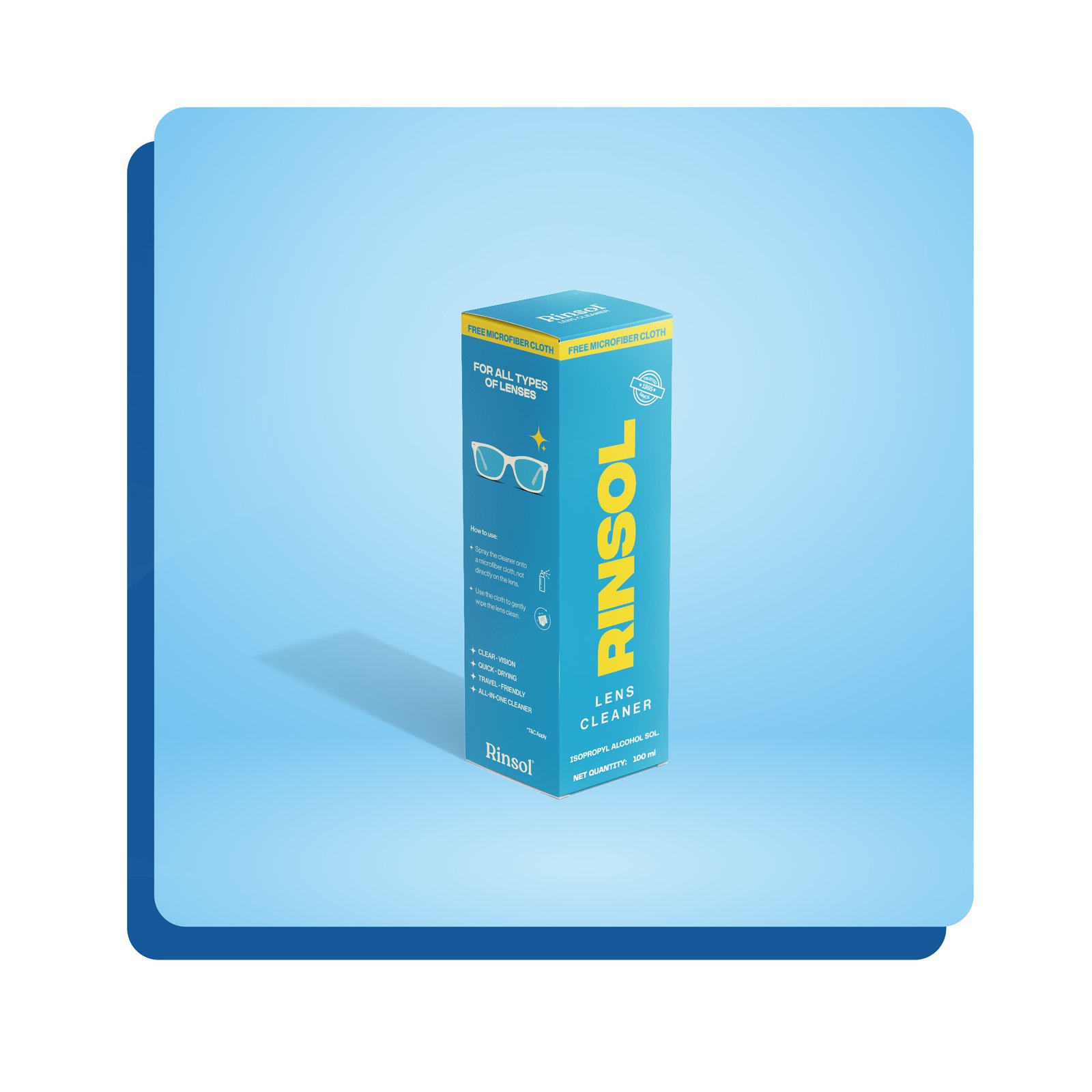
Rinsol Lens Cleaner & Wipes
Spray for home • Wipes for the road
Frequently Asked Questions
Why do my glasses get dirty so quickly during commutes?
Can pollution damage spectacle lenses?
What is the best way to clean dusty glasses?
Can I use a microfiber cloth to clean my glasses?
How often should I clean my glasses?
Conclusion
Daily commuting in an Indian city is hard on glasses. Urban pollution, dust, heat, sweat and the physical demands of busy journeys create lens contamination far beyond normal indoor use. It cannot be fully prevented by being more careful. It is simply the reality of the environment.
What you can control is the cleaning response: remove loose dust before wiping, use a dedicated glasses cleaning spray, and finish with a clean microfiber cloth. That turns a contamination problem into a manageable daily habit. Wiping dusty lenses with whatever is at hand turns the same contamination into progressive, irreversible damage. Two minutes of correct cleaning when you arrive protects your lenses for years of clear vision.