
Monsoon season brings relief from the summer heat, but for contact lens wearers across India, it also brings a set of eye care challenges that most people are genuinely unprepared for.
Humidity, rainwater, increased airborne contamination, and the general wetness of the season create conditions where bacteria and fungi thrive far more aggressively than during dry months.
Your regular lens care routine, which is adequate for normal conditions, may simply not be enough during monsoon. Understanding why helps you adjust before a problem develops rather than after.
Why Does Humid Weather Affect Contact Lens Safety?
Does high humidity affect contact lens safety and hygiene?
Yes, significantly, and the mechanism is straightforward once you understand it.
Bacteria and fungi need warmth and moisture to multiply. Monsoon season provides both in abundance. The ambient humidity during India’s rainy season can sit above 80 to 90 percent for weeks at a stretch. This creates an environment where microorganisms that are normally kept in check by drier conditions can multiply rapidly on surfaces, in water, and in the air itself.
Your contact lens is a warm, moist surface sitting directly on your eye for 12 to 14 hours a day. In high-humidity conditions, the lens surface retains more moisture and the environment around it is richer in microbial activity. This combination creates elevated contamination risk even when your general hygiene habits have not changed.
Why are eye infections more common in the rainy season for lens wearers?
Monsoon air carries higher concentrations of airborne fungi, pollen, and bacteria than dry season air. Waterlogging in cities increases the presence of contaminated water in the environment. People touch their faces, eyes, and glasses more frequently when dealing with rain and humidity. All of these factors converge to make the monsoon period genuinely higher risk for contact lens wearers.
Common Contact Lens Problems During Monsoon Season
1. Eye Infections and Microbial Keratitis
Bacterial and fungal corneal infections spike during monsoon months in India. This is not coincidental. The same conditions that produce lush green growth across the landscape also accelerate microbial activity in the environment your eyes are constantly exposed to.
Fungal keratitis in particular is a monsoon-season concern. Fungal spores are present in air and water year-round but become significantly more abundant during humid, wet conditions. A contact lens that has been exposed to contaminated rainwater or inadequately disinfected provides an entry point for these organisms.
2. Eye Irritation and Dryness
Why do my eyes get sticky when wearing contacts in humid weather?
This is one of the most common monsoon complaints from lens wearers. High humidity does not necessarily mean your eyes are more hydrated. It can actually disrupt the natural balance of your tear film and cause a sticky, uncomfortable feeling during lens wear.
The outer lipid layer of your tear film, which controls evaporation, is sensitive to environmental changes. Humidity fluctuations, combined with increased airborne particles, can destabilise this layer and cause intermittent dryness and stickiness even when the air around you feels wet.
3. Allergic Conjunctivitis
Monsoon season increases airborne pollen, mould spores, and dust mite activity. For wearers with allergies, contact lenses act as collectors for these allergens, keeping them in prolonged contact with the conjunctival surface. The result is increased itching, redness, and watering during the season.
How Does Rainwater Affect Contact Lenses?
Can rainy weather cause contact lens infections?
Directly and genuinely, yes. Rainwater is not sterile, regardless of how clean it looks falling from the sky. By the time rain reaches you in an urban environment, it has collected atmospheric pollutants, particulate matter, and microorganisms on its way down.
Contact with rainwater while wearing lenses introduces these contaminants to the lens surface and the space between the lens and your cornea. This is the same fundamental risk as tap water contact, with the added dimension of whatever urban air pollution the water has absorbed during its fall.
Waterlogging and Contaminated Water Splashes
Walking through waterlogged streets during heavy rain is an everyday reality in most Indian cities during monsoon. Splashes from puddles and drains can carry significantly contaminated water toward your face and eyes. For contact lens wearers, this kind of splash exposure is a meaningful infection risk.
Fungi including Fusarium and Aspergillus species, which can cause serious corneal infections, are present in soil and organic matter that becomes suspended in puddle and drain water during heavy rain. A splash that lands on a contact lens can introduce these organisms directly to your corneal surface.
The Right Response to Water Exposure
If your lenses come into contact with rainwater or any contaminated water, remove them as soon as safely possible. Clean and disinfect thoroughly with fresh multipurpose solution before any further wear. If you experience redness, pain, or sensitivity following water exposure, remove the lenses and consult an eye care professional rather than waiting to see if symptoms resolve on their own.
Essential Contact Lens Care Tips During Monsoon
How to clean contact lenses properly during monsoon season?
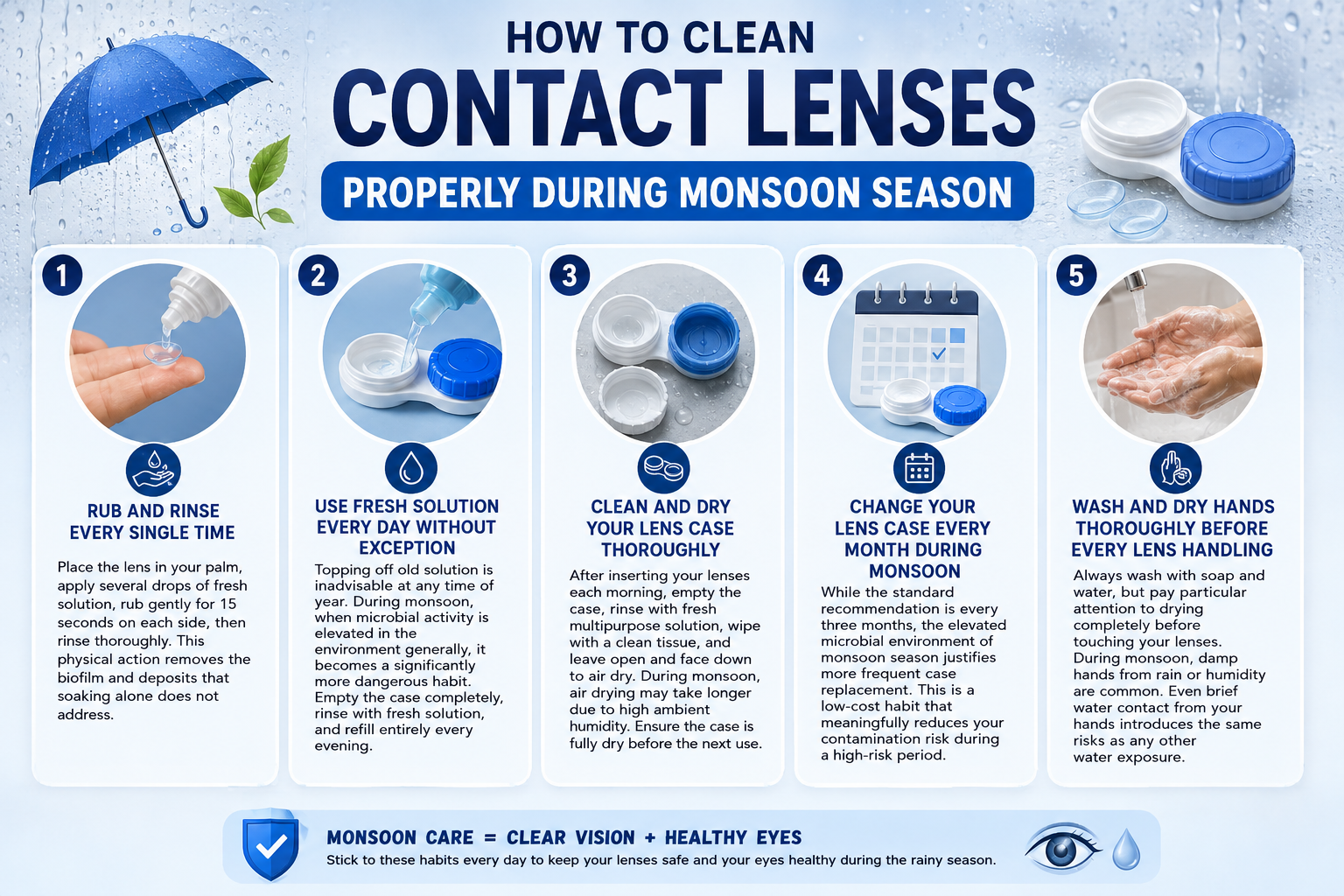
The fundamentals of lens cleaning do not change during monsoon. What changes is how consistently and carefully those fundamentals need to be applied. During high-risk seasons, shortcuts that might seem inconsequential during dry months carry genuinely elevated consequences.
- Rub and rinse every single time: The rub and rinse method is non-negotiable during monsoon. Place the lens in your palm, apply several drops of fresh solution, rub gently for 15 seconds on each side, then rinse thoroughly. This physical action removes the biofilm and deposits that soaking alone does not address.
- Use fresh solution every day without exception: Topping off old solution is inadvisable at any time of year. During monsoon, when microbial activity is elevated in the environment generally, it becomes a significantly more dangerous habit. Empty the case completely, rinse with fresh solution, and refill entirely every evening.
- Clean and dry your lens case thoroughly: After inserting your lenses each morning, empty the case, rinse with fresh multipurpose solution, wipe with a clean tissue, and leave open and face down to air dry. During monsoon, air drying may take longer due to high ambient humidity. Ensure the case is fully dry before the next use.
- Change your lens case every month during monsoon: While the standard recommendation is every three months, the elevated microbial environment of monsoon season justifies more frequent case replacement. This is a low-cost habit that meaningfully reduces your contamination risk during a high-risk period.
- Wash and dry hands thoroughly before every lens handling: Always wash with soap and water, but pay particular attention to drying completely before touching your lenses. During monsoon, damp hands from rain or humidity are common. Even brief water contact from your hands introduces the same risks as any other water exposure.
How Do I Protect My Eyes From Fungal Infections During Monsoon?
How do I protect my eyes from fungal infections during monsoon?
This is one of the most important questions any contact lens wearer in India should know the answer to during rainy season.
Fungal eye infections are more common in tropical and subtropical climates and peak during and after monsoon. For contact lens wearers, the primary protection comes from a combination of consistent lens hygiene and minimising water exposure to the eyes.
Avoid wearing lenses on heavy rain days if you will be spending significant time outdoors. Use glasses instead on days when water exposure is likely, whether from rain, flooded streets, or outdoor activities. This single habit, switching to glasses on genuinely wet days, eliminates a significant proportion of monsoon-related lens contamination risk.
When lens wear is necessary during monsoon, use a quality disinfecting solution without exception and follow the full rub, rinse, and soak routine every single time you remove your lenses. Do not shorten this routine during monsoon. If anything, it deserves more attention during this season than any other.
Mistakes to Avoid During Humid Weather
- Touching lenses with hands that have been in contact with rain or puddles. Even if you washed your hands earlier, rain contact means rewashing before handling lenses.
- Wearing lenses while travelling through flooded streets. Splash exposure risk is too high. Switch to glasses on days with significant waterlogging.
- Skipping cleaning because your eyes feel fine. During monsoon, contamination can be present without immediate symptoms. Feeling comfortable is not a reliable indicator that your lenses are clean and safe.
- Reusing solution or lens cases beyond their effective life. Elevated environmental contamination during monsoon means worn-out cases and old solutions carry higher risk than usual.
- Ignoring mild symptoms. Mild redness or irritation that might resolve on its own during a dry month warrants more attention during monsoon. Early symptoms of fungal or bacterial infection during high-risk periods deserve prompt professional evaluation.
Choosing the Right Contact Lens Solution in Monsoon
Best contact lens solution for humid weather conditions
During monsoon, your contact lens solution needs to work harder than usual. The disinfecting capability of your solution is your primary defence against the elevated microbial environment of rainy season. Choosing a quality multipurpose solution with proven disinfecting agents is not just a preference during this period. It is essential.
Look for a solution that explicitly covers bacterial and fungal disinfection. Not all multipurpose solutions are formulated with equal breadth of antimicrobial coverage.
A solution that addresses bacteria, fungi, and Acanthamoeba provides more comprehensive protection during a season when all three are more prevalent.
Multisol+ by Gaymed Labs
Multisol+ is a multipurpose contact lens solution from Gaymed Labs formulated to clean, rinse, disinfect, and store soft contact lenses with effective antimicrobial action. During monsoon when environmental contamination is elevated, using a solution manufactured in a GMP and ISO 13485-certified facility with over 30 years of optical care expertise gives you the confidence that your daily lens care is meeting the actual demands of the season.
Conclusion
Monsoon season is genuinely higher risk for contact lens wearers, and treating it the same as the rest of the year is one of the most common oversights in lens care. The combination of elevated humidity, increased airborne microorganisms, rainwater exposure, and contaminated urban water creates conditions where consistent, careful lens hygiene is more important than at any other time.
The adjustments required are not dramatic. They are the same fundamentals of good lens care applied with greater consistency and attention. Fresh solution every day. Rub and rinse every time. Clean, dry hands before every handling. Case replaced monthly during monsoon. Glasses used on genuinely wet days.
These habits, maintained consistently throughout the rainy season, protect your eyes from risks that are entirely avoidable with the right knowledge and the right products.
Frequently Asked Questions
1. Why do my eyes get sticky when wearing contacts in humid weather?
High humidity can disrupt the natural balance of the tear film, particularly the outer lipid layer that controls evaporation. Combined with increased airborne particles during monsoon, this can cause a sticky, uncomfortable sensation during lens wear even when the surrounding air feels moist.
2. Can rainy weather cause contact lens infections?
Yes. Rainwater carries atmospheric pollutants, airborne microorganisms, and in urban environments, significant contamination collected during its fall. Contact with rainwater while wearing lenses introduces these contaminants directly to the lens surface and your cornea, creating a meaningful infection risk.
3. How do I protect my eyes from fungal infections during monsoon?
Avoid wearing lenses on heavy rain days and use glasses instead when significant water exposure is likely. Follow the rub and rinse method every single time you remove your lenses, use a quality multipurpose solution with broad antimicrobial coverage, replace your lens case monthly during monsoon, and consult your eye care professional promptly if any redness, pain, or sensitivity develops.
4. Does high humidity affect contact lens safety and hygiene?
Yes. High humidity creates conditions where bacteria and fungi multiply more rapidly in the environment generally. Your lens case, your lens surface, and your general lens handling environment all carry elevated contamination risk during humid monsoon conditions compared to drier months.
5. Why are eye infections more common in the rainy season for lens wearers?
Monsoon air contains higher concentrations of airborne fungi, bacteria, and pollen. Contaminated water exposure is more frequent due to rain and urban waterlogging. People touch their faces more often when dealing with wet weather. All of these factors combine to create a significantly elevated infection risk for contact lens wearers during rainy season.