
For millions of people, contact lenses are a daily miracle. They give you crisp, clear, 360-degree vision without the weight of frames resting on your nose. But because they sit directly on your cornea—the clear, living tissue on the front of your eye—they come with a major responsibility.
Your eyes naturally produce tears, proteins, and lipids (fats). While these keep your eyes healthy, they also leave behind a film on your lenses. Combined with invisible environmental debris and bacteria, your lenses can quickly turn from a vision correction tool into a breeding ground for infection if not cared for.
If you have ever skimped on your cleaning routine or wondered, “What happens if I don’t clean my contact lenses with solution?“, this comprehensive guide breaks down the science of lens buildup, the hidden risks of poor hygiene, and the exact steps you need to take to protect your sight.
Why Is Cleaning Contact Lenses Important?
To understand why a dedicated contact lens cleaning solution is non-negotiable, you have to look at what happens to a lens over the course of a single day. The moment you place a contact lens on your eye, an microscopic accumulation process begins.
The Breakdown of Lens Buildup
- Bacterial Colonization: Your eyes are exposed to the air, dust, and your own skin. Bacteria like Staphylococcus or Pseudomonas are incredibly common. Without daily disinfection, these microbes latch onto the porous material of your lens and multiply.
- Protein Deposits: Your tear film contains natural proteins that fight infection. However, these proteins denature (break down) when they bind to a synthetic contact lens. Over time, they form a foggy, jagged film over the lens surface that irritates the inner eyelid.
- Lipid and Biofilm Layering: Lipids (fats) from your eye’s oil glands build up alongside debris. Together with bacteria, they create a “biofilm”—a slimy protective shield that makes bacteria highly resistant to your body’s natural defense mechanisms.
When you use a fresh, high-quality sterile contact lens solution, you aren’t just rinsing away visible dust. You are actively breaking down this microscopic biofilm, dissolving stubborn protein bonds, and killing pathogens before they can migrate into your eye tissue.
What Are the Risks of Poor Contact Lens Hygiene?
Skipping your cleaning routine or cutting corners doesn’t just cause minor discomfort; it opens the door to conditions that can permanently alter your vision.
Why do my eyes hurt after wearing uncleaned contacts?
When you wear uncleaned lenses, the jagged layers of denatured proteins and trapped debris rub against your cornea every time you blink. This creates micro-abrasions (tiny scratches) on the surface of your eye. Furthermore, the buildup suffocates your eye, cutting off its oxygen supply (a condition known as hypoxia). This combination of physical friction and oxygen deprivation triggers inflammatory responses, leading to redness, burning, and deep aching pain.
Common Consequences of Poor Lens Hygiene
- Severe Eye Irritation & Chronic Dryness: Debris-laden lenses disrupt your natural tear film. This causes your tears to evaporate too quickly, leaving you with a gritty, “sand-in-the-eye” feeling that persists even after you take the lenses out.
- Blurry Vision & Lens Intolerance: As protein deposits build up, they alter the optical clarity of the lens, making your vision look cloudy or smeared. Eventually, your immune system may reject the dirty lens entirely, causing a condition called Giant Papillary Conjunctivitis (GPC), where bumps form under your eyelid, making it impossible to wear contacts comfortably again.
- Corneal Ulcers (Keratitis): If micro-scratches on your eye become infected by trapped bacteria or amoebas, an open sore called an ulcer can form on your cornea. Corneal ulcers are medical emergencies that cause intense pain, extreme light sensitivity, and can leave behind permanent scars right across your line of sight.
Can You Get an Eye Infection from Dirty Contact Lenses?
Yes, absolutely. In fact, poor contact lens hygiene is the single greatest risk factor for developing microbial keratitis (a corneal infection). When dangerous microbes are trapped beneath a tightly fitting lens, they are pressed directly against the vulnerable surface of the eye, giving them the perfect dark, warm, moist environment to thrive.
What are the symptoms of a contact lens infection?
If you experience any of the following warning signs, remove your lenses immediately and consult an eye care professional:
- Intense, worsening pain or aching in one or both eyes.
- Extreme sensitivity to light (photophobia) where you cannot open your eyes comfortably in a lit room.
- Unusual watery discharge, thick mucus, or yellow/green pus oozing from the eye.
- Severe, persistent redness that looks like “pink eye” but doesn’t improve.
- A sudden, noticeable drop in your visual clarity or a foggy, blurred view.
- The feeling that a foreign object is permanently stuck in your eye.
Can dirty contact lenses cause permanent blindness?
Regrettably, yes, they can. While rare, aggressive pathogens like Acanthamoeba (commonly found in tap water) or Pseudomonas aeruginosa can destroy corneal tissue with alarming speed. If an infection penetrates deep into the cornea or causes a central corneal ulcer, it leaves behind dense, opaque scar tissue.
In severe, untreated cases, the infection can cause the cornea to perforate (tear open), leading to total loss of the eye or requiring emergency corneal transplant surgery to restore even partial vision.
How Should You Clean and Store Contact Lenses?
Preventing these devastating complications comes down to a disciplined, correct daily routine. To properly sanitize your lenses, you must use a dedicated regimen centered around an approved contact lens cleaning solution.
The Step-by-Step Daily Cleaning Routine
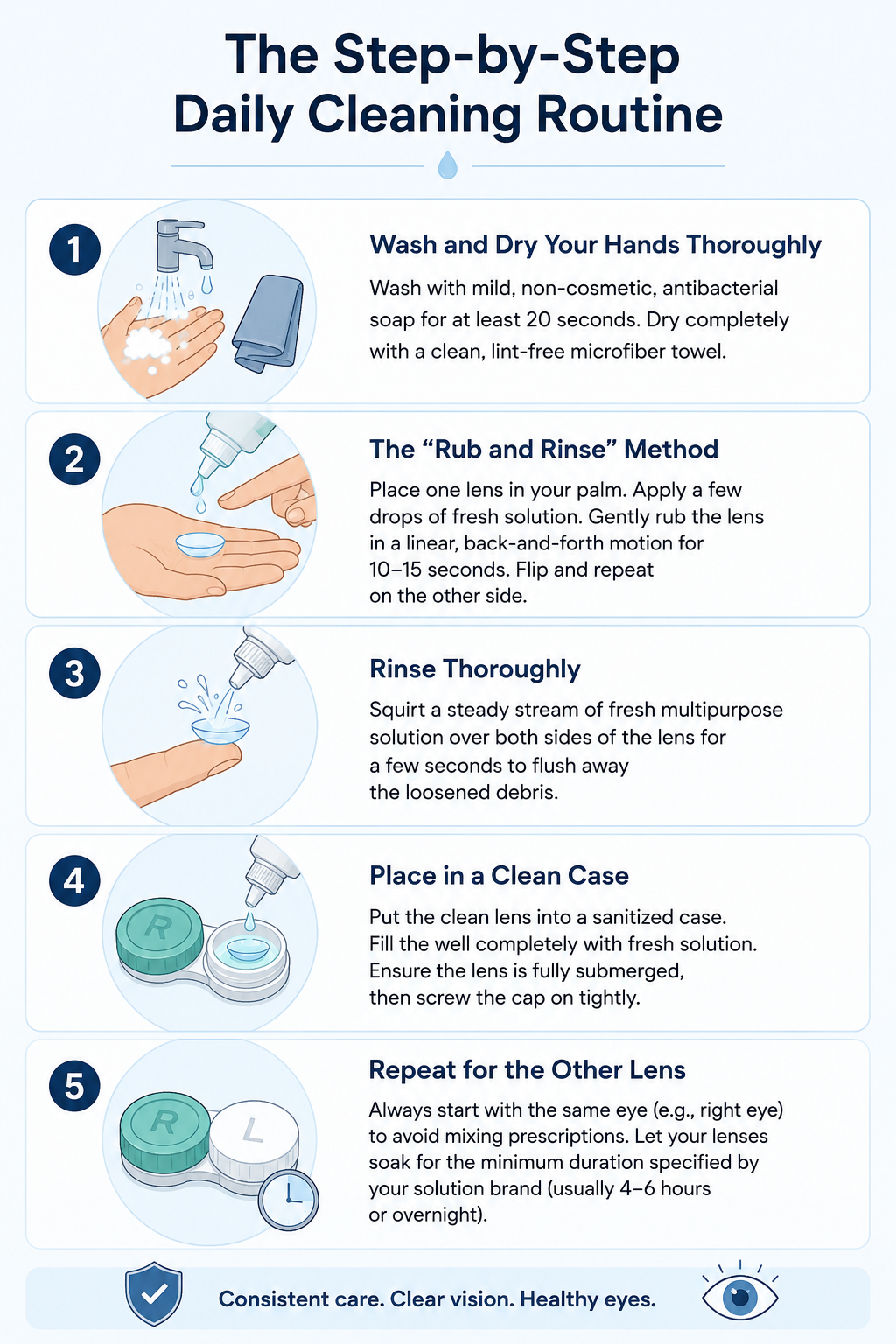
Here is the safest, clinically recommended method for cleaning and storing reusable (monthly or bi-weekly) contact lenses:
- Wash and Dry Your Hands Thoroughly: Always wash your hands with a mild, non-cosmetic, antibacterial soap for at least 20 seconds. Dry your hands completely with a clean, lint-free microfiber towel. Wet hands can introduce harmful tap water bacteria to your lenses.
- The “Rub and Rinse” Method: Place one lens in the clean, dry palm of your hand. Apply a few drops of fresh sterile contact lens solution to the lens surface. Using the pad of your pinky or ring finger, gently rub the lens in a linear, back-and-forth motion for about 10 to 15 seconds. This physical friction loosens the sticky biofilm and protein deposits. Flip the lens and repeat on the other side.
- Rinse Thoroughly: Squirt a steady stream of fresh multipurpose solution over both sides of the lens for a few seconds to flush away the loosened debris.
- Place in a Clean Case: Put the clean lens into a sanitized contact lens case. Fill the well completely with fresh, unadulterated solution. Ensure the lens is fully submerged, then screw the cap on tightly.
- Repeat for the Other Lens: Always start with the same eye (e.g., your right eye) to avoid accidentally mixing up your prescriptions. Let your lenses soak for the minimum duration specified by your solution brand (usually 4 to 6 hours or overnight).
Common Contact Lens Care Mistakes to Avoid
Even well-intentioned contact lens wearers frequently fall into bad habits that compromise their eye health. Identifying and eliminating these common mistakes can dramatically cut down your risk of irritation and infection.
1. Using Tap Water, Saline, or Saliva as a Substitute
Never allow tap water, distilled water, homemade saline, or saliva to touch your lenses or your lens case. Water is not sterile; it contains minerals, chlorine, and dangerous microorganisms like Acanthamoeba. Saliva is packed with oral bacteria that belong in your mouth, not on your eyes. If you run out of solution, do not resort to water—throw the lenses away or keep them out until you buy a fresh bottle.
2. “Topping Off” or Reusing Old Solution
“Topping off” is the practice of leaving yesterday’s solution in the case and simply adding a few fresh drops to fill it back up. This is incredibly dangerous. Disinfecting ingredients lose their potency after a single use. Reusing old solution stretches the active chemicals too thin, creating a weak bath where bacteria can easily multiply and colonize your lenses overnight. Always dump out the old solution completely, rinse the case with fresh solution, and leave it to air dry.
3. Neglecting the Contact Lens Case
Your case needs just as much care as your lenses. A dirty case acts as a reservoir for bacteria. Every morning, after putting in your contacts, empty the case completely. Rinse it thoroughly with fresh contact lens cleaning solution (never water!), wipe it with a clean tissue, and store it upside down with the caps off to air dry. Furthermore, you should replace your lens case entirely every 1 to 3 months. For absolute convenience, look for a contact lens solution with case bundle so you always have a fresh, sterile case ready when you open a new bottle.
4. Sleeping or Showering in Your Lenses
Unless explicitly prescribed by your optometrist for extended wear, sleeping in your contacts multiplies your risk of corneal infection by nearly six times. Closing your eyes cuts off the flow of oxygen and tears, trapping bacteria underneath the lens. Similarly, showering, swimming, or sitting in a hot tub while wearing contacts exposes them directly to waterborne pathogens that easily latch onto the lens material.
5. Traveling with Bulky Bottles or Improvised Containers
When you are on the go, it is tempting to pour solution into a small, generic plastic travel pump bottle to save space. This breaks the sterile seal of the liquid and contaminates the solution. Instead, always purchase a factory-sealed, regulatory-approved travel size contact lens solution designed specifically to maintain sterility while meeting airline liquid regulations.
Understanding Your Bottle: Contact Lens Solution Ingredients
When you look at the back label of your solution bottle, the chemical terms can look intimidating. However, knowing what goes into these formulas helps you understand how they protect your eyes. Most modern multipurpose solutions rely on a carefully balanced blend of these key elements:
| Ingredient Category | Common Examples | What It Does For Your Lenses |
| Disinfectants / Antimicrobials | Polyaminopropyl biguanide, Polyquaternium, PAPB | Actively kills bacteria, fungi, and amoebas by disrupting their cellular walls without irritating eye tissues. |
| Surfactants & Cleaners | Poloxamer, Poloxamine | Act like a gentle, eye-safe detergent to loosen, break up, and dissolve accumulated lipids and environmental oils. |
| Protein Removers | Hydroxyalkylphosphonate (Hydranate) | Specifically targeted molecules that unlock and strip away denatured protein film from the lens matrix. |
| Humectants & Lubricants | Hyaluronic acid (HA), Sorbitol, Propylene glycol | Mimic your natural tear film, locking moisture into the lens material so it stays hydrated and comfortable all day. |
| Buffers & Tonicity Agents | Boric acid, Sodium borate, Sodium chloride | Keeps the liquid perfectly balanced to match the natural pH and salt levels of human tears, preventing burning or stinging. |
FAQs About Contact Lens Cleaning
Q1. What happens if I accidentally put my contacts in water overnight?
If your lenses spend the night in tap, bottled, or distilled water, they are no longer safe to put in your eyes. Water causes the soft lens material to swell and warp, altering its shape and fit. More importantly, the lens will absorb harmful waterborne microorganisms. If this happens, the safest option is to discard the lenses immediately. Do not attempt to “rescue” them by soaking them in solution later.
Q2. Can I clean my contact lens case with soap and water?
No, you should never use tap water or dish soap to clean your lenscase. Soap leaves behind a chemical residue that can transfer to your lenses and cause severe chemical burns on your cornea. Tap water introduces dangerous bacteria. Only rinse your lens case with fresh contact lens cleaning solution and allow it to air dry face down on a clean paper towel.
Q3. Is it safe to use expired contact lens solution?
No, it is not safe. The expiration date printed on the bottle guarantees that the chemical preservatives inside are stable enough to kill bacteria and maintain sterility. Past that date, the chemical components degrade. The solution may no longer be capable of disinfecting your lenses, or its pH could shift, causing painful burning and irritation when applied to your eyes.
Q4. How long can contact lenses stay in a solution case safely?
For most standard multipurpose solutions, you can leave your lenses safely stored in a tightly sealed case for up to 30 days. However, if they sit in the case for longer than 30 days without use, the solution loses its disinfecting efficacy. You must remove the lenses, discard the old solution, perform a fresh “rub and rinse,” and soak them in clean solution overnight before wearing them again.
Q5. What is the difference between multipurpose solution and hydrogen peroxide systems?
A multipurpose solution is an all-in-one formula used to rub, rinse, disinfect, and store lenses directly. A hydrogen peroxide system uses a specialized case with a built-in neutralizing disc. It provides a much deeper, preservative-free clean that is excellent for sensitive eyes, but the lenses must soak in the special case for at least 6 hours to turn the acid into harmless saline. Putting unneutralized hydrogen peroxide directly onto your eye will cause an agonizing, temporary chemical burn.
Final Thoughts: Prioritizing Your Vision Health
Your eyes are incredibly resilient, but they lack built-in defense mechanisms against dirty contact lenses. Skipping a clean, reusing solution, or letting tap water touch your lenses might seem like small compromises in the moment, but they carry massive risks to your long-term vision.
By sticking to a strict daily “rub and rinse” routine, avoiding common cross-contamination habits, and always using fresh, premium products—whether it’s a home-sized formula or a handy travel size contact lens solution—you ensure that your contact lenses remain a safe, comfortable, and crystal-clear way to experience the world. Take care of your lenses today so your eyes can take care of you tomorrow.