
Proper contact lens care is essential for maintaining healthy eyes and clear vision. Poor hygiene practices can lead to irritation, dryness, redness, and even serious infections. As more people rely on lenses for daily vision, following a consistent contact lens care guide becomes crucial. Understanding how to take care of contact lenses not only improves comfort but also extends lens life and reduces the risk of complications.
Understanding the Basics of Lens Hygiene
Maintaining good lens hygiene starts with regular cleaning and disinfection. Contact lenses are exposed to dust, protein deposits from tears, and environmental bacteria throughout the day. If not cleaned properly, these deposits build up on the lens surface, affecting comfort and clarity.
Using a high-quality contact lens cleaning solution helps remove these impurities. When storing your lenses, always place them in a clean, sterile contact lens case filled with fresh solution to prevent harmful microbial growth.
How to Put In and Take Out Contact Lenses Safely
Learning how to handle your lenses is just as important as keeping them clean. Always work over a clean, flat surface.
How to Put In Contact Lenses
-
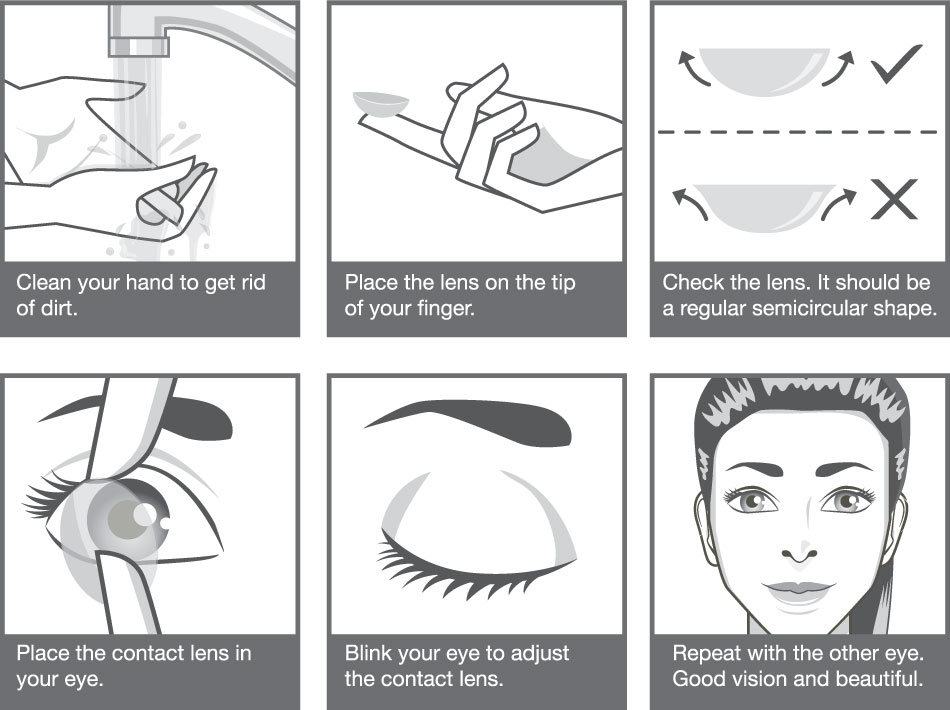
Place the clean lens on the tip of your index finger. Ensure it curves upward like a bowl (not flared out like a soup dish).
-
Use your other hand to hold your upper eyelid open, and use your free fingers on your main hand to pull down your lower eyelid.
-
Look straight ahead or up at the ceiling, gently place the lens on your eye, close your eye slowly, and blink a few times to let it settle.
How to Take Out Contact Lenses?
-
Wash and dry your hands thoroughly.
-
Pull down your lower eyelid with your middle finger.
-
Use the pads of your thumb and index finger to gently pinch the lens and pull it away from your eye.
How to Clean Contact Lenses: Essential Steps
Following a simple daily routine can significantly improve lens safety and comfort:
Step 1: Wash and dry your hands
Always wash your hands thoroughly with soap and dry them before touching your lenses.
Step 2: Clean with a multipurpose solution
Use a multipurpose contact lens solution to gently rub, rinse, and disinfect lenses after each use.
Step 3: Replace solution daily
Never reuse old solutions. Always fill your lens case with fresh solutions to maintain hygiene.
Step 4: Store lenses properly
Keep lenses in a clean, sterile case and ensure they are fully submerged in solution.

Common Mistakes: Preventing a Contact Lens Eye Infection
Avoiding common errors is just as important as following the right steps:
- Using tap water or saliva to clean lenses
- Reusing old or “topped-off” solution
- Wearing lenses longer than recommended
- Not cleaning or replacing the lens case regularly
Failing to follow proper hygiene rules is the leading cause of a contact lens eye infection (such as microbial keratitis). Neglecting to regularly clean or replace your contact lens case can lead to painful corneal scratches or vision loss.
Conclusion
Good contact lens hygiene is the foundation of safe and comfortable vision. By following a proper routine and using a quality contact lens cleaning solution, users can prevent discomfort and long-term eye issues. Consistency in care not only protects your eyes but also enhances your overall lens-wearing experience.
FAQs
How to choose the right contact lens case for daily use?
Choose a case made of high-quality, durable material with proper ventilation and leak-proof design. Replace your lens case every 1–3 months and clean it regularly to prevent bacterial buildup.
Top contact lens care kits recommended by eye specialists
Eye specialists usually recommend kits that include a multipurpose solution, a hygienic lens case, and optional rewetting drops. Look for products that ensure effective cleaning, hydration, and safe storage.
Steps to properly clean and store soft contact lenses
Wash hands, remove lenses, apply solution, gently rub, rinse thoroughly, and store in fresh solution. Always use a clean case and avoid skipping the rubbing step for better disinfection.
Compare popular brands of contact lens solution for sensitive eyes
Solutions for sensitive eyes typically focus on gentle formulations, balanced pH, and enhanced hydration. Look for products designed to minimize irritation and improve comfort for long wear.
Which rewetting drops are safe for use with all types of contact lenses?
Rewetting drops labeled as “compatible with all soft lenses” are generally safe. Always check product instructions and consult an eye care professional if you have sensitive eyes.