Updated 2026•
6 min read
No, they need different care. Plain uncoated glasses tolerate basic wipes, but blue-light and anti-glare (AR) coatings are thin surface layers that can be damaged by ammonia and strong alcohol-based cleaners. AI smart glasses need the same lens care plus strict moisture control around microphones, sensors and charging pins.
The glasses on your face in 2026 are a different kind of technology from the glasses your parents wore. Blue-light filtering lenses are common for anyone who spends long hours on screens. Anti-glare coatings are now a baseline rather than a premium upgrade. And AI glasses, frames with cameras, microphones, speakers and wireless connectivity built in, are moving from novelty to mainstream faster than most people realise.
What hasn’t kept pace is how people clean them. Most wearers still reach for a shirt hem, a tissue or whatever glass cleaner is nearby. On plain uncoated lenses that causes scratches over time. On modern coated lenses and electronic eyewear it can cause damage that is difficult or impossible to reverse.
1Do AI, Blue-Light & Anti-Glare Lenses Need Special Care?
The Coating Complexity of Modern Lenses
Modern spectacle lenses are not a single material with a single surface. They are a base lens with typically three to seven functional layers applied on top, each with its own purpose and its own chemical sensitivity.
Lens Coating Stack (Illustrative Microscopic View)
These coatings are designed on the assumption that lenses will be cleaned with appropriate optical products. They are not designed for hand sanitiser, window cleaner, kitchen spray, or the dry friction of a polyester shirt.
Blue-Light Lenses
Blue-light filtering works by absorbing or reflecting specific wavelengths of high-energy visible (HEV) light. If harsh cleaners degrade the coating, the lens can look perfectly clear while filtering less than it should.
Anti-Glare (AR) Lenses
AR coatings use thin-film interference to cancel reflected light, which depends on very uniform thickness. Because they cut reflections, AR lenses also show fingerprints, streaks and chemical marks more clearly than plain lenses.
Eyewear Care Compatibility Matrix
Select your eyewear type to see safer vs risky methods
Safer Methods
- Dedicated pH-balanced optical spray
- Clean microfiber cloth
- Warm water and a drop of mild soap, then dry
Risky Methods
- Dry paper tissues or paper towels
- Shirt hems and rough fabrics
- Wiping dusty lenses without blowing off grit first
Safer Methods
- Ammonia-free optical lens sprays
- Light circular microfiber wipes
- A consistent daily routine
Risky Methods
- Window or glass cleaner (ammonia)
- Strong rubbing alcohol
- Hand sanitiser
Safer Methods
- Spray on the cloth only, never the frame
- Dry microfiber around microphones
- Dry cotton swab for camera edges
Risky Methods
- Spraying directly onto frame or hinges
- Submerging or rinsing the frames
- Damp wipes over charging contacts
The Universal 5-Step Cleaning Method
Suitable for Daily Use
Remove loose particles first
Blow gently across both sides of the lens to dislodge dust and grit that could scratch during wiping. On AI glasses, avoid blowing moist breath into camera or microphone openings. A soft brush or air bulb is ideal if you have one.
Apply the cleaner to the cloth, not the glasses
Important for AI Glasses
Spray 2–3 light spritzes of optical cleaner onto a clean microfiber cloth. Never spray liquid directly onto smart frame hinges, microphone grilles or charging pins.
Wipe with light pressure
Wipe each lens in gentle circular motions from the centre outward, using light, even pressure. Don’t rub hard over sensor openings.
Finish with a dry pass
Switch to a dry, clean section of the cloth and buff lightly. Hold the lenses up to a light source to check for streaks or smudges.
Care for frame and nose pads
Lightly wipe nose pads and arms to remove facial oils. On AI glasses, keep damp cloths away from charging terminals and audio ports.
How Harsh Cleaners Can Damage Modern Lenses
Ammonia (Window Cleaners)
Can attack AR coatings and cause crazing, a spiderweb pattern of fine cracks that cannot be reversed.
Strong Rubbing Alcohol
Repeated use can wear down hydrophobic and oleophobic top coats, leaving lenses that smudge easily and feel sticky.
Shirt Hems & Paper Tissues
Wood-pulp fibres and synthetic weaves are abrasive at a microscopic level and can leave fine scratches over time.
Bleach & Hand Sanitiser
Harsh chemicals can degrade lens coatings and may weaken frame seals, which is a particular concern for electronic eyewear.
AI Smart Glasses: Protecting the Electronics
Cameras, microphones, speakers and charging contacts
AI glasses need everything coated spectacle lenses need, plus protection for the embedded hardware. A thorough daily lens clean using the cloth-first spray method is the safe approach. Between full cleans, use a dry microfiber cloth to remove dust without bringing moisture near small openings.
Camera Lenses
Clean with ultra-soft dry microfiber only. Use a dry cotton swab for edges.
Mic & Speaker Ports
Never spray liquid at the grilles. Moisture can damage mesh and internal parts.
Charging Pins
Make sure contacts are fully dry before placing the frames in the charging case.
Rinsol Lens Cleaner: Made for Coated & Smart Eyewear
Rinsol Lens Cleaner from Gaymed Labs is an optical care spray designed for modern lens coatings, including anti-reflective, blue-light filtering, UV and hydrophobic top coats.
- 100% Ammonia-Free
- pH-Balanced Surfactant Formula
- Suitable for AI Smart Glasses Lenses
- Includes Free Microfiber Cloth
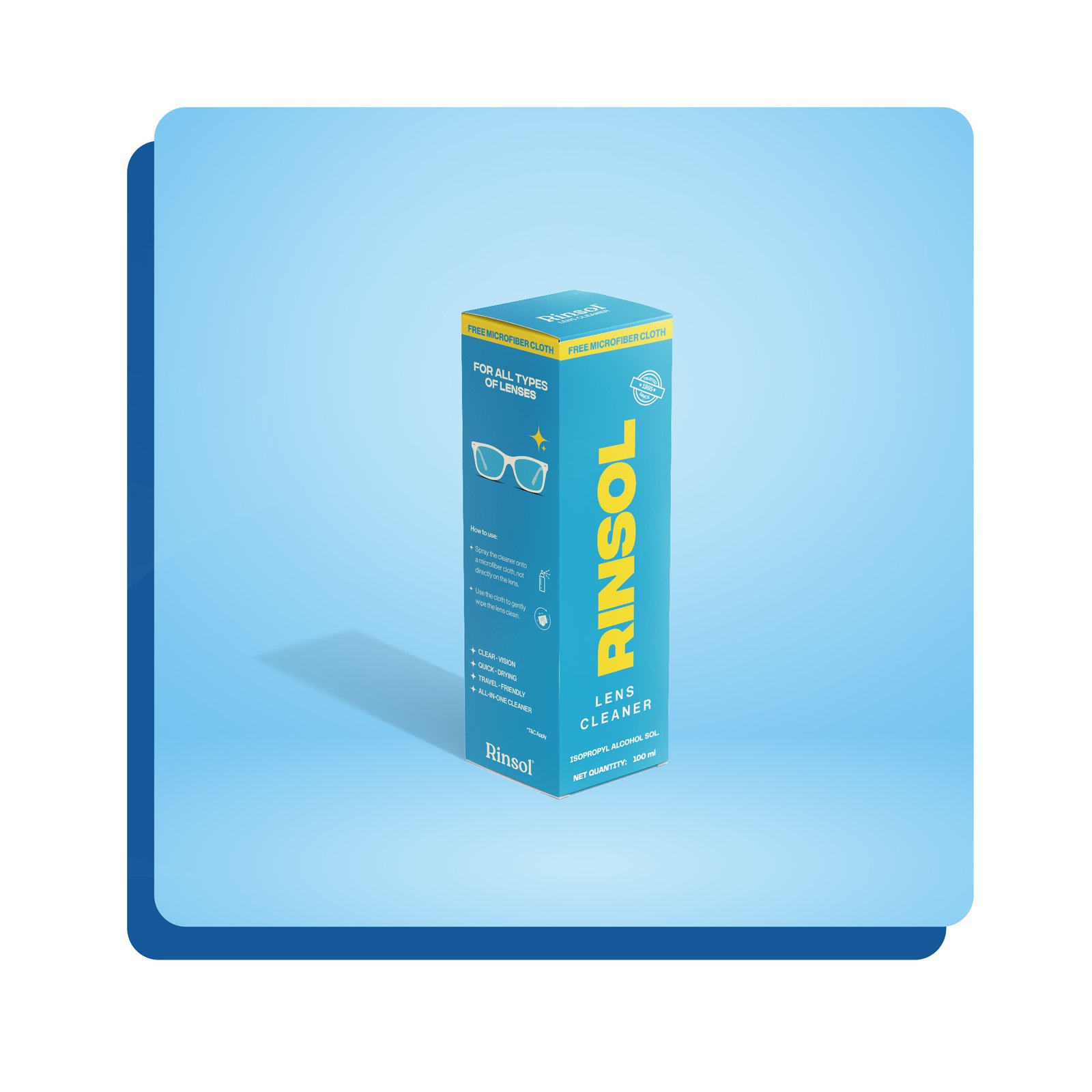
Rinsol Lens Cleaner
Optical Lens Cleaner • 100 ml
Frequently Asked Questions
Can I clean blue-light glasses with regular lens cleaner?
Can lens cleaner damage anti-glare coating?
How should I clean AI or smart glasses?
Can I use a microfiber cloth on coated lenses?
What should I avoid when cleaning spectacle lenses?
Conclusion
Blue-light glasses, anti-glare lenses and AI smart glasses are sophisticated optical and electronic devices that deserve cleaning to match. Shirt hems and household glass cleaners can gradually damage the coatings that make these products worth their cost.
The method is consistent whatever the lens type: remove loose particles first, apply a dedicated optical cleaner to a clean microfiber cloth, wipe gently, and finish with a dry buffing pass. Good habits protect both your vision and your investment.